


13 How to Master Digital and Platform Models
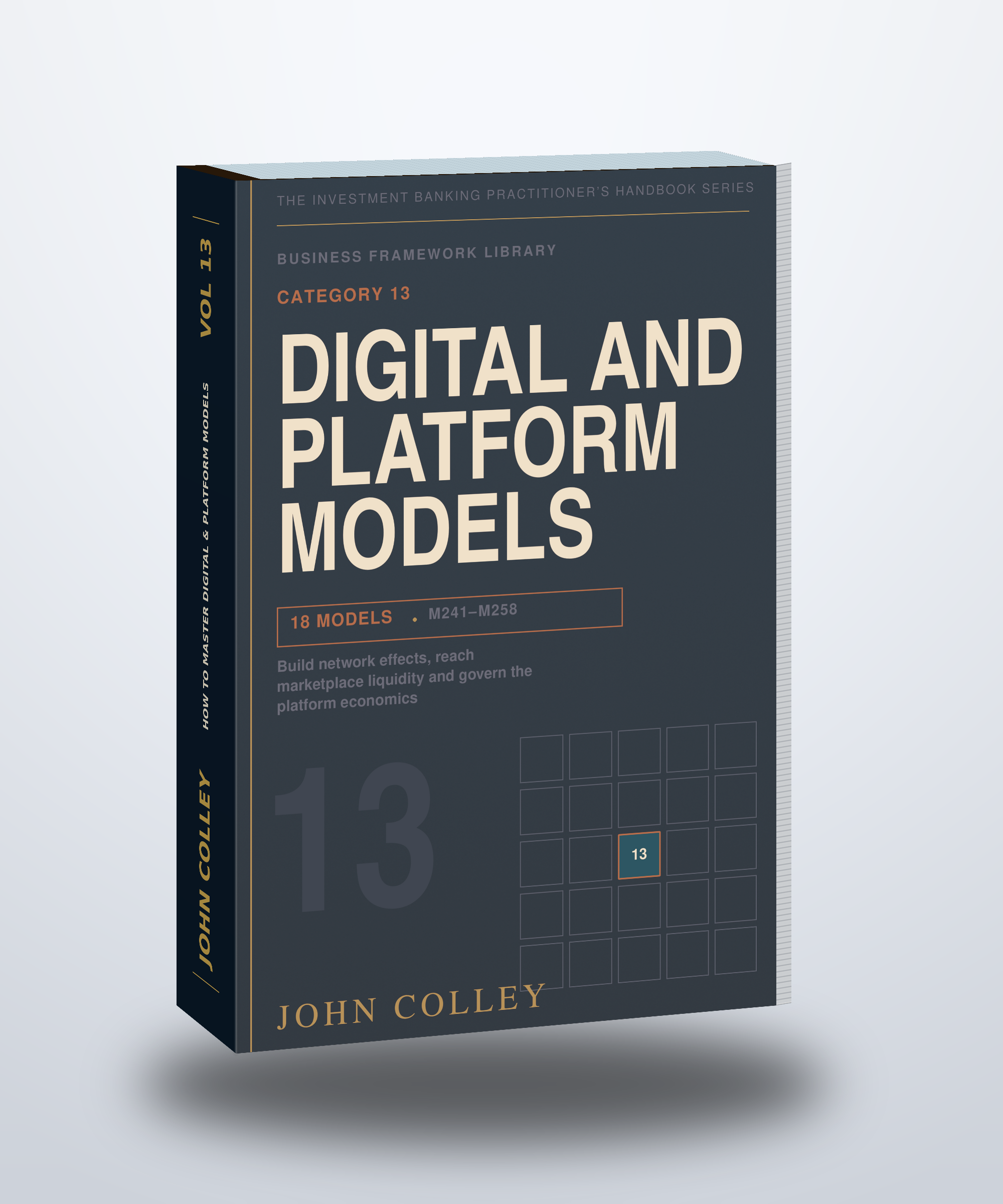 Eighteen digital and platform models, each taught end to end — with the worked models to run them.
Digital and platform businesses grow by connecting participants and compounding advantage — the more that join, the more valuable the network becomes. This handbook teaches all eighteen models in the Digital and Platform category — one chapter each — from the network effects that make platforms defensible, through marketplaces, multi-sided platforms and the SaaS, API and app-store models built on them, to the flywheels, take rates and cold-start problems that decide whether they win. From Direct Network Effects and the Two-Sided Marketplace to the SaaS Model, the Digital Flywheel and Disintermediation Risk.
What you get
The complete PDF handbook plus eighteen worked Excel models — one for every model in the book. Blue input cells you change, formula cells that respond, and a Read-me tab on each, so you can run the numbers on your own assumptions.
How every chapter is built
Read one and you can build any. Each model follows the same thirteen-section rhythm: the question it answers, what it is, who uses it, its anatomy, inputs and outputs, how to build it step by step, a worked example, strengths, limits and pitfalls, industry notes, how it connects to the other models, modern relevance, using AI on it, and a practitioner’s checklist.
The eighteen models
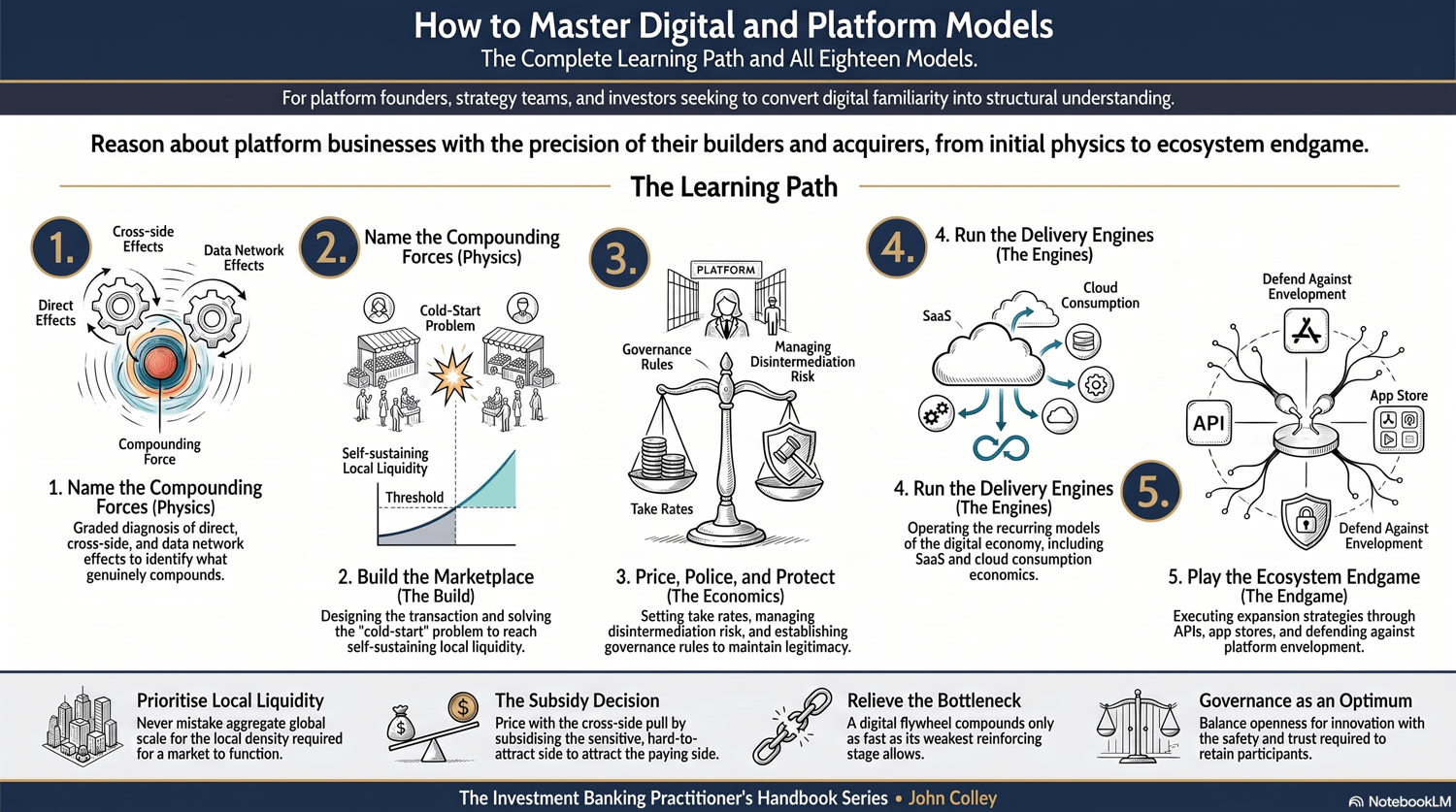
Direct Network Effects, Indirect Network Effects, Data Network Effects, the Two-Sided Marketplace, the Multi-Sided Platform, the Liquidity Model, Platform Governance, the API Economy, the App Store model, the Super-App, the SaaS Model, Cloud Consumption, the Creator Platform, the Digital Flywheel, the Cold Start Problem, Platform Envelopment, the Take Rate and Disintermediation Risk.
The learning path
The chapters are ordered as a single connected build, not an alphabetical list — from the network effects that make platforms defensible, through the marketplace, SaaS and API models built on them, to the flywheels, take rates and risks that decide whether they win.
Who it’s for
Founders, product and platform leaders, digital strategists and investors who must build, price or back a platform — and understand what makes one defensible.
How to use it
Work straight through to master the category, or jump to a single model when you need it for live work.
Book 13 of the Business Framework Library, part of The Investment Banking Practitioner’s Handbook Series. Master this category on its own, or reach for the Business Framework Compendium when you want the one-page reference to all 467 frameworks.
By John Colley — Cambridge University MA · MBA with Distinction, Bayes Business School · 30+ years in investment banking, M&A and private equity.