

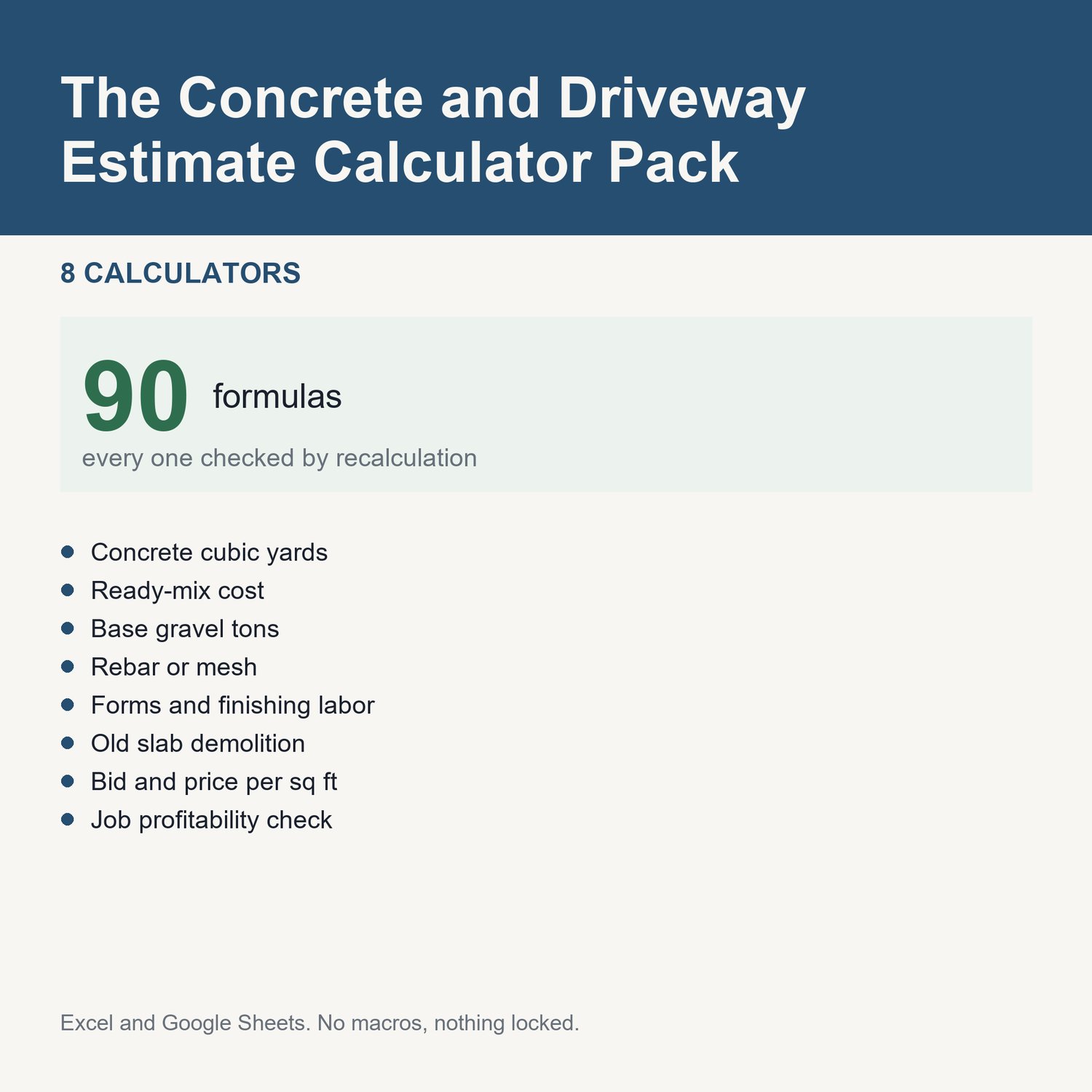
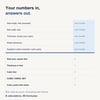

The Concrete and Driveway Estimate Calculator Pack: Eight linked calculators, every formula checked by recalculation
Eight calculators for estimating and bidding concrete flatwork from your own prices, your own spec and your own crew's speed: cubic yards from length, width and thickness with waste, ready-mix delivered with short-load and truck fees, base gravel tons from depth and density, rebar or mesh from area and spacing, forms and finishing labor from crew production rates, breaking out and hauling off an old slab, a bid from a target margin with its price per square foot, and a check of the job once it is poured. Start with sheet 1. In the worked example a 48 by 20 foot driveway at 4 inches takes 13.0 cubic yards and bids at $12.78 a square foot. Every figure is an example for you to overwrite; none of it is a claim about what concrete costs or sells for. Thickness, base and reinforcement are your specification: these sheets compute quantities and costs, not structural design. These are estimates, not financial advice. Every formula was recalculated and checked against an independent implementation before this shipped.
What is in it
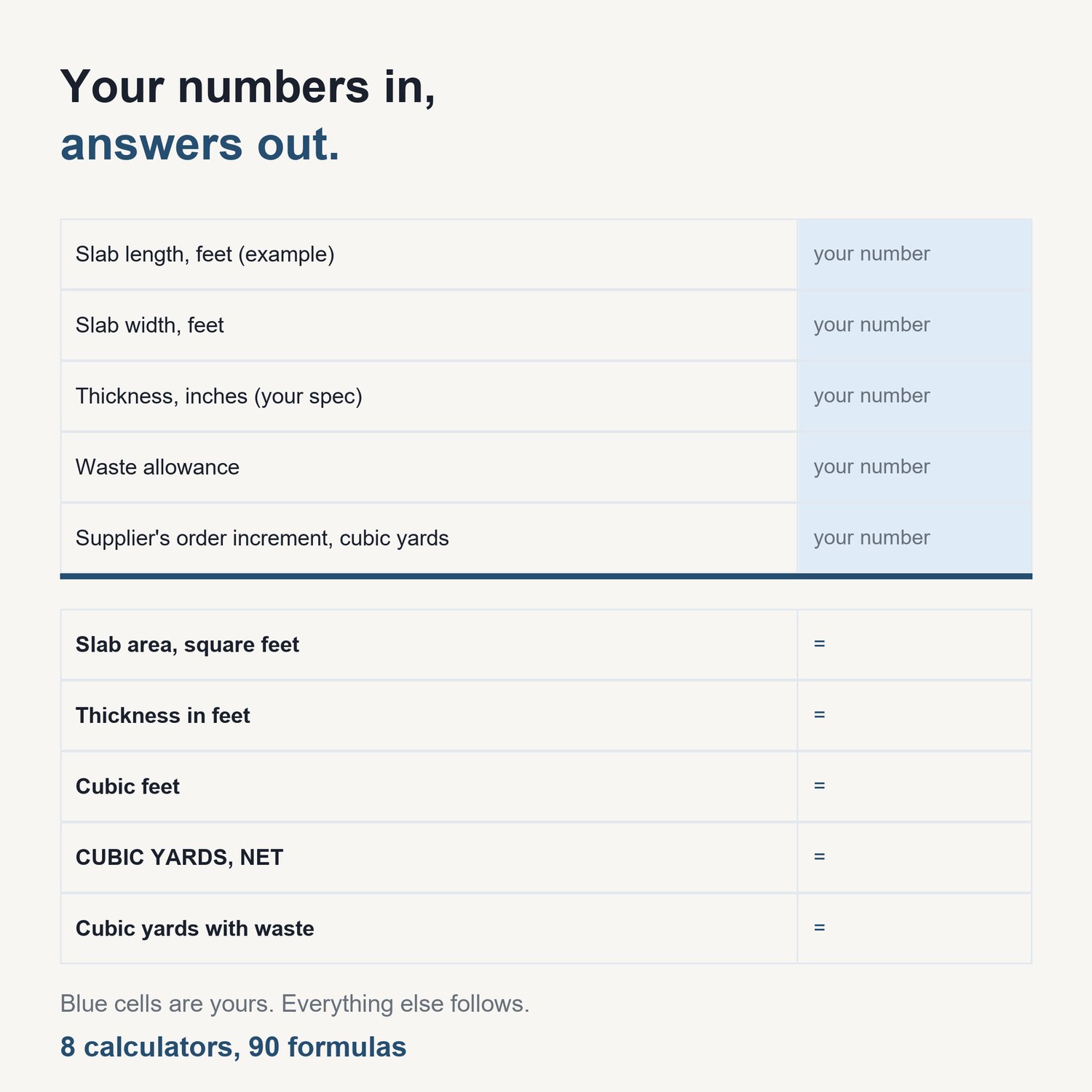
8 calculators, one per sheet. Overwrite the blue cells with your own numbers and everything else follows. Nothing is locked, there are no macros, and it opens in Excel, Numbers, LibreOffice and Google Sheets.
- Concrete cubic yards: What volume of concrete does this slab take, with waste, and what do you order?
- Ready-mix cost: What does the concrete cost delivered, with short-load and truck fees?
- Base gravel tons: What tonnage of base gravel does the slab need, and what does it cost delivered?
- Rebar or mesh: How much rebar or wire mesh does your spec take, and what does each cost?
- Forms and finishing labor: What crew days, labor and form materials does this slab take at your crew's speed?
- Old slab demolition: What does breaking out and hauling off the old slab cost?
- Bid and price per sq ft: What bid gives your target margin, and what is that per square foot?
- Job profitability check: Did the pour make what the bid said it would?
Every formula was checked
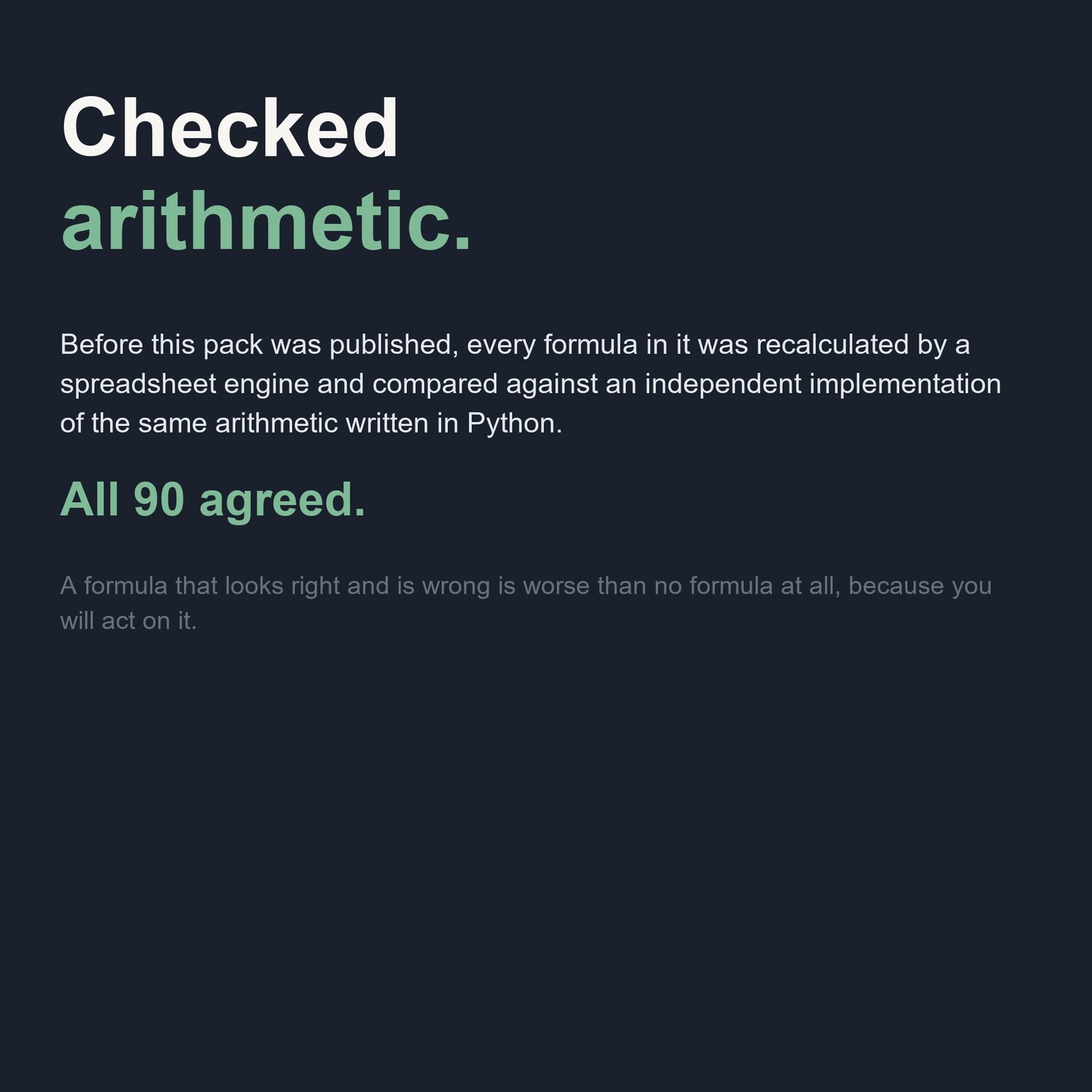
This pack contains 90 formulas. Before it was published, every one of them was recalculated by a spreadsheet engine and compared against an independent implementation of the same arithmetic written in Python. All 90 agreed to within a cent, and the workbook carries a Verification sheet saying so.
That is an unusual thing to be able to claim about a spreadsheet, and it is the main reason to buy this one rather than download a free template. A formula that looks right and is wrong is worse than no formula at all, because you will act on it.
What each calculator assumes
There is a sheet listing this, because a calculator that hides its assumptions is just a number generator:
- A rectangle of even thickness. For an L-shaped or curved slab, split it into rectangles and add the yards. Thickness is your specification; this sheet computes volume, not what a slab needs to carry.
- Fees are the ones your supplier quotes; the sheet has no figures of its own. Whether a plant will split a load evenly is the plant's call. Pump truck or conveyor charges go on the bid sheet as other costs.
- Base depth, how far it runs past the slab and the compaction allowance are your specification. Excavating the soil to make room for the base is not costed here; add it as other costs on the bid sheet if the job needs it.
- Bars run both ways at one spacing, each the full slab length less the edge clearance. Laps are counted at each splice. No claim is made about which reinforcement, bar size or spacing a slab needs: that is your engineer's, your code's or your own specification.
- Production rates are crew rates: the whole crew working together. Joints run full width and length at one spacing. Stripping forms on a later day is counted in hours, not as a separate trip; add a trip on the bid sheet if it needs one.
- The old slab is one even thickness. Rebar or mesh in the old slab slows break-out; lower the rate if you find it. One driver hauls while the rest of the crew keeps working.
- Overhead is spread evenly across jobs. The price per square foot is this job's; a smaller slab carries the same overhead share and truck fees over fewer feet, so price it on its own numbers rather than at this rate.
- Every hour is costed at the same labor rate. Change orders the customer paid for (a wider apron, a thicker section) should be added to the bid before comparing, or they show up as an overrun.
What this is not
Not financial, tax or legal advice, and not a recommendation to buy, sell, borrow or sign anything. These are calculators: they show what a choice costs, not which choice is right for you. Where a published rate or threshold is used it is the one current when the pack was built; those change, the arithmetic does not.
Honest about the format
One .xlsx workbook, 8 calculator sheets plus Start Here, Assumptions and Verification. Not a PDF, not a physical product, not a Notion template. Available immediately after purchase; nothing ships.
Refunds
If this isn't what you expected, email me within 30 days and I'll refund you in full. No need to explain. Because it's an instant download I can't take the file back, so I'd rather you just had your money back.