


Introduction to Machinability
Introduction to Machinability
Abstract
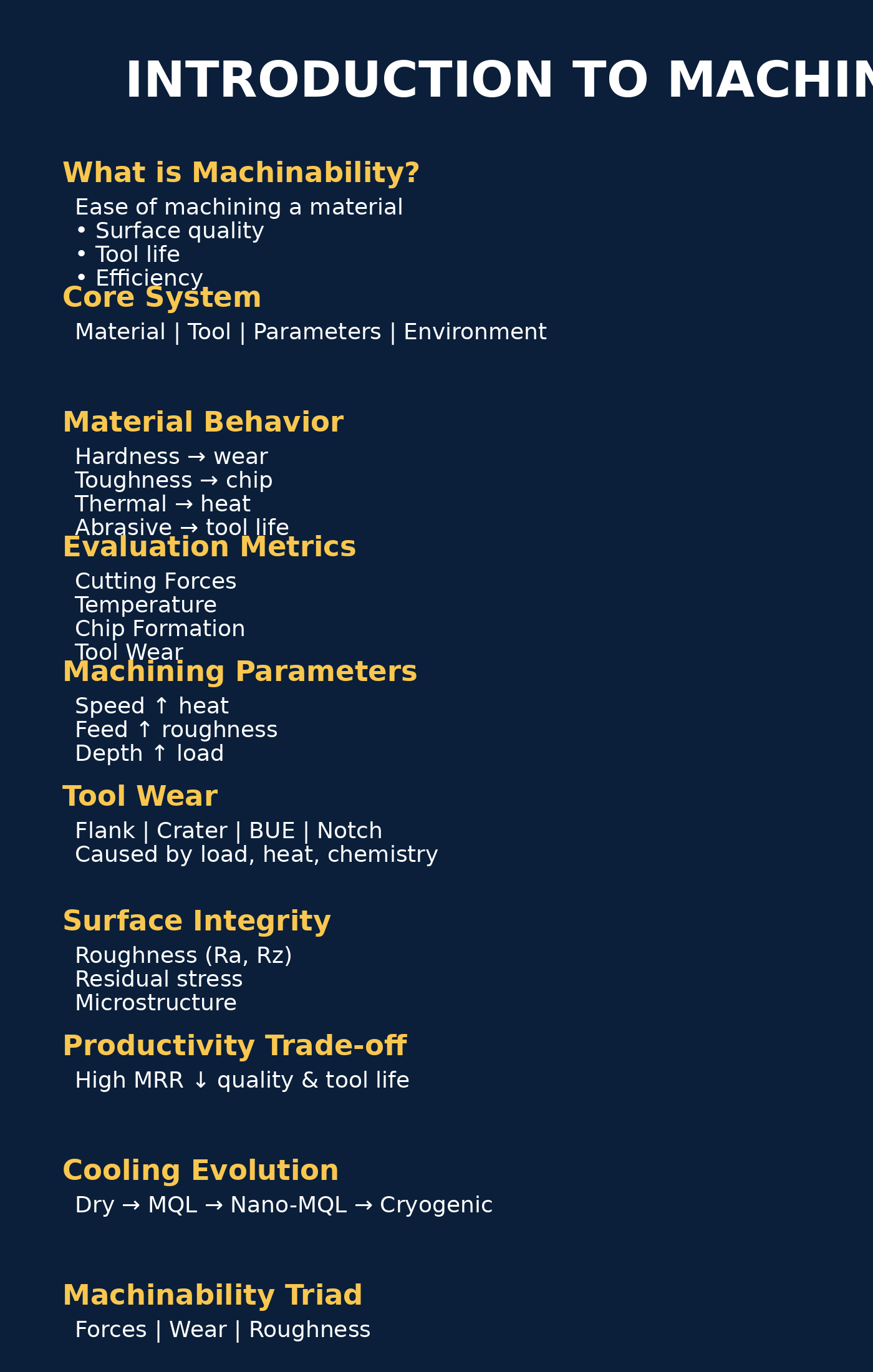
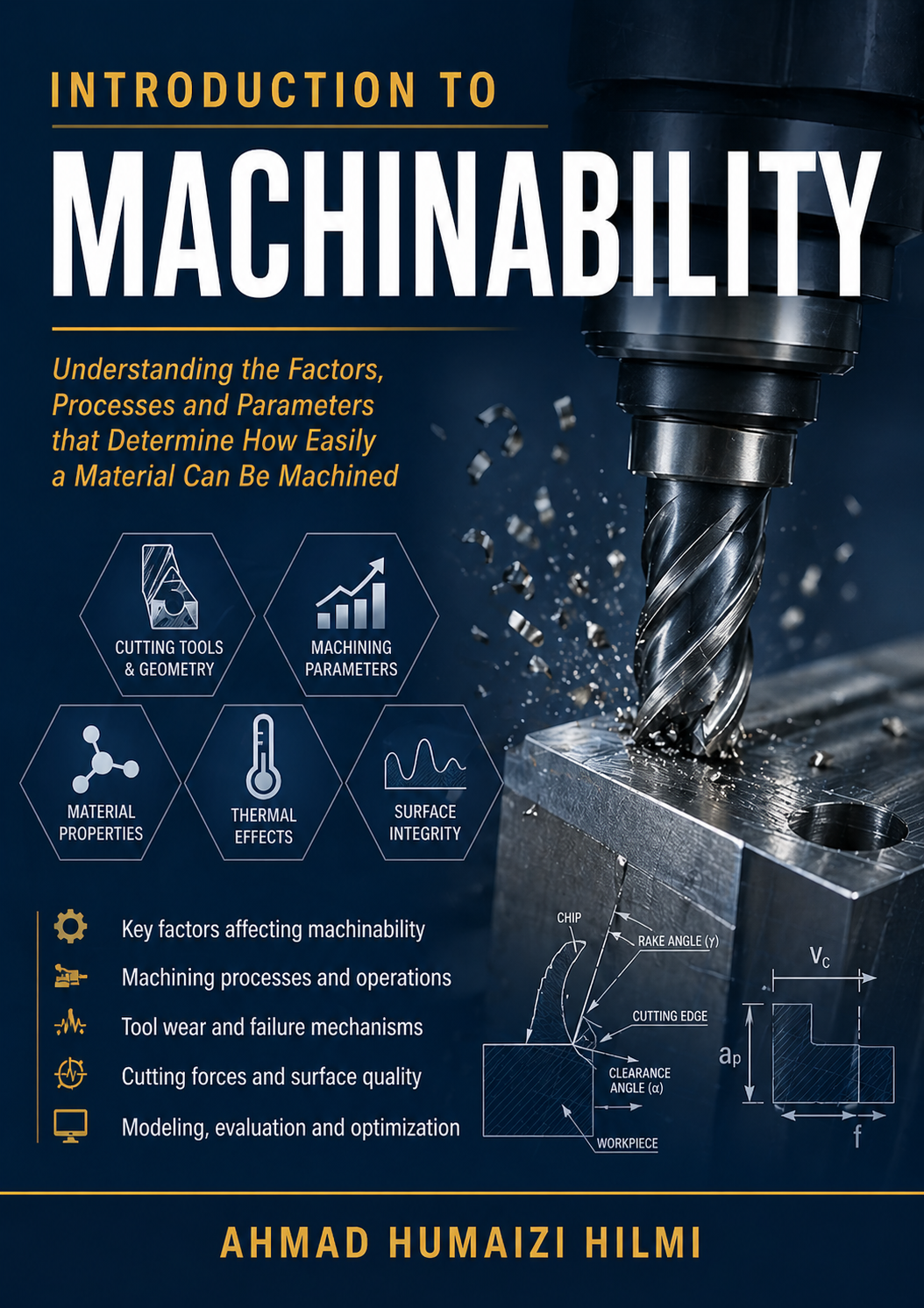
Machinability, defined as the ease with which a material can be machined to achieve desired surface quality and tool longevity, is crucial in manufacturing processes. This review synthesizes fundamental principles underlying machinability, including the effects of material hardness, toughness, thermal conductivity, and abrasiveness on cutting dynamics. Key machinability metrics such as surface roughness, material removal rate, tool wear, cutting forces, and temperatures are examined, alongside the influence of cutting parameters and cooling techniques. Measurement techniques involving surface profilometry, tool wear assessment, and force sensing are discussed, highlighting innovations in experimental setups. Common challenges and errors in measurement—including equipment inaccuracies, environmental effects, and operator variability—are analyzed, along with material-specific considerations for alloys like titanium and superalloys that present unique machining difficulties. This review underscores the pivotal role of accurate machinability assessment for process optimization and benchmarking while identifying gaps for future research in advanced measurement technologies and error mitigation strategies.
Keywords: machinability, tool wear, surface roughness, measurement techniques, cutting forces, material-specific variations, measurement errors