
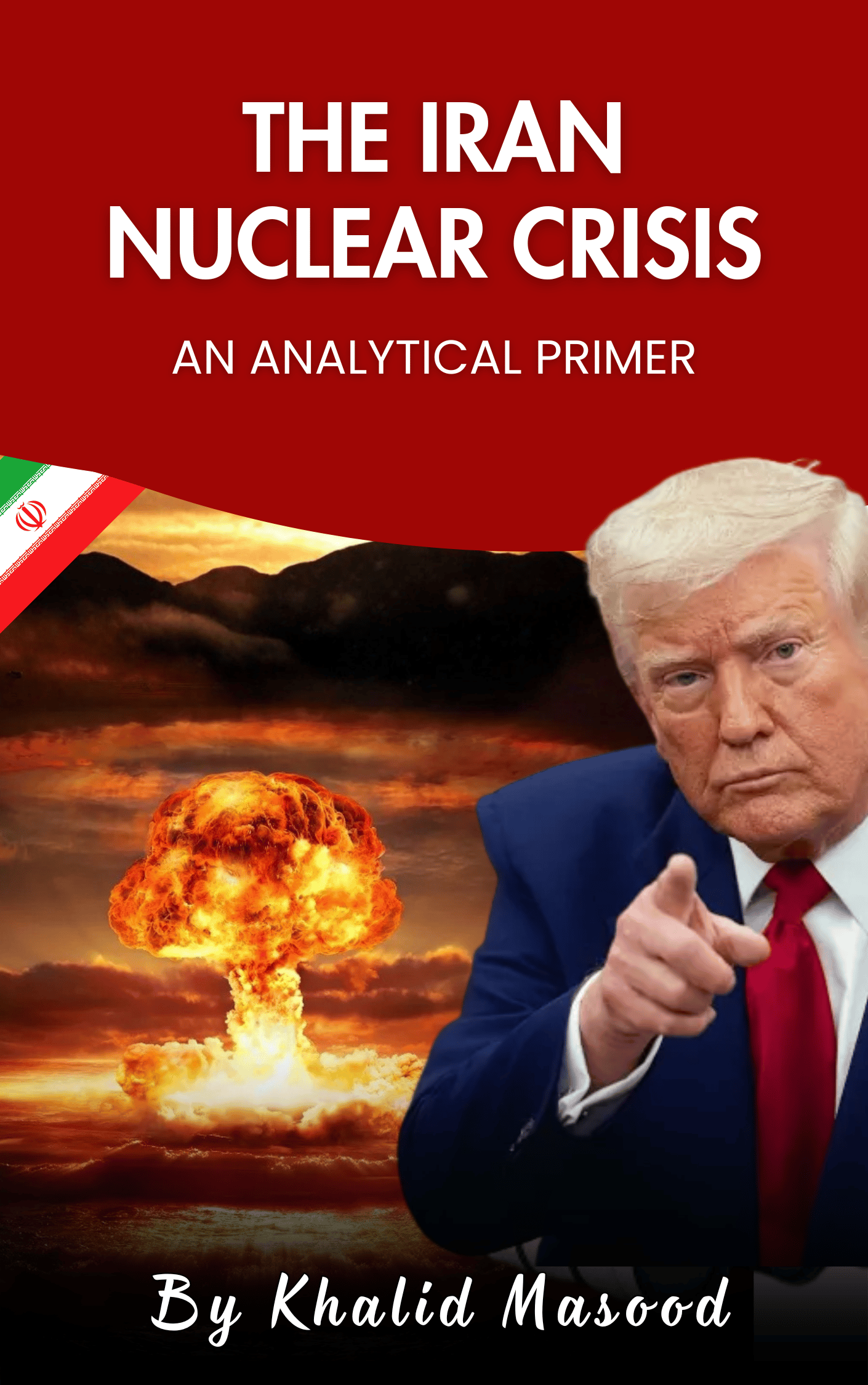
THE IRAN NUCLEAR CRISIS
The Iran Nuclear Crisis: An Analytical Primer
A Field Guide to the Most Dangerous Standoff of Our Time
What You Need to Know—And What the Headlines Won't Tell You
On May 11, 2026, President Donald Trump issued an ultimatum: "We will get their uranium." Iran responded in kind. The talks collapsed. The Strait of Hormuz bristled with warships. And the world edged closer to a conflict that could reshape the Middle East, spike oil prices past $120 a barrel, and trigger a nuclear arms race across three continents.
But here is what the breaking-news alerts won't explain:
Why Iran will never surrender its nuclear program on American terms.
Why a military strike would guarantee the weaponization it seeks to prevent.
Why sanctions have failed—and how Tehran learned to sell oil the world pretends not to buy.
Why Saudi Arabia, Turkey, and Egypt are quietly preparing their own nuclear options.
Why this crisis is not about 2026. It is about 1953, 1979, and every broken promise since.
This primer gives you the scaffolding to understand any headline that emerges from this crisis—not with hysteria, but with clarity.
What You Get
9 Chapters | 26,000+ Words | Living-Document Updates
Table
Part I: FoundationsThe 70-year history of distrust, the JCPOA's rise and fall, and why the May 2026 talks collapsed over proxies, not uranium.Part II: The MachineNatanz, Fordow, and the physics of ambiguity—why Iran stops at 60% enrichment and what that choice reveals.Part III: The WebHezbollah, the Houthis, Iraqi militias, and the shadow fleet that keeps Tehran funded despite sanctions.Part IV: The HorizonThree scenarios for 2026–2030: the Libya model, the North Korea model, and the "forever crisis" that may already be here.
Plus: Technical glossary, facility profiles, timeline, and a curated bibliography for deeper research.
Written for Readers Who Think
- Policy professionals who need context faster than classified briefings can deliver it.
- Journalists and editors covering the crisis from newsrooms without regional expertise.
- Investors and energy analysts tracking the Hormuz premium and sanctions-evasion flows.
- Students and researchers building foundational literacy in nonproliferation and Middle East security.
- Citizens tired of being shouted at and hungry for understanding.
Foreword by Brigadier Abdul Ghafoor (Retd)
"The author has done the hard work of structure so that you can do the essential work of thinking."
A senior military practitioner's perspective on why surgical solutions seduce—and why they fail.
A Living Document
Geopolitics does not stand still. Neither does this book.
Edition 1.0 is current as of May 2026. Purchasers receive one complimentary update to the current-events chapter within 90 days as the situation evolves. You are not buying a snapshot. You are buying a relationship with a disciplined analyst who writes daily about the fault lines of our world.
The Bottom Line
The question is no longer "Can Iran get the bomb?"
The question is: "Who will stop them, and at what cost to the global order?"
The answer may be: no one.
And that is the real story.
[BUY NOW — $2.99]
Available in PDF, EPUB, and Kindle formats. Instant download.
P.S. If you read one thing before tomorrow's headlines break, make it Chapter 4: "The Suez Paradox—Why Military Strikes Fail." It will change how you read every "limited strike" proposal that crosses your feed.