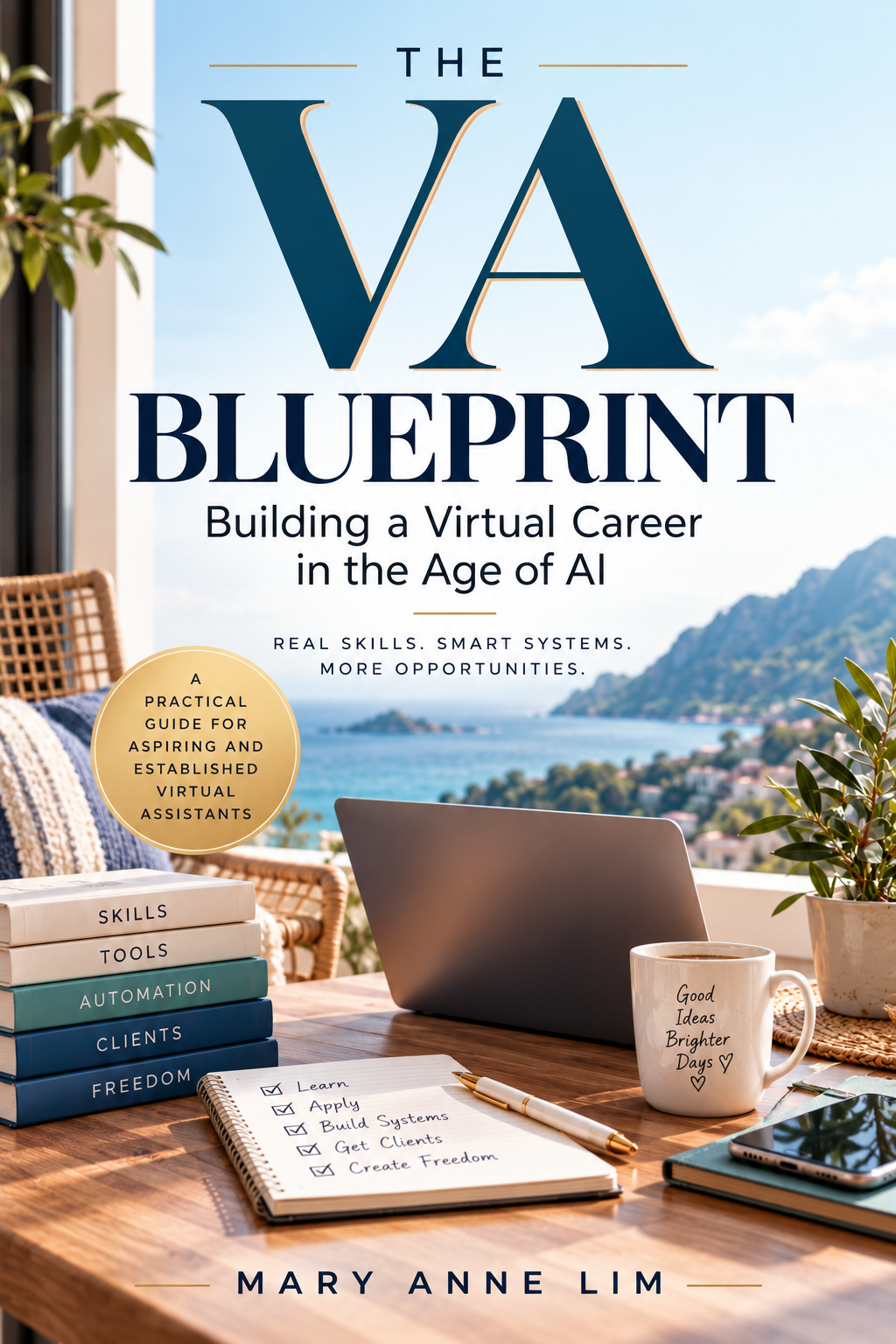
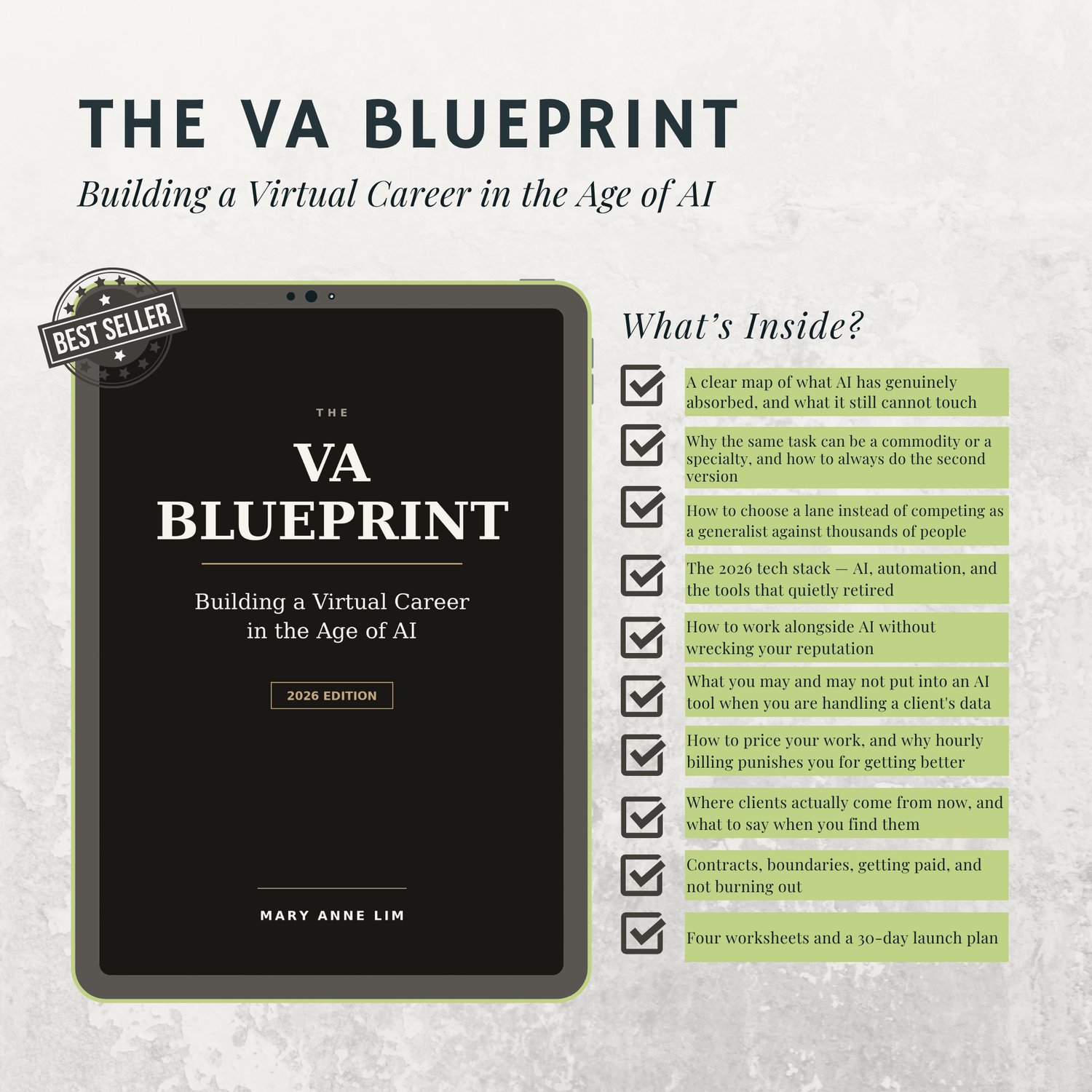

THE VA BLUEPRINT: Building a Virtual Career in the Age of AI
In 2024 I wrote a guide to becoming a virtual assistant. Two years later, half of it was no longer true.
The tasks that used to get a beginner hired — formatting documents, drafting captions, summarizing meetings, tidying up data — are the tasks a business owner now does in ten minutes with a chatbot. That entry rung is gone. No amount of encouragement puts it back.
But something else happened at the same time, and almost nobody is talking about it.
Businesses have more tools than they have ever had and less idea how to run them. Five subscriptions that don't talk to each other. An AI writing tool producing content nobody reads. Three automations somebody built once and nobody maintains. What they need now is a person who can hold the whole picture, make decisions inside it, and be accountable for the outcome.
That person earns considerably more than a general VA did in 2024.
This is the rebuilt edition — not a refresh. Five new chapters, a new spine, and an honest accounting of what changed.
WHAT'S INSIDE
- A clear map of what AI has genuinely absorbed, and what it still cannot touch
- Why the same task can be a commodity or a specialty, and how to always do the second version
- How to choose a lane instead of competing as a generalist against thousands of people
- The 2026 tech stack — AI, automation, and the tools that quietly retired
- How to work alongside AI without wrecking your reputation
- What you may and may not put into an AI tool when you are handling a client's data
- How to price your work, and why hourly billing punishes you for getting better
- Where clients actually come from now, and what to say when you find them
- Contracts, boundaries, getting paid, and not burning out
- Four worksheets and a 30-day launch plan
WHO IT'S FOR
Two readers. People starting from nothing who want a realistic path in — not a promise about laptops on beaches. And working virtual assistants who can feel the ground shifting and want to be on the right side of it. Sections marked "If you're already working" are written for the second group.
ABOUT THE AUTHOR
Mary Anne Lim began working as a virtual assistant in 2012, when the role barely had a name and there were almost no resources for learning it. She started as a single mother with three young children who needed work that let her earn and be present at the same time. Fourteen years later she works as an email marketing and automation specialist and teaches this career to others.
She writes about it honestly, including the parts that are hard — the burnout, the income insecurity, the invisibility of good operational work. Her position is that this path is not right for everyone, and that the people it is right for deserve better information than she had.
This book is not a promise. It is a map, from someone who walked the route without one.