

Pet peeves & weird habits
PET PEEVES & WEIRD HABITS — B1 Speaking Activities
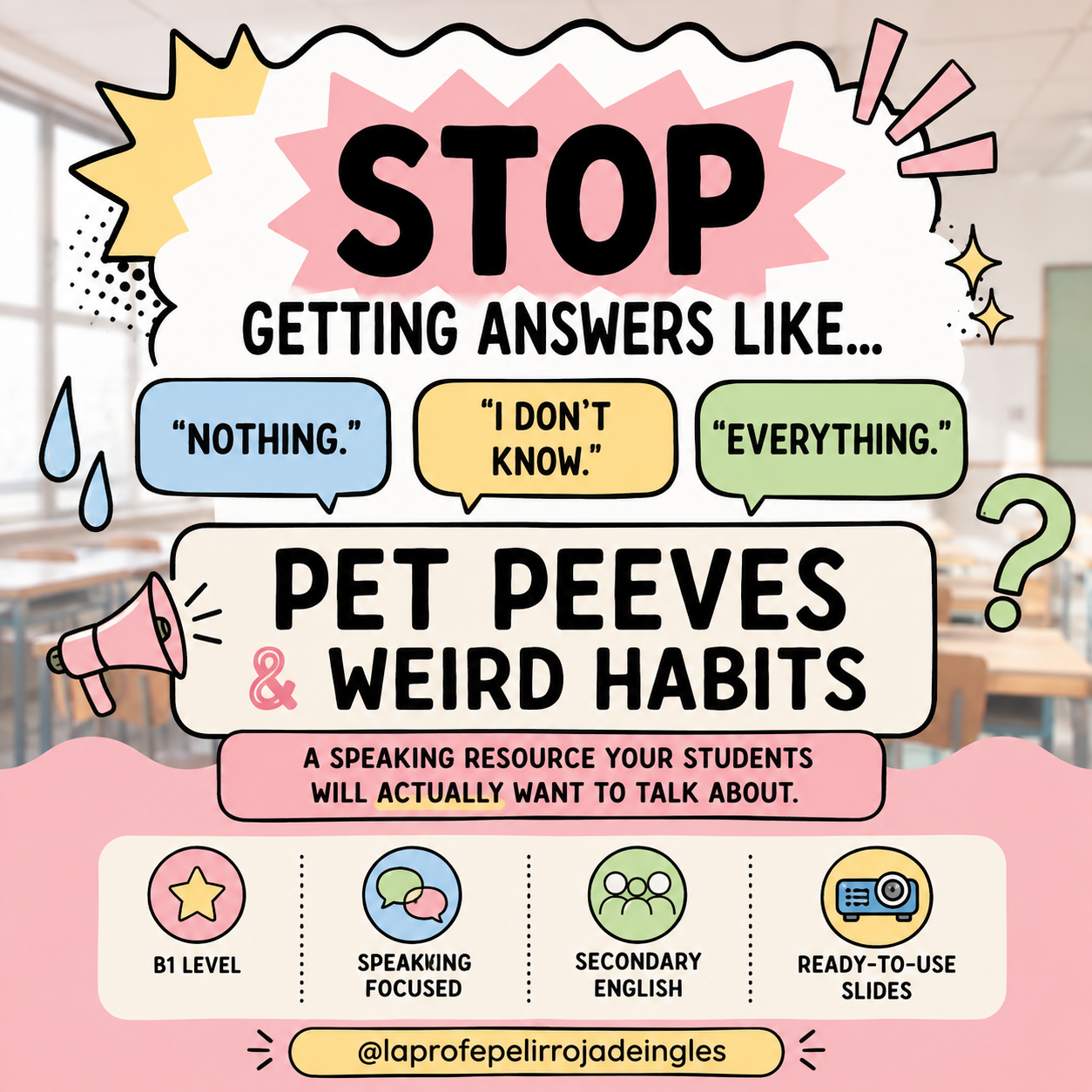
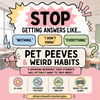
“Nothing.”
“I don’t know.”
“Everything.”
If these are the answers you keep getting during speaking activities, maybe your students don’t need more questions.
Maybe they need something they actually want to talk about.
Pet Peeves & Weird Habits is a ready-to-use B1 speaking resource designed to turn one-word answers into real opinions, reactions, debates and conversations.
Instead of forcing students through speaking prompts they have nothing to say about, this resource gives them relatable, funny and sometimes controversial topics that naturally make them want to react, agree, disagree and explain themselves.
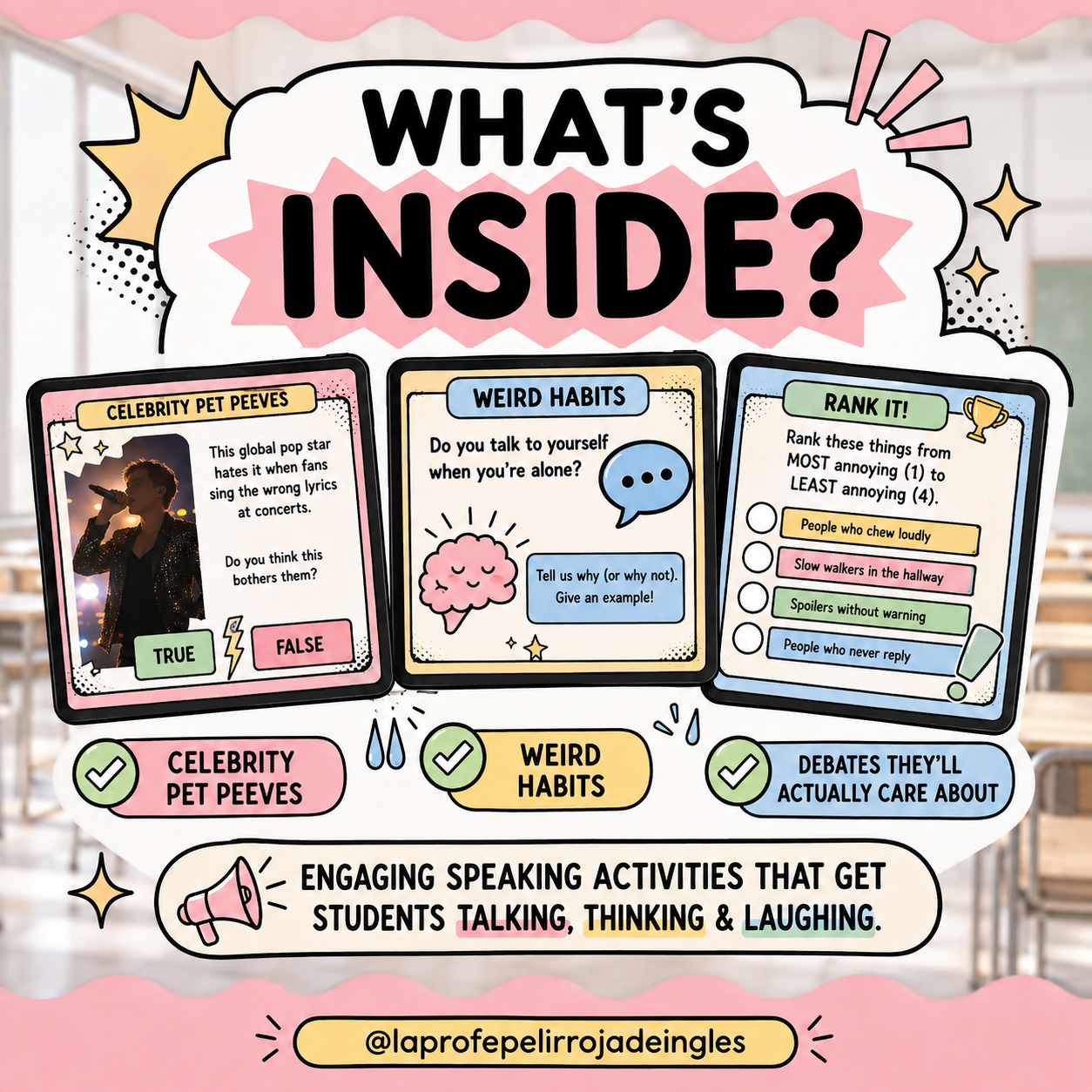
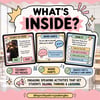
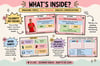
🗣️ What’s included?
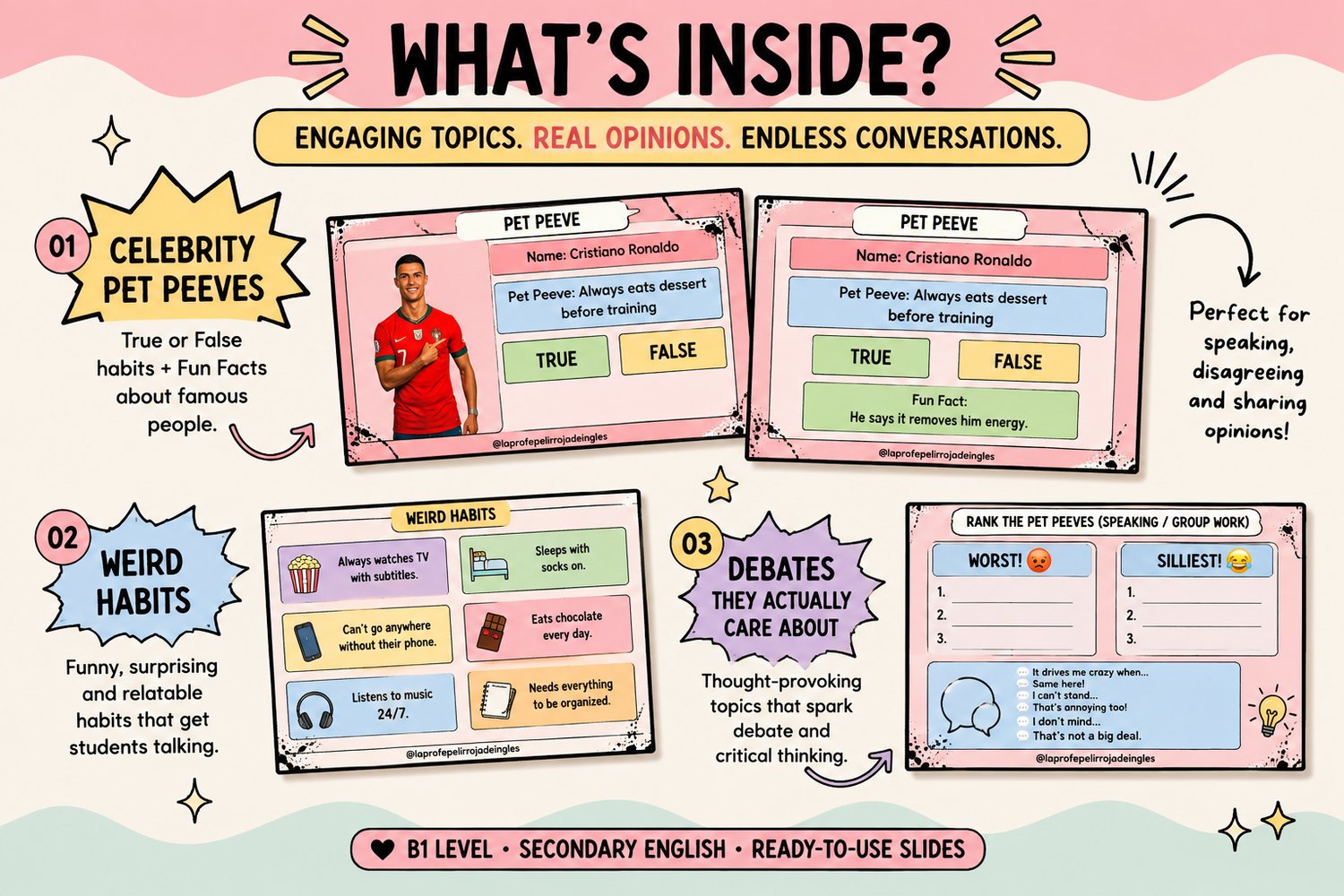
⭐ Celebrity Pet Peeves
Students guess whether surprising pet peeves and habits about famous people are true or false, discover the answer and use it as a starting point for discussion.
🤪 Weird Habits
Relatable and funny habits that encourage students to compare themselves with others, share experiences and explain their opinions.
🔥 Pet Peeves & Debates
Students rank annoying behaviours, decide what crosses the line and discuss situations where there isn’t necessarily one “correct” answer.
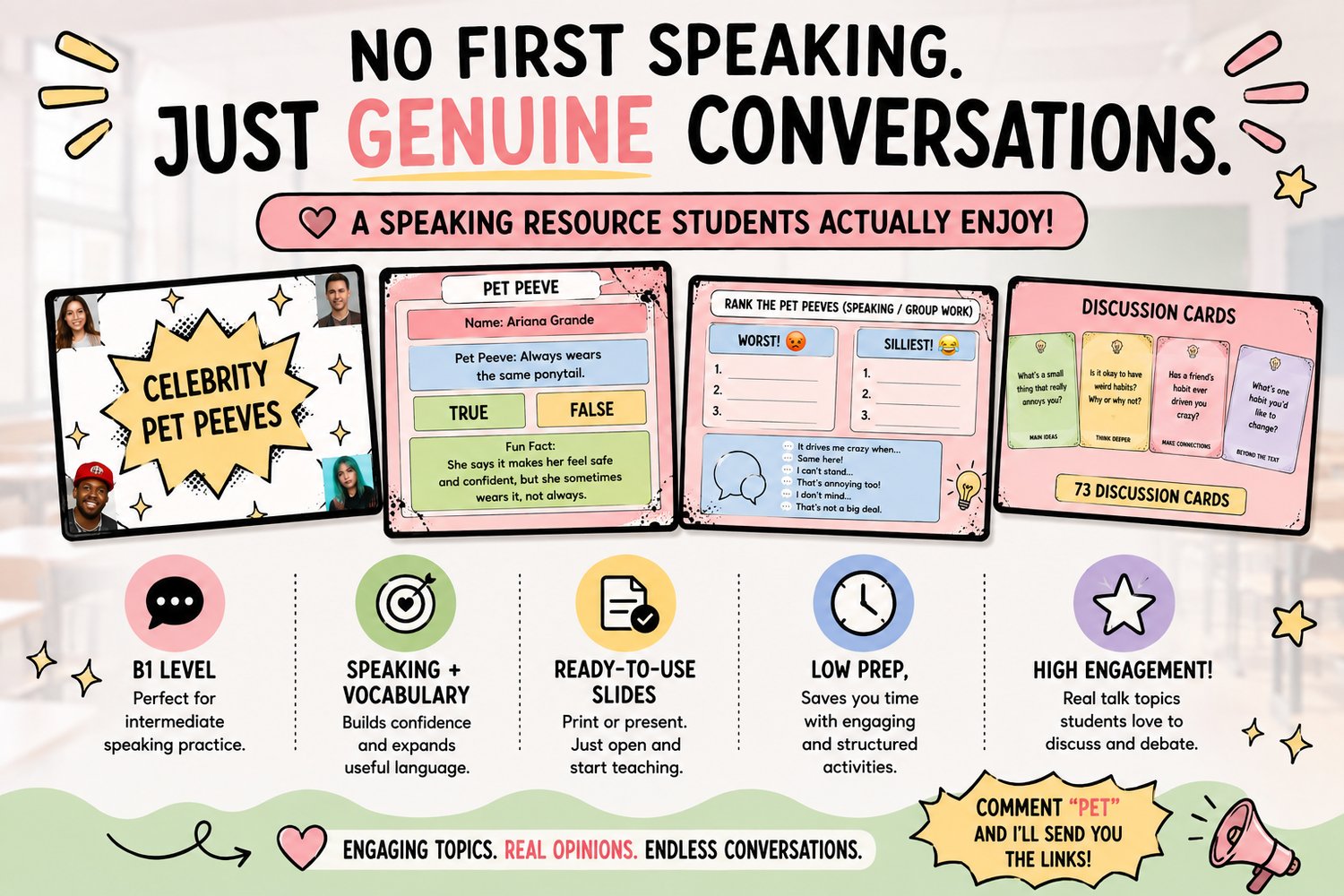
💬 Speaking language & vocabulary
Useful expressions such as I can’t stand…, It drives me crazy when…, Same here!, That’s annoying too! and more, helping students move beyond basic answers and express themselves more naturally.
👥 Individual, pair and group speaking opportunities
Activities designed to get students reacting to each other — not simply answering the teacher and waiting for the next question.
✨ Perfect for...
✔️ B1 / intermediate English learners
✔️ ESL, EFL and English language classes
✔️ Teenagers and secondary-age students
✔️ Speaking lessons and conversation classes
✔️ Vocabulary development
✔️ Pair work and group work
✔️ Teachers looking for low-prep, high-engagement activities
✔️ Lessons where students need a little extra push to actually TALK
💛 Less prep. More actual conversation.
The slides are ready to use, so you can open the resource, project it and start.
No complicated preparation.
No awkward forced speaking.
No endless “I don’t know.”
Just engaging topics, useful language and genuine conversations.
Because sometimes the problem isn’t that students don’t want to speak.
They just haven’t been given something they want to speak ABOUT.