
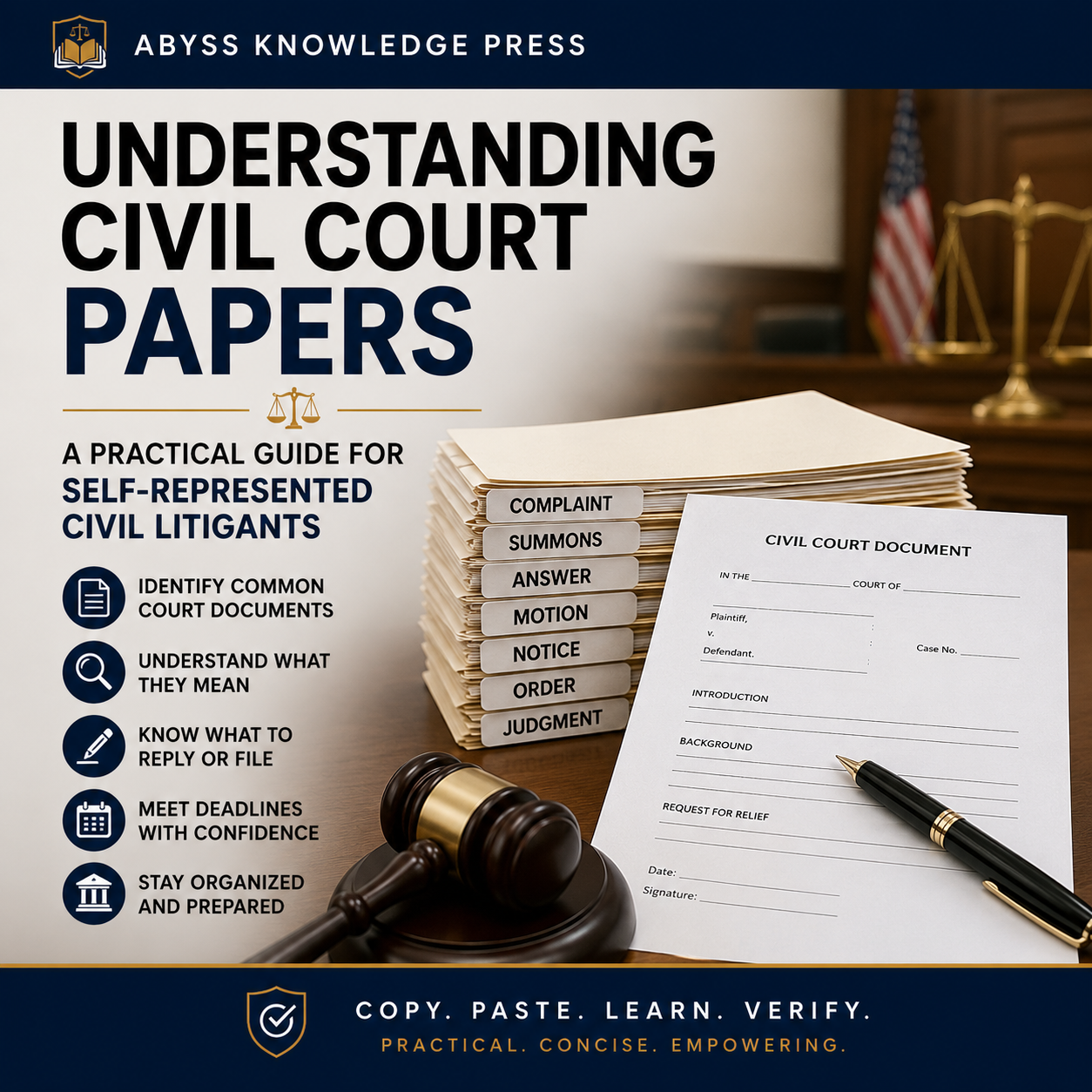
Understanding Civil Court Papers — A Practical Guide for Self-Represented Civil Litigants
Receiving civil court papers can be confusing when you do not know what the documents mean or what you are expected to do with them. Understanding Civil Court Papers provides a concise introduction to common documents used in civil court and helps self-represented litigants understand what to look for.
This practical guide explains the purpose of common court papers and helps you identify important information, deadlines, and possible next steps.
Inside the Guide
Recognizing common civil court documents
Understanding complaints and summonses
Identifying notices, motions, orders, and judgments
Finding important names, dates, case numbers, and deadlines
Understanding why different court documents are used
Organizing the papers you receive and file
Knowing when a document may require a response or other action
Finding and verifying information through official court resources
Copy. Paste. Learn. Verify.
This guide is intended for educational and informational purposes. It is not legal advice and does not replace advice from a qualified attorney. Court documents, terminology, forms, procedures, and deadlines vary by jurisdiction and type of case and may change. Always verify the requirements that apply to your case with the appropriate court or another authoritative source.