
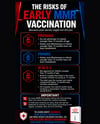
The Vaccine Insert Handbook: From Birth Through Teens
The information exists. Most people haven’t seen it.
How informed are we about the vaccines we are being asked to trust?
For most people, the honest answer is: not very.
The uncomfortable reality is that the most important documents about childhood vaccines are rarely reviewed in full by the people most directly involved in deciding whether they will be administered. Most parents, and even many medical professionals, have never closely examined the official regulatory records that contain the kind of information any meaningful informed-consent discussion should include.
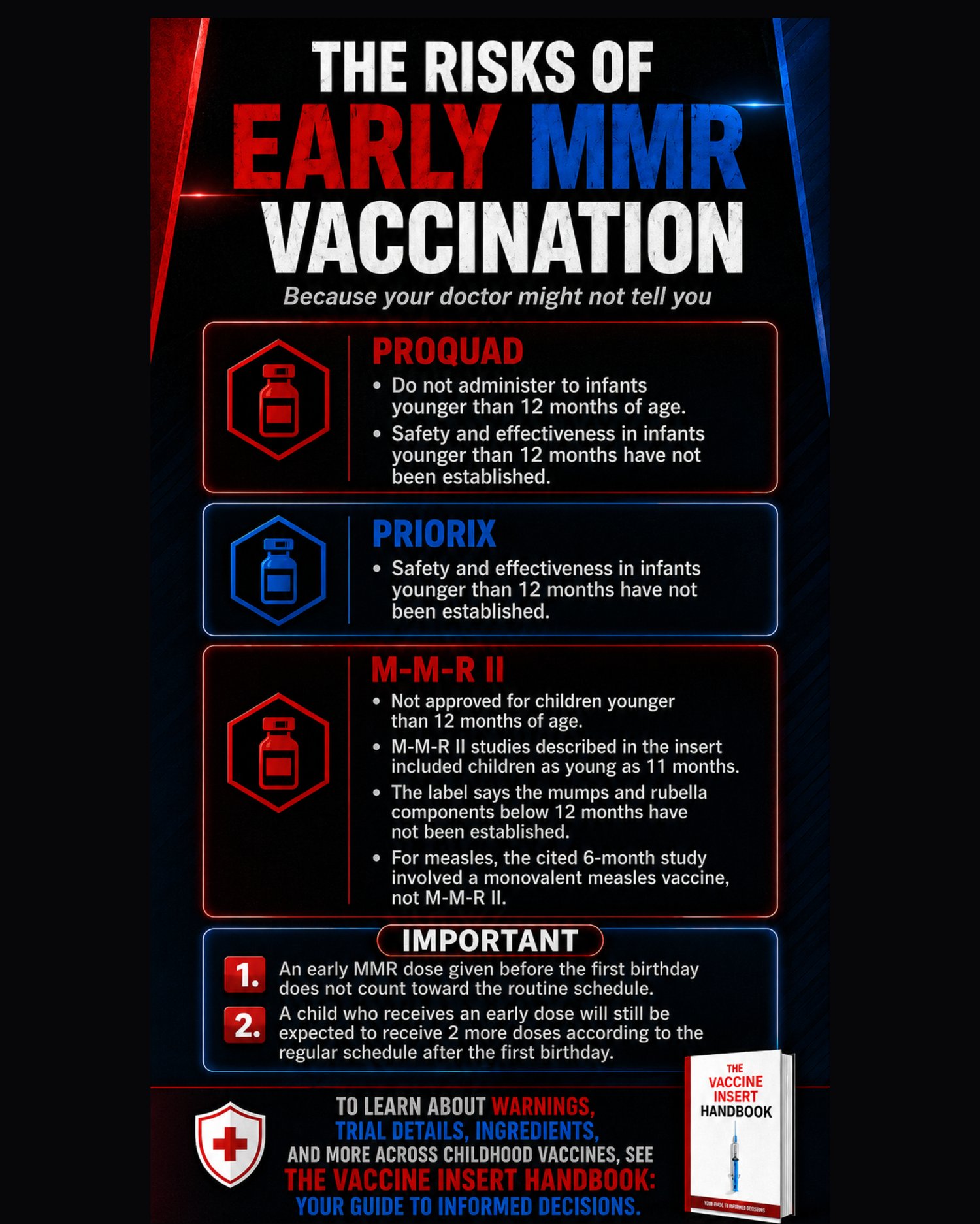
These regulatory records, known as vaccine package inserts, contain answers to the central questions every parent and medical professional should be asking:
• Who is the manufacturer of the vaccine?
• How long was each vaccine studied before approval?
• Who were the vaccines tested on, and how large were the study populations?
• Who conducted and funded the studies?
• What control groups were the vaccines compared against in clinical trials?
• How long were participants monitored for safety, and what adverse outcomes were reported?
• What ingredients are contained in the vaccine?
• Were the vaccines evaluated for long-term health outcomes?
• Who is the vaccine approved for, and who is contraindicated?
• What assumptions have been made, and what limitations or gaps exist within the available data?
Although these records are publicly available, they are not easy to navigate. Written in dense regulatory language and spread across lengthy technical documents, the most important details are often difficult to locate, compare, and understand in context.
The Vaccine Insert Handbook: From Birth Through Teens compiles these critical details directly from official regulatory filings into a clear, easy-to-read reference guide organized according to the ages at which vaccines are commonly administered throughout childhood. It reviews routine childhood vaccines widely recommended across many national immunization programs, along with additional special-circumstance, international, and travel vaccines, offering readers a broader view of childhood vaccination beyond any single country’s schedule.
This first-of-its-kind handbook is grounded in the manufacturer’s own regulatory disclosures. Each chapter begins with the official record itself, then offers a clearly labeled terrain-based perspective that considers the child as a whole, evolving biological system shaped by environment, health, and cumulative exposures over time.
Beyond individual vaccine reviews, this handbook reveals the larger pattern: how childhood vaccination unfolds across infancy, childhood, and adolescence as a cumulative schedule rather than a series of isolated decisions. Dense medical and regulatory language is explained in clear, readable terms so readers can follow the evidence, compare products, and see the bigger picture without needing a medical background.
In a world flooded with marketing slogans, headlines, assumptions, simplified narratives, and conflicting claims, this handbook gives readers something far more valuable: a way back to the source. It cuts through the noise by organizing the official records behind vaccine approvals into a clear, readable guide families can actually use.
This book does not ask the reader to accept any predetermined conclusion, nor was it written to inspire fear or distrust. It was written to bring the official record into clear view, provide a contrasting perspective, and help readers examine the evidence with clarity, confidence, and discernment.
Because trust can only be built upon informed understanding.