
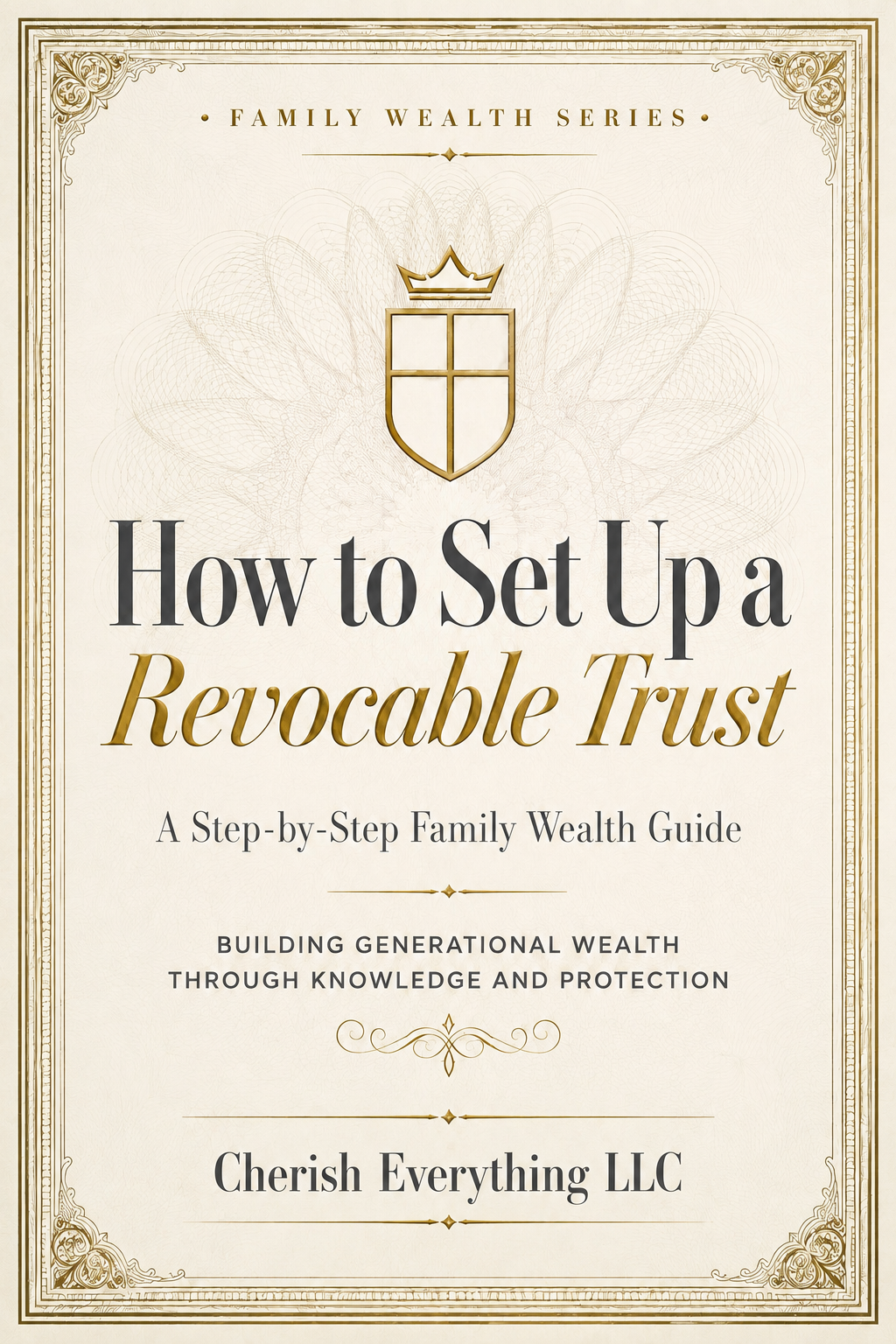
The Family Wealth Workbook — Revocable Trust Fill-In Documents
You know you need a trust. Now what do you actually write down?
That’s where almost everyone stops.
You’ve read the articles. You understand what a revocable living trust does. But nobody tells you what a completed document is supposed to look like, what your attorney is going to ask for, or what to bring so the meeting doesn’t cost a fortune.
This is the paperwork, in one place, ready to fill in.
41 pages. 21 documents. 933 fill-in fields. What’s inside
Worksheets — start here
Asset inventory. Choosing your people. Beneficiary planning, including the one column most people leave blank that causes the most family litigation. And an attorney meeting prep sheet that shortens your first appointment enough to notice on the bill.
Core documents
Revocable Living Trust Agreement · Schedule A · Certification of Trust · Pour-Over Will · Self-Proving Affidavit · Durable Financial Power of Attorney · Medical Power of Attorney · Living Will · HIPAA Release · Digital Assets Authorization
Funding documents — the step everyone skips
Bill of Transfer for personal property · Deed information worksheet · Business interest assignment · Trust funding letters to your bank · A 22-line master funding checklist
Administration documents
Successor Trustee Affidavit · Trust Amendment · Revocation · Personal Property Memorandum · Letter of Instruction · Family Wealth Binder Index
Plus signing instructions for every document and an annual review checklist.
Three formats included
Fillable PDF — type directly into it and save. Works on your phone, tablet, or computer.
Printable PDF — clean blanks for pen and paper.
Editable Word file — for anything you want to adjust.
One purchase, all three.
Why this exists
Most people who buy an estate plan never finish it. Not because the law is hard — because the administrative work is invisible until you’re in it, and nobody hands you the list.
The unfunded trust is the single most common failure in do-it-yourself estate planning. Someone pays for documents, signs them in front of a notary, files them in a binder, and feels finished. The house is still in their own name. Every asset goes through the exact probate they were trying to avoid.
This workbook is the list. Every document, every worksheet, every checklist, in the order the work actually happens.
Who this is for
• You own a home and want it to pass without probate
• You have children and no plan for who raises them
• You’ve been meaning to do this for three years
• You want to walk into an attorney’s office prepared instead of paying them to ask you basic questions
• You already have a trust and are not certain it was ever funded.
Who this is not for
If you want someone to prepare documents for you, hire an attorney. This is a workbook — you do the filling in.
And if your entire estate is a checking account, you may not need a trust at all. The free guide explains when a beneficiary designation does the same job for nothing.
Important
These are blank educational templates. They are not legal advice, and buying them does not create an attorney-client relationship.
Trust and estate law is state-specific. Have your completed documents reviewed by a licensed attorney in your state before you sign them.
What this workbook does is make that review fast and cheap, because you arrive with the work already done.
Instant download. All three formats.
FAQ SECTION
Is this legal advice?
No. These are blank educational templates. The author is not an attorney. Have your completed documents reviewed by a licensed attorney in your state before signing anything.
Will these work in my state?
The documents follow general United States practice, with Colorado-specific notes where marked. Requirements for signing, witnessing, notarizing, and recording differ by state — which is exactly why the workbook tells you to have your documents reviewed locally before you sign.
Can I really fill these in on my phone?
Yes. The fillable PDF has real form fields that work in most PDF readers on phone, tablet, and computer. There’s also a printable version if you’d rather use a pen.
Do I still need a lawyer?
Yes, and the workbook says so on nearly every document. What changes is what that lawyer costs you. Attorneys bill for the time it takes to extract information from you. Arriving with a completed inventory, named fiduciaries, and a beneficiary plan removes most of that time.
Why isn’t there a blank deed?
Because a blank deed does more harm than good. A deed requires the exact legal description from your currently recorded deed — not the street address — and counties reject filings that miss their formatting requirements. Fill in the wrong thing and you cloud your own title without knowing it. The workbook includes a deed information worksheet instead: capture everything a title company needs, hand it over, pay a small fee, and get it recorded correctly.
What if I already have a trust?
Then go straight to the funding section. Pull your deed and look at the name on it. If it says your name and not your trust’s name, you have work to do — and this is the checklist for it.
Is this a physical book?
No. Instant digital download in three formats.
Refunds?
[State your policy — for digital downloads, “all sales final due to the nature of digital products” is standard and enforceable if disclosed before purchase.]