
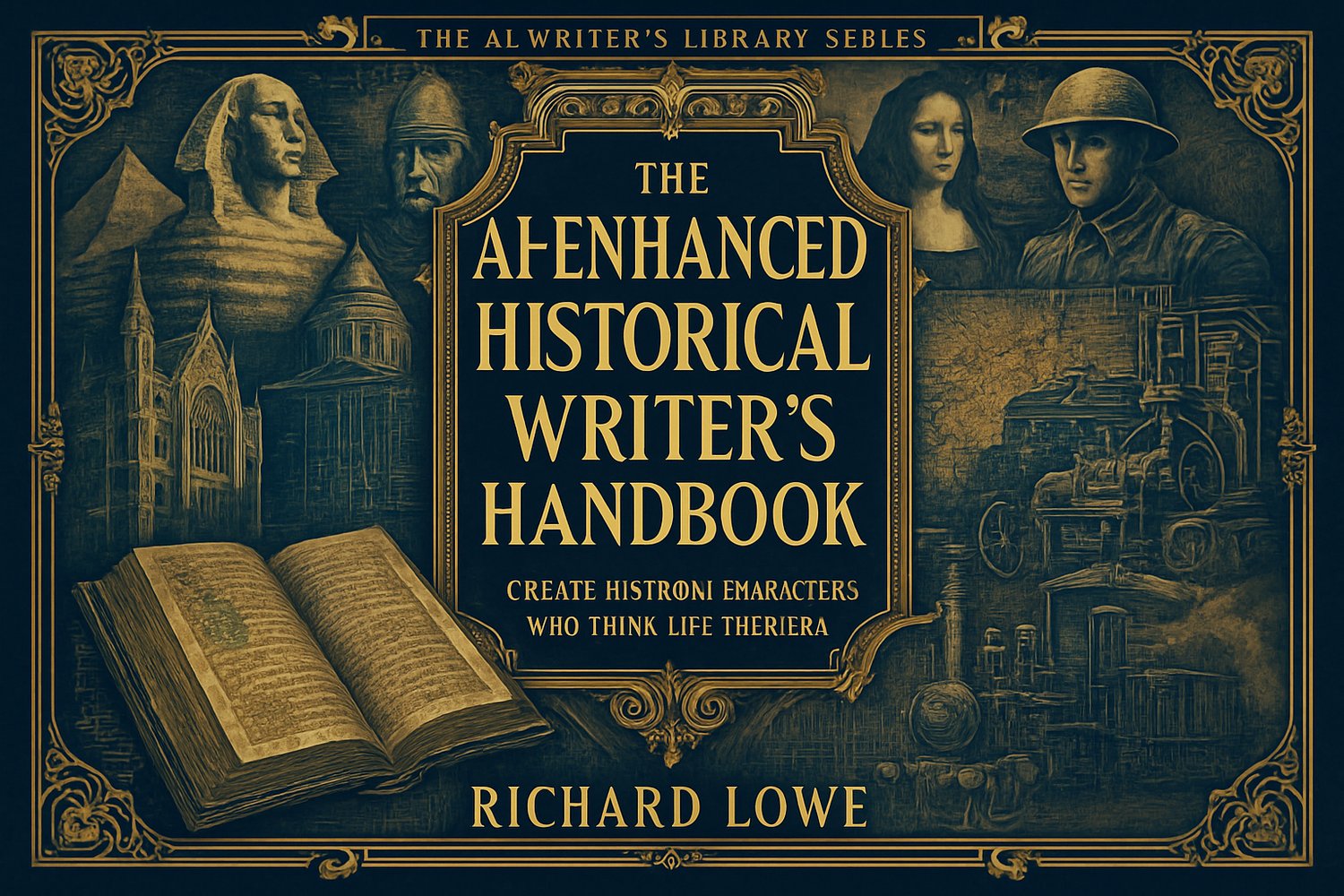
AI-Enhanced Historical Writer's Handbook
Stop Writing Modern People in Period Costumes
You've researched the armor, the castles, the customs. You know what they ate, how they traveled, when they bathed. Every historical detail is accurate. Your characters still sound like modern people dealing with quaint inconveniences.
A Roman senator who owned slaves wasn't a monster by his own cultural standards. A Victorian woman who accepted limited freedoms wasn't a victim waiting for rescue. A medieval peasant didn't dream about individual rights and social mobility.
They were fully realized humans operating under different assumptions about reality, morality, social relationships, and personal identity. Your job isn't to judge those assumptions. Your job is to understand them well enough that your characters' thoughts and actions feel inevitable given their circumstances.
Historical authenticity isn't about getting the costumes right. It's about understanding how people thought, felt, and made decisions within their cultural context. Readers forgive minor factual errors when the emotional truth feels right. They'll never forgive perfect facts wrapped around characters who think like 21st-century Americans in period dress.
The Three Levels of Historical Context
Most writers nail level one and wonder why their historical fiction feels flat. The difference between costume drama and authentic period fiction lives in levels two and three.
Level one is physical. It covers costumes, architecture, technology, food, and travel. This level is easy to research. Readers notice errors but forgive them. Level two is social. It covers class structures, gender roles, religious authority, and family obligations. Most writers miss how these constraints shaped daily decisions and life options. Level three is mental. It covers worldview, morality, identity, and what people worried about. Most writers miss how cultural programming made different choices feel inevitable.
A medieval knight's armor is level one. His feudal obligations are level two. His genuine belief that breaking an oath damns his soul is level three. That's what makes him choose death over dishonor in a way modern readers believe.
Period-Specific Psychology
Each historical period taught people to think differently. The handbook covers the psychological frameworks that made decisions feel inevitable in each era.
Ancient civilizations featured rigid hierarchies, religious beliefs as literal truth, and concepts of honor and shame that determined social survival. Your Egyptian scribe doesn't question divine pharaoh any more than you question gravity. Medieval Europe featured feudal loyalty as sacred obligation, religious motivation that shaped every decision, and community survival over individual ambition. Your peasant worries about guild regulations and whether his lord will honor protection agreements, not social mobility. Renaissance and early modern periods saw traditional authority colliding with emerging individual identity. Religious reformation, scientific revolution, and colonial expansion created moral complexity characters must navigate without modern answers.
Victorian era featured subtlety and social restriction. Fear of disgrace drove decisions. Propriety functioned as survival strategy. Characters had internal lives that contradicted their public performance in ways that feel alien to contemporary psychology. World war periods featured character under extreme pressure. Moral choices defied simple good-versus-evil narratives. Ordinary people adapted to extraordinary circumstances without the historical hindsight we possess. Civil rights and modern historical periods require handling contemporary sensitive topics without preaching. Characters operated within moral frameworks we now reject but understood as normal. Complexity without anachronistic judgment.
What's Inside
The handbook covers the foundations of authentic historical fiction, explaining historical accuracy versus historical authenticity and why the distinction determines whether readers trust your world. Advanced AI applications for historical fiction teaches research techniques that focus on character psychology instead of academic completeness. A full example chapter walks through development from simple prompt to psychologically authentic historical narrative.
The three fatal mistakes covers tourist mentality, research dump disease, and the anachronism trap that kills most historical fiction. Period-specific scenario chapters cover ancient Egypt, Vikings, medieval, Victorian, world war, and more, with each teaching specific craft skills. Dialogue that reveals character and period covers speech patterns that suggest historical authenticity without confusing modern readers. Historical mystery psychology addresses period-appropriate investigation methods and justice systems.
300+ historical scenarios designed as craft exercises teach specific techniques. Not random story prompts, but systematic skill development across multiple periods.
Built for Writers Who Use AI
AI can accelerate historical research. It can also generate modern characters wearing period costumes.
The problem isn't the AI. It's what you're asking for. "Research medieval England" produces costume details. AI needs psychological frameworks. What medieval people worried about. What made them feel proud or ashamed. How cultural programming affected their decision-making.
The handbook shows you how to prompt AI for period psychology. Research cultural context in hours instead of months. Verify authenticity before your editor catches embarrassing anachronisms. Develop authentic character motivation without getting lost in academic rabbit holes.
AI is your research assistant, not your creative authority.
From an Author With 113 Published Books
My ghostwriting clients have secured over $30 million in venture capital with books that understand authentic human psychology across different contexts. My brain doesn't accept "research thoroughly" as methodology. When I realized I'd been fascinated by history for decades without understanding why some historical fiction transported me completely while other well-researched novels felt like costume drama, I dug until I found the systems underneath.
WWII drew me in first. The impossible human choices, the moral complexity that defied simple narratives. Ancient Rome revealed how power functioned when emperors balanced military genius with political survival. Persian and Greek civilizations showed me how different cultures solved identical human problems through completely different worldviews.
294 pages of psychology-first historical craft. 300+ scenarios across multiple periods. AI research techniques. Character psychology frameworks that make readers feel transported instead of educated.
The past deserves better than costume drama. Your readers deserve stories that make history feel personal and immediate.