

Navigating Silence in Therapy: A Therapist Guide
Silence can be useful in therapy, but it can also leave you wondering what to do next.
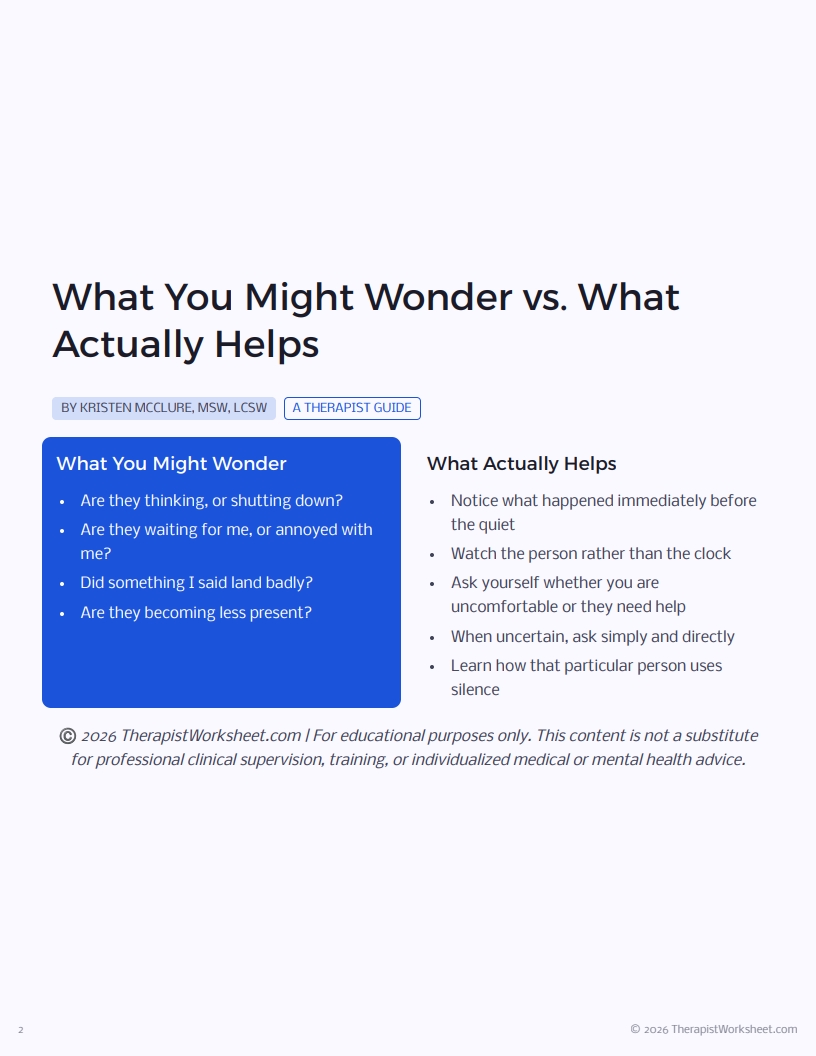
Do you wait? Ask a question? Check in? Did something you say land badly? Is the client thinking, searching for words, overwhelmed, disconnected, or simply comfortable being quiet?
Navigating Silence in Therapy is a practical 10-page guide for therapists who want to feel more comfortable and thoughtful when a session goes quiet.
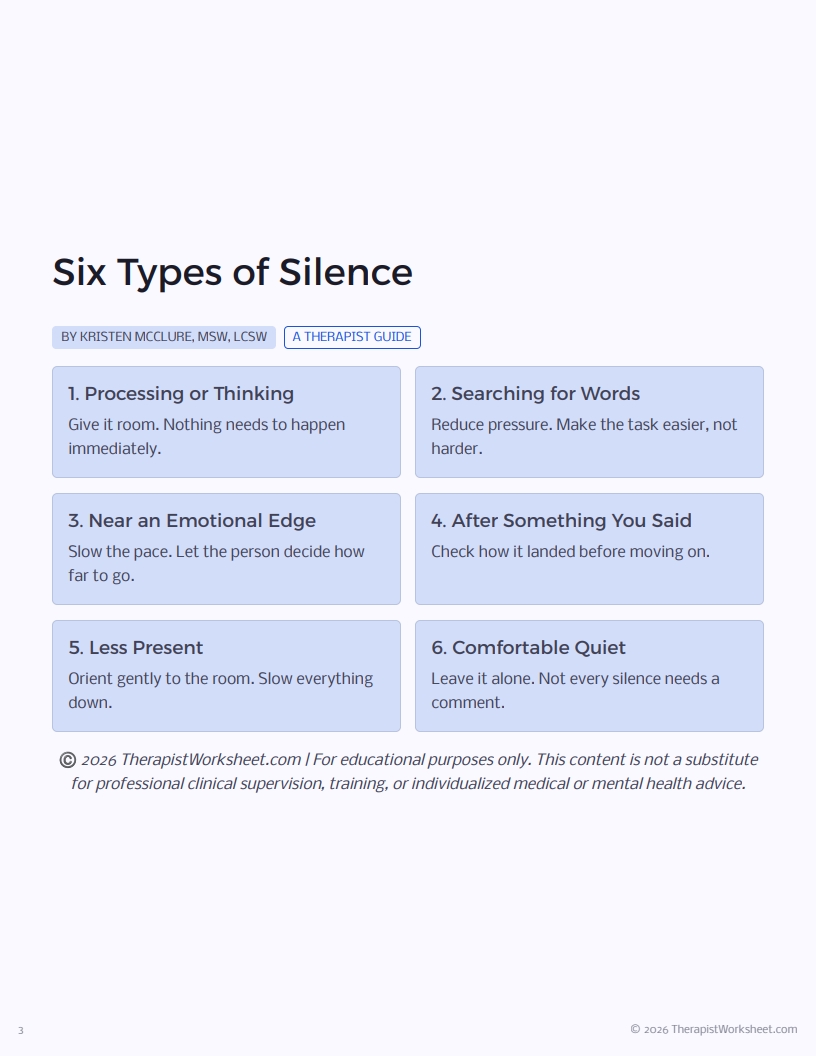
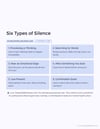
The guide walks through six different kinds of silence and offers practical ways to respond without assuming you know what the silence means.
Inside you’ll find:
- six common types of silence and how they may show up
- guidance for knowing when to wait and when to step in
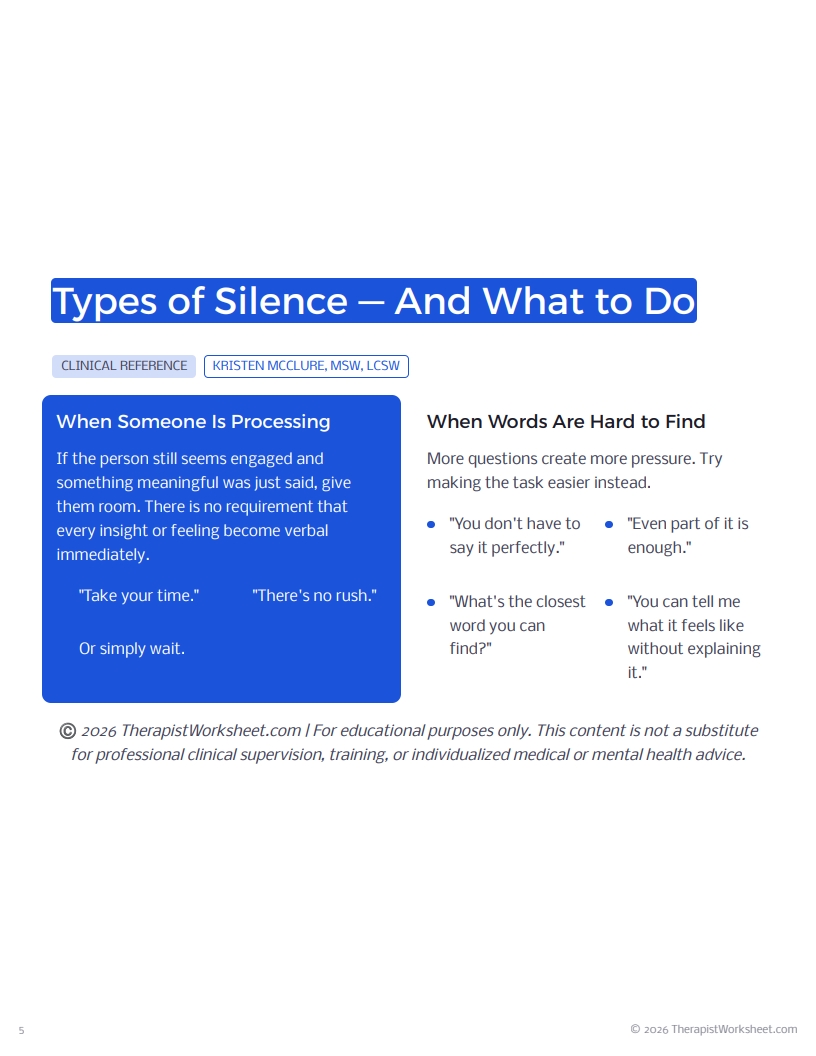
- examples of language you can actually use in session
- ways to respond when a client is struggling to find words
- help recognizing when silence follows something you said
- guidance for moments when a client seems less present
- therapist self-reflection questions for noticing your own discomfort with silence
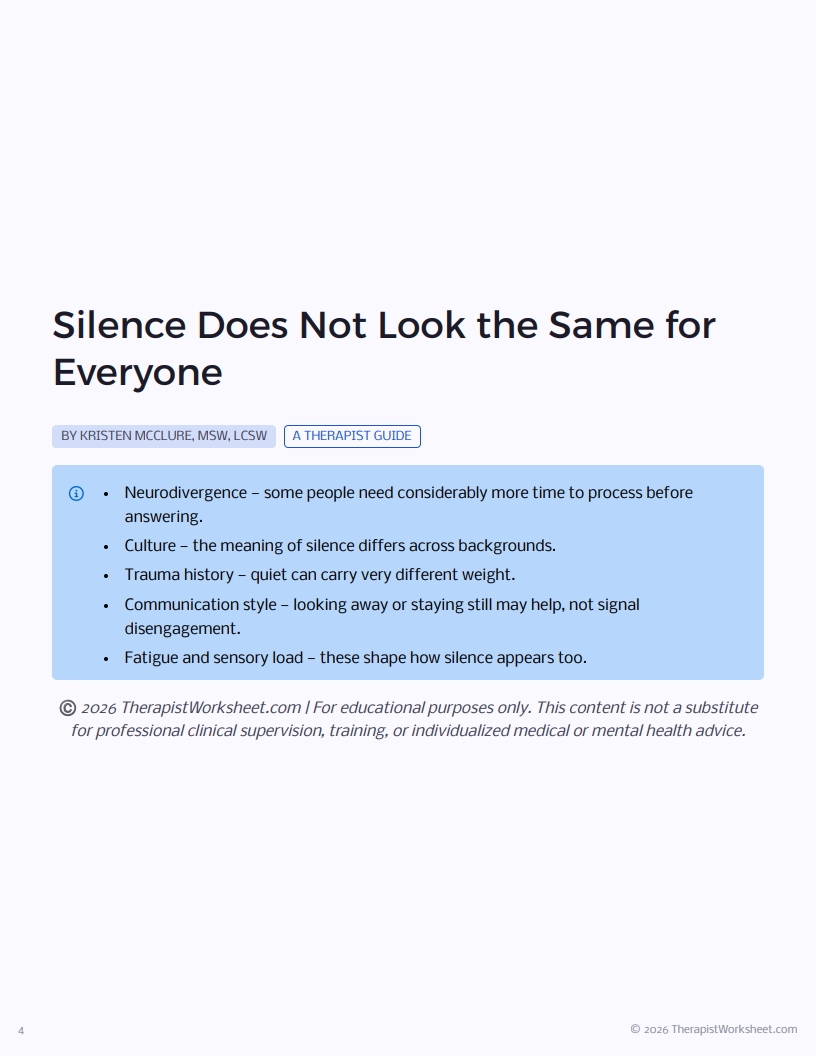
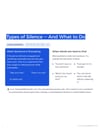
- considerations related to neurodivergence, culture, trauma history, communication style, fatigue, and sensory load
- a quick-reference page to keep nearby during clinical work
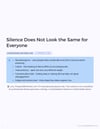
There is no single meaning of silence, and there is no correct number of seconds to wait.
Sometimes a client needs room to think. Sometimes they need help finding words. Sometimes something difficult has come up. Sometimes they want you to step in. And sometimes the silence is completely fine.
This guide gives you a clearer way to decide what might help without turning every quiet moment into a problem that needs to be fixed.
For therapists, counselors, social workers, interns, and other mental health clinicians.
10-page PDF | Instant download
For educational purposes only. This resource is not a substitute for professional clinical supervision, training, or individualized medical or mental health advice.