

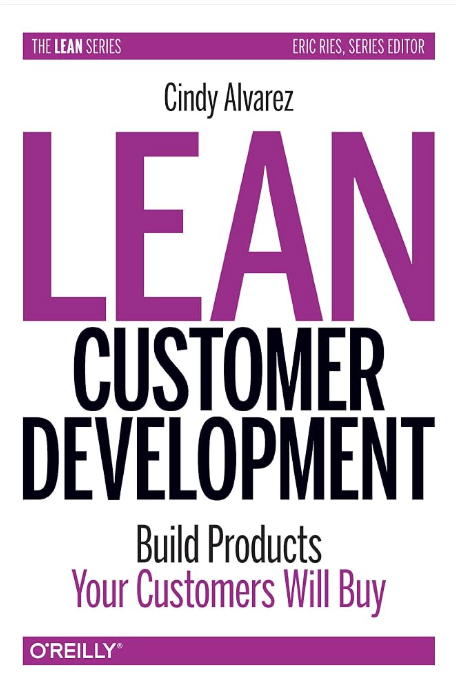
Lean Customer Development
Lean Customer Development is a pragmatic business methodology that prioritizes discovering and understanding your target market's actual problems before building a product. Popularized by author Cindy Alvarez in her seminal book, Lean Customer Development: Building Products Your Customers Will Buy, it bridges the gap between Steve Blank's rigorous Customer Development framework and Eric Ries's Lean Startup philosophy. Instead of treating a product as a certainty, this approach treats it as a series of hypotheses that must be validated or invalidated through rapid, open-ended customer research.
The Core Principle: Problem Before Solution
Most product failures occur because companies fall in love with a solution before they fully understand the problem. Lean Customer Development shifts the focus to active listening and fast, flexible research. The objective is to identify customer behaviors, hidden constraints, and pain points to ensure that when you finally engineering a solution, a validated market already exists.
The 5-Step Process
The methodology operates in a continuous, disciplined loop:
- Formulate a Hypothesis: State your clear assumptions about who your customer is, what problem they have, and how they currently try to solve it.
- Find Your Target Customers: Seek out prospective buyers who fit your profile, avoiding only the "loudest" voices to ensure you find a scalable segment.
- Conduct Strategic Interviews: Use play-by-play open-ended questions. Focus entirely on their present behaviors and procedural frustrations rather than asking them to predict the future or invent solutions.
- Analyze and Detect Patterns: Identify consistent friction points, spending habits, and behavioral boundaries across different conversations.
- Build a Minimum Viable Product (MVP): Use your insights to design highly targeted experiments (such as concierge services or single-use prototypes) to validate actual customer commitment and willingness to pay.
Stated Desire vs. Actual Commitment
A foundational rule of this process is distinguishing between customer compliments and real validation. Customers often say they want a feature, but their actual behavior might contradict their stated desires. Lean research actively searches for indicators of true commitment, such as time invested, budget signals, or a clear willingness to abandon current habits.
Are you looking to apply this framework to a brand-new startup idea or to an existing product line within an established company? If you have a specific hypothesis in mind, I can help you structure your first customer interview questions.