
When Something Goes Wrong in Therapy
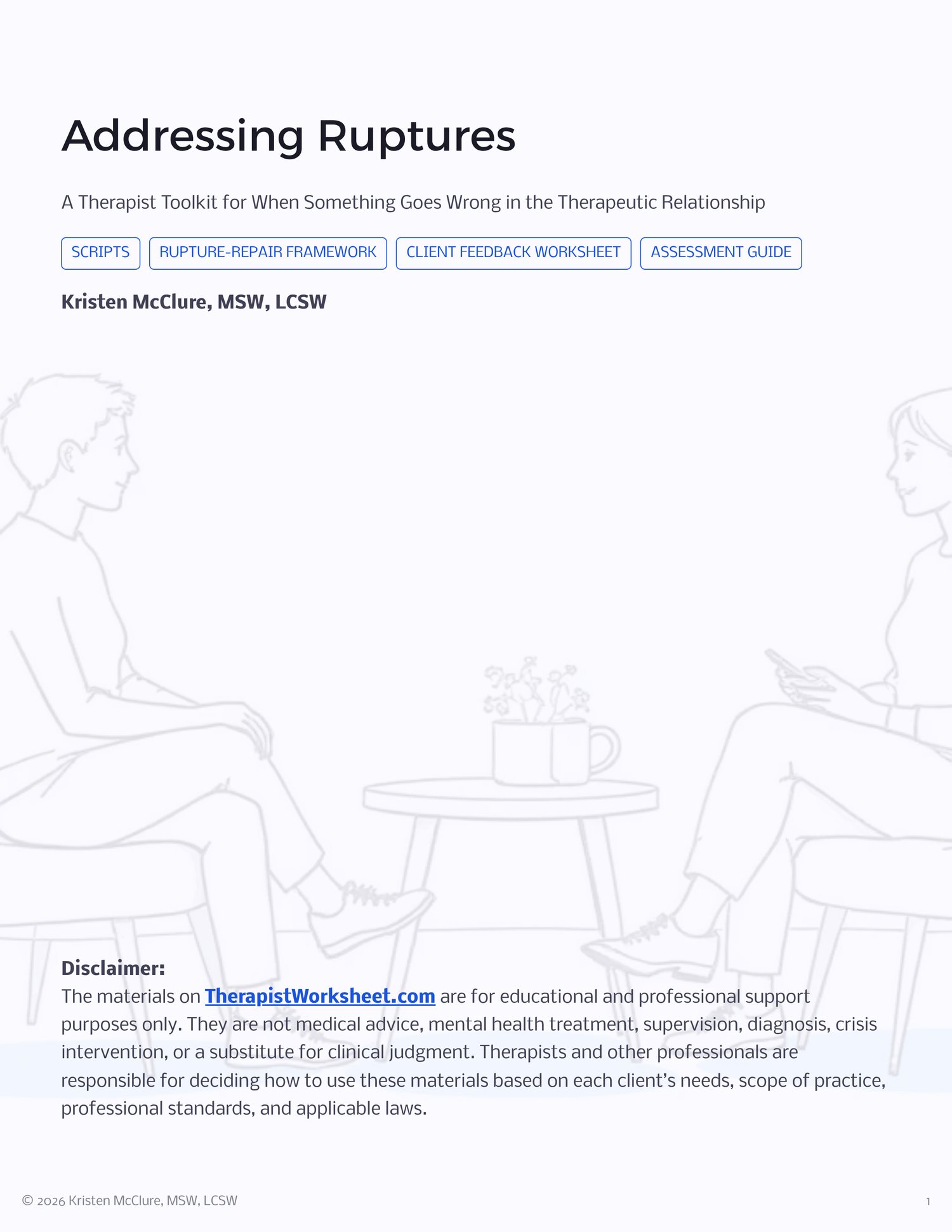
What do you say when something goes wrong in the therapeutic relationship?
Every therapist has moments when the energy shifts. A client goes quiet. They seem hurt, distant, angry, guarded, or withdrawn. They say “it is fine,” but something in the room tells you it is not.
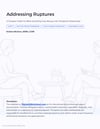
This 19-page therapist toolkit gives you scripts, structure, and clinical guidance for addressing ruptures in therapy without becoming defensive, over-apologizing, or avoiding the conversation.
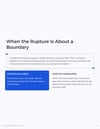
Use this toolkit when you need help naming a possible rupture, responding to direct client feedback, owning a mistake, repairing misattunement, addressing boundary-related tension, working through cultural ruptures, or assessing when the rupture may need consultation.
Inside, you will find:
🔵 A rupture-repair cycle framework
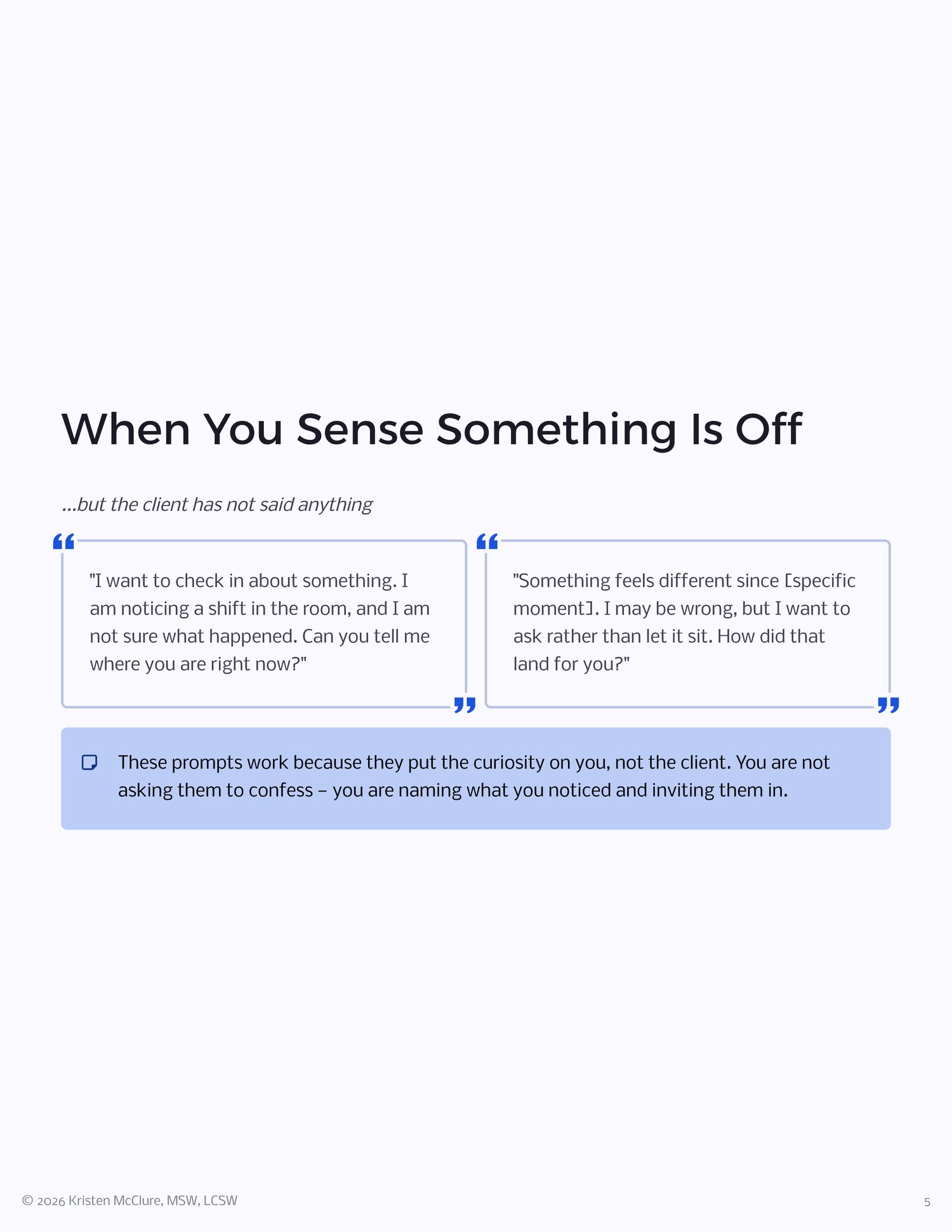
🔵 Therapist scripts for when something feels off but the client has not named it
🔵 Scripts for responding when a client says, “I did not like what you said last time”
🔵 Language for when a client goes quiet, withdraws, or says “it is fine”
🔵 Guidance for owning a mistake without spiraling into guilt or over-apologizing
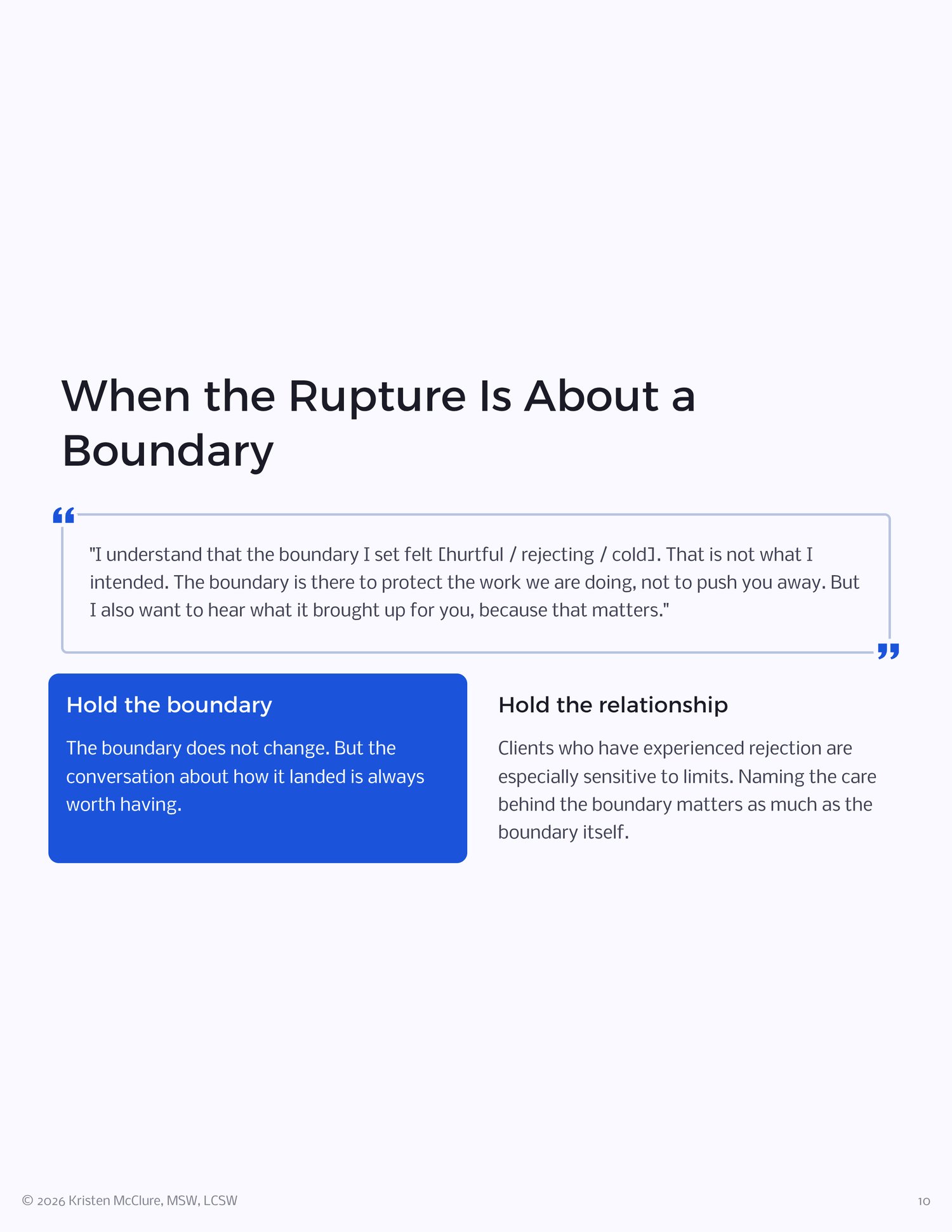
🔵 Scripts for repairing misattunement, boundary ruptures, and cultural ruptures
🔵 Language for when a client tests you after a rupture
🔵 Scripts for when the client threatens to leave therapy
🔵 Guidance for initiating repair proactively after a difficult session
🔵 A client worksheet called “Something Felt Off”
🔵 A decision guide for assessing minor misattunements, significant ruptures, and therapeutic crises
🔵 Guidance on when to seek consultation
Designed for therapists who want practical language for the moments when the therapeutic relationship feels strained, fragile, or uncertain.
Format: Instant PDF download
Length: 19 pages
Best for: therapists, counselors, clinical social workers, psychotherapists, interns, supervisees, supervisors, and group practice owners
Use for: rupture repair, alliance repair, client feedback, supervision discussion, consultation prep, relational repair, and clinical reflection
For educational and professional support use only. This resource does not replace clinical judgment, supervision, crisis intervention, legal guidance, or applicable ethical and professional standards.