
Feelings Are Information: Understanding Emotional Regulation
The science of emotional regulation in plain language, with skills to practice and a pattern map to bring to session.
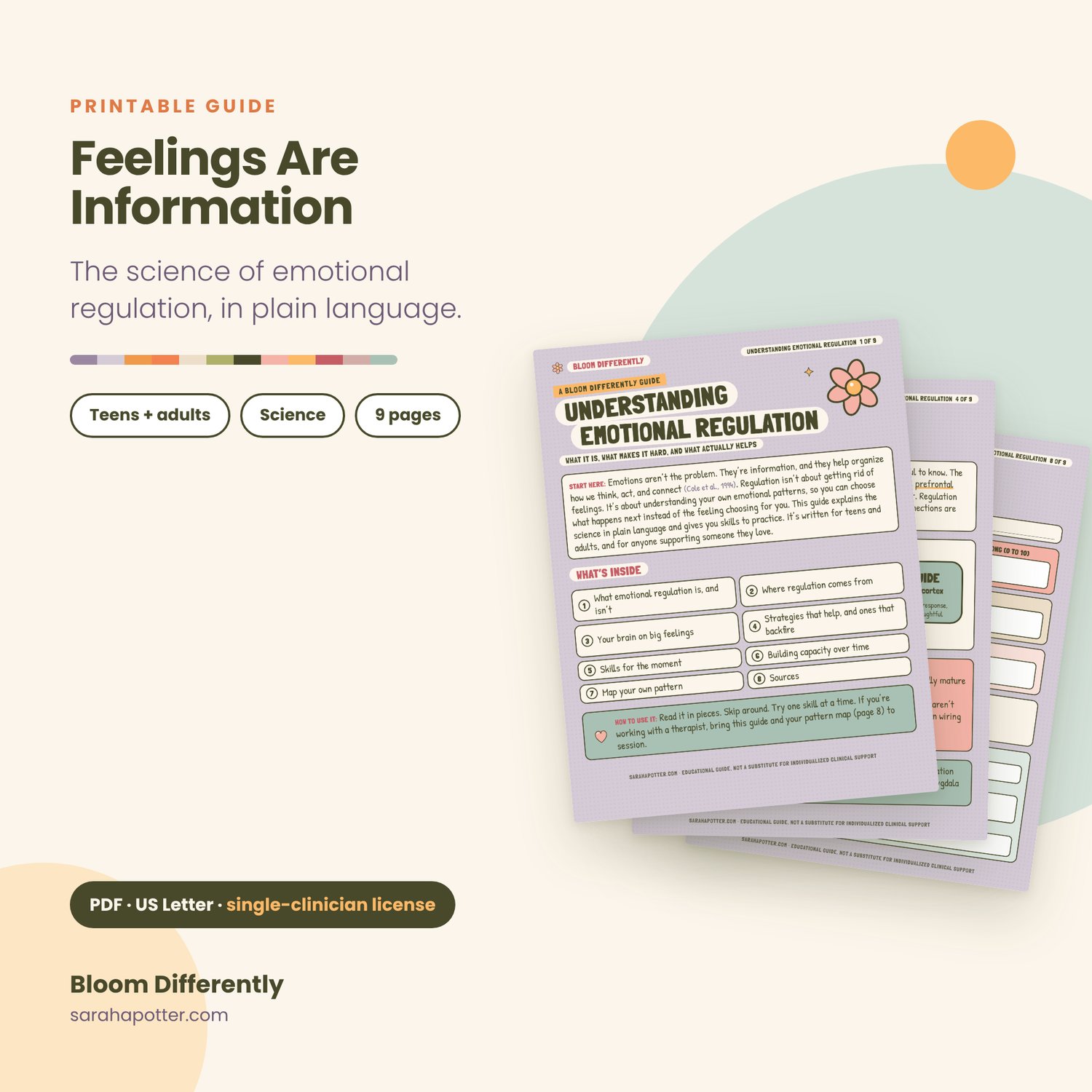
Emotions aren’t the problem. They’re information, and they shape how we think, act and connect. Regulation isn’t about getting rid of feelings. It’s about understanding your own emotional patterns so you can choose what happens next, instead of the feeling choosing for you. This 9-page research-based guide explains where regulation comes from, what happens in the brain during big feelings, and which strategies help or backfire over time. It’s written for teens and adults, and for anyone supporting someone they love.
What’s inside
- What regulation is, and isn’t: emotions have jobs, regulation is a skill rather than a trait, and dysregulation is a state, not a character flaw.
- Where regulation comes from:co-regulation and how regulation is learned inside relationships
- why many “dysregulated” patterns started as coping
- what shapes regulation: biology, experiences and stress load
- Notes for parents and neurodivergent readers: a no-blame look at parenting research, and why emotion dysregulation is now seen as a core part of ADHD for many people.
- Your brain on big feelings: the alarm (amygdala) and the guide (prefrontal cortex), why “just calm down” doesn’t work, and why teen brains are still under construction.
- Strategies that help, and ones that backfire: a comparison of reappraisal, acceptance and problem solving with suppression, avoidance and rumination, plus why flexibility matters most.
- Skills for the moment: STOP, Name It, Check the Facts, Opposite Action and Validate Yourself, plus “emotions are waves” and a safety note.
- Building capacity over time: lower your vulnerability, add good things on purpose, and widen your window.
- Map Your Own Pattern: a fill-in worksheet for one hard moment. It walks through the facts, the feeling, the body, the urge, the short-term payoff and the long-term cost, then which strategy you used.
- Sources: a full APA reference list.
Who it’s for
- Teens and adults who feel their emotions come on fast, run hot or take a long time to settle.
- ADHD, autistic and AuDHD clients who’ve been told they’re “too much.”
- Parents who want to understand what’s happening in their child’s brain and body.
- Therapists, counselors and educators who want psychoeducation backed by citations.
Ways to use it
- As an early-session psychoeducation handout.
- One part per week as homework, with the pattern map brought back to session.
- In a DBT skills group or a teen group.
- As a parent handout alongside your child or teen work.
Why it’s different
Most regulation handouts jump straight to coping skills. This one explains why regulation is hard first, so clients stop blaming themselves before they start practicing. Every claim is cited, the language stays plain, and the framing is neurodivergent-affirming throughout.
What you get
- 1 printable PDF, 9 pages, US Letter.
- Psychoeducation pages, 5 in-the-moment skills, capacity-building strategies, a pattern map worksheet and full sources.
- Single-clinician license included.
Pairs well with
- Window of Tolerance
- STOP Skill
- My Regulation Toolkit
- Zero to Sixty (Emotional Overwhelm in ADHD)