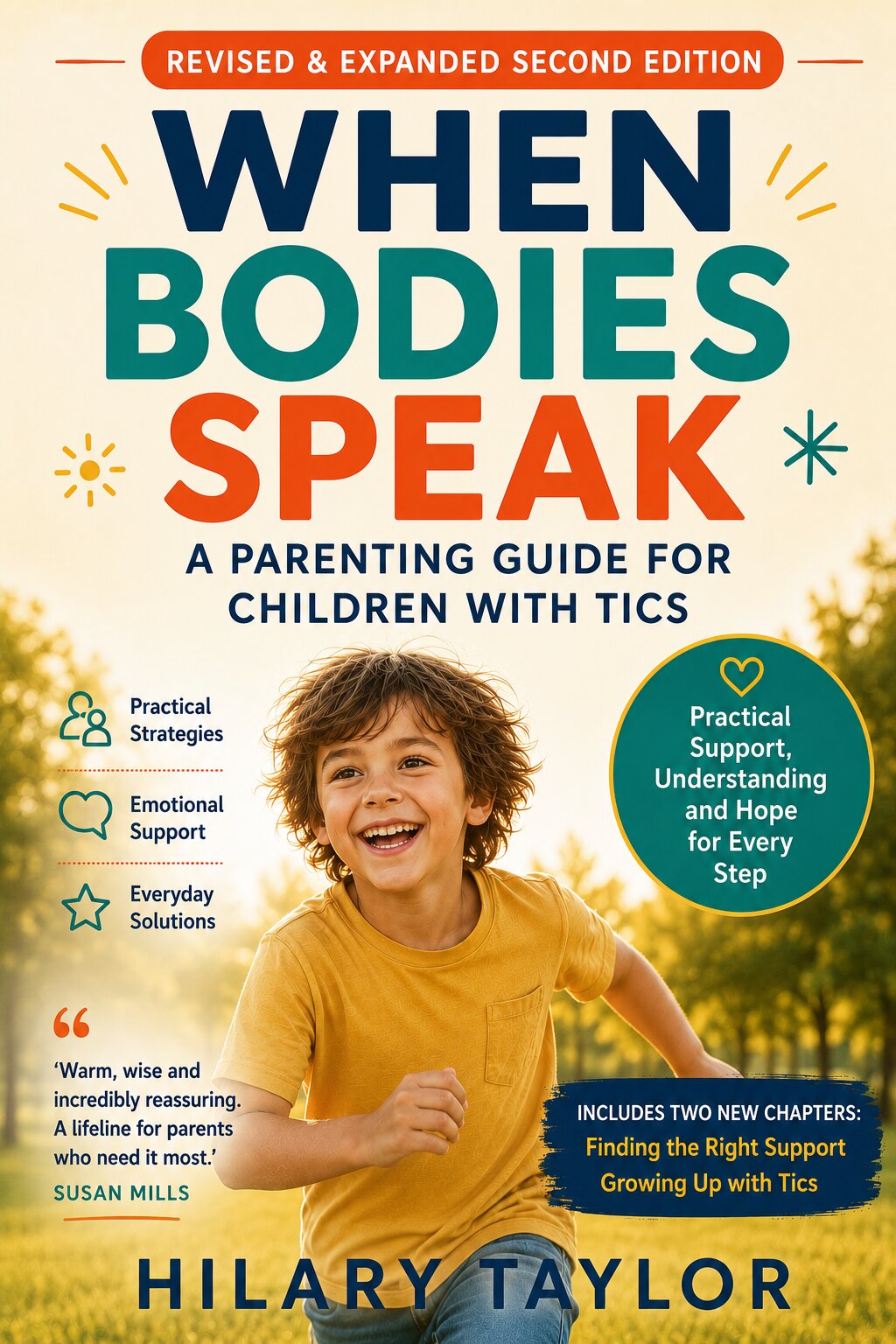
When Bodies Speak Parent Programme- Helping Your Child Navigate Tics with Confidence
A practical, compassionate programme created to help you understand your child’s tics, respond with confidence, and support them through everyday challenges.

A practical, compassionate programme created to help you understand your child’s tics, respond with confidence, and support them through everyday challenges.
When your child has tics, it can be difficult to know what to do for the best. Should you acknowledge a tic or ignore it? Should you step in when other people notice? What happens when school becomes difficult, your child feels embarrassed, or their tics suddenly become more noticeable? Even with the very best intentions, it is easy to find yourself constantly wondering whether you are helping in the right way.
The When Bodies Speak Parent Programme was created to take some of that uncertainty away. It offers parents and carers clear, compassionate and practical guidance to help you better understand what your child may be experiencing and respond in ways that support their confidence, wellbeing and sense of safety.
Rather than focusing on trying to stop or suppress tics, the programme looks at the whole child. You will explore why tics can change, how stress, excitement, tiredness and attention may affect them, what can make everyday situations easier, and how to respond when your child is struggling. There is also practical guidance for school, friendships, public situations and those difficult moments when other people simply do not understand.
• Better understand tics and why they can change from day to day
• Respond to tics without accidentally creating additional pressure
• Help your child manage embarrassment, frustration or unwanted attention
• Navigate school and communicate more confidently with teachers
• Support friendships, social situations and everyday family life
• Recognise when your child needs support and when they may simply need space
• Advocate for your child without making them feel defined by their tics
• Build their confidence and help them feel comfortable being themselves
You can work through the programme at your own pace and return to individual lessons whenever you need them. There is no expectation that you become an expert or get every response exactly right. The aim is to give you a stronger understanding, useful strategies and greater confidence in the decisions you make for your child.
Created by Hilary Taylor, author of When Bodies Speak: A Parenting Guide for Children with Tics, the programme builds on the warm, practical approach of the book and takes it further with structured lessons designed specifically for parents and carers.
Most importantly, this programme is about helping your child grow up knowing that tics are something they experience, not something that defines who they are.
The When Bodies Speak Parent Programme has been created as a companion to Hilary Taylor’s book, When Bodies Speak: A Parenting Guide for Children with Tics.
The book gives parents and carers a warm, accessible foundation for understanding tics and supporting a child with greater confidence and compassion. This programme takes that guidance a step further, turning many of those ideas into structured, practical lessons that you can work through at your own pace.
If you already own the book, the programme is a natural next step, helping you put what you have read into practice and explore some of the everyday challenges in greater depth. If you haven’t read it yet, that’s absolutely fine too.
The programme has been designed to stand on its own, so you can begin here without needing the book first.
Together, they offer something parents often need most: not simply information about tics, but practical support for knowing what to do with that information in real family life.
Work through the programme at your own pace, with a combination of clear, practical lessons, guided activities and assignments designed to help you put what you are learning into practice.
As you move through the programme, you’ll explore why tics happen and why they can change, the role of stress and attention, how to respond without adding pressure, supporting your child at school and in social situations, handling difficult reactions from others, and helping your child build confidence and self-acceptance.
You’ll also find reflection exercises, practical assignments and simple activities throughout, helping you apply the ideas to your own child and family rather than simply reading about them.
There is no pressure to complete everything at once. Work through it from beginning to end, dip into the sections most relevant to you, and return to individual lessons whenever you need a little extra guidance or reassurance.