
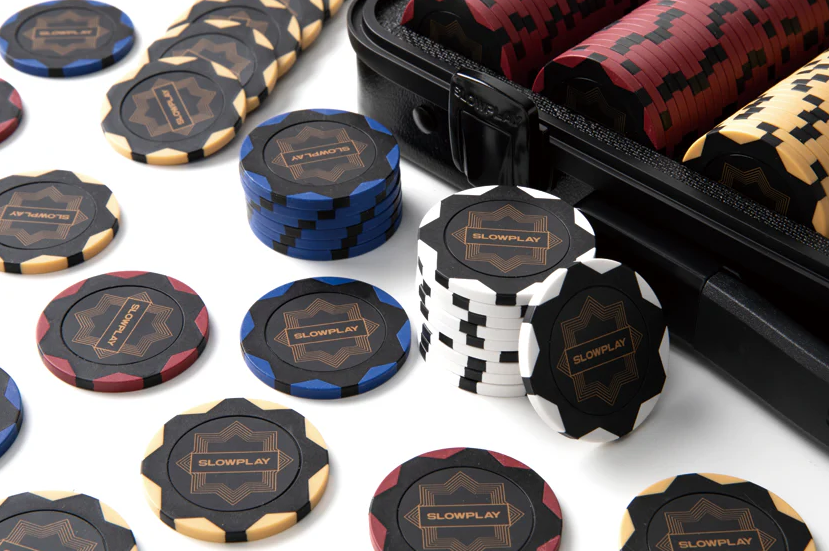
How Are Clay Poker Chips Made?
If you’ve ever handled those real-deal chips, the kind you find in poker rooms or fancy home sets, you probably noticed they feel way different than the cheap plastic ones. They're heavier, sure, but there’s more to it than that. They don’t slip out of your fingers like plastic. They make a softer sound when they clack together. That smooth, chalky feel is hard to explain but you know it when you feel it.
People call them clay chips but that’s not totally true. At least not anymore. Back in the early days, yeah, they were made of actual clay. Kind of like pottery, but thinner and round. That didn’t last long. They’d chip or crack too easily, especially if people were rough with them. Today’s chips are better. They’re stronger and made to last for years of play. That’s why most of the custom clay poker chips out there use a different recipe now, one that blends durability with that classic feel.
So What Are They Really Made Of?
Here’s the thing. They’re not just clay. Not even close. Most high-quality chips are made from a mixture. There’s a base of clay-like material, but they add other stuff like fillers, sand, resin, and maybe a little plastic. Every company keeps their exact formula secret. Some of them guard it like it’s the Coca-Cola recipe.
This blend is called a “composite.” It gives the chip strength, consistency, and that weight that feels just right in your hand. You want a chip that doesn’t feel hollow or sound like plastic. But also not one that chips if you drop it on a tile floor.
When mixed correctly, the material turns into a dry powder. Not a goopy paste like ceramic. Just a fine, dusty powder that gets shaped under pressure.
Molding With Muscle
This is where it gets intense. To make each chip, that dry powder goes into a mold. These molds are made of steel and are super precise, because every chip needs to be the exact same size and shape.
Then the machine clamps down with crazy pressure. Tons of it. The powder compresses into a solid disk. While it's under pressure, the mold gets heated too, which helps everything fuse together.
That’s called compression molding. And it’s a huge reason why real clay chips feel the way they do. You’re not injecting molten plastic like with toys. You're pressing the shape out of dry material and forcing it to bind under heat and pressure. That gives the chips a dense, chalky texture that’s hard to copy.
The Inlay, or the “Face” of the Chip
Once you’ve got a blank chip, the next part is the inlay. That’s the artwork in the center—the number, logo, or design.
In some cases, it’s printed on a label that’s glued to the chip. But high-end chips usually have a recessed center, and the inlay is printed and sealed right into it. They don’t peel or wear off easily. You’ll see inlays that say $5 or $100, maybe a casino name, sometimes a hologram or barcode if it’s a security chip.
Some inlays even get laminated or coated for extra protection. That way sweaty hands or spilled drinks won’t wreck them. Cheaper chips won’t hold up as well and after a few months, the print rubs off or the sticker lifts at the edges.
Edge Spots: Not Just for Looks
You ever notice those colored stripes on the edges of chips? They’re called edge spots, and they’re important.
They help you recognize chip values without flipping them over. If you’re betting fast, or the light’s not great, edge spots save time. You can spot a green chip with white spots vs. a black chip with pink ones without thinking.
In high-end chips, these spots aren’t painted on after the fact. They’re part of the mold. Manufacturers lay colored segments into the mold before the main body gets pressed. Once it’s all squeezed together, the chip comes out with edge spots built in. No flaking. No fading.
Tumbling, Buffing, Testing
The chip might look finished after molding and inlays, but there’s still work to do.
Edges might be sharp. Chips might stick together a little. So they go through a tumbling process which is kind of like putting rocks in a dryer. This smooths the edges and gives them that “worn in” feel. They don’t look scuffed, just a little softer.
Then they’re weighed and inspected. A good batch has chips that weigh exactly the same, usually around 9 to 10 grams. Casinos can’t have chips that vary too much, or they’d be easier to fake or exploit.
Some chips even go through security checks. Casinos might embed RFID tags, UV markings, or other features that aren’t visible to players. That stuff won’t be in your home game chips, but the process is basically the same.
Why They Cost So Much
Yeah, they’re not cheap. A single real clay chip can cost over $1, especially if you’re customizing it. That’s not even counting design work, logos, or small batch fees. Custom runs often require minimum orders like 500, 1000, or sometimes more.
Why so pricey? Because making them takes time and effort. The molds are expensive. The compression process is slow compared to plastic injection. Each chip gets touched, inspected, sometimes even weighed by hand.
Cheaper chips skip most of that. They’re made with plastic, sometimes with metal slugs inside for fake weight. They feel wrong though: too slick, too noisy, too light. You drop a plastic chip and it rattles. A clay one? More of a “thunk.”
Can You Make Them Yourself?
Not really. You can buy blank chips and add your own labels, sure. But true clay chips, the ones molded under pressure with layered edge spots and inlays, need serious equipment.
That’s why most home players order from companies that offer semi-custom chips. You pick colors, patterns, maybe upload a logo. They use pre-made molds and press your design into it. You still get quality, but without the huge cost of fully custom runs.
Chips vs. Chips: What’s the Difference?
Let’s be real—most casual players don’t know or care about chip quality. But once you’ve used a good set, it’s hard to go back.
Plastic chips? Too light. They feel like toys.
Ceramic chips? Smooth, kind of slippery, loud when they clack together.
Clay chips? Grippy, heavy but not too heavy. Slightly textured. When you shuffle them in your hand, it feels right. It’s hard to describe. You just know it when it happens.
They’re Just Chips… But Not Really
So yeah, they’re small and round and used for betting, but real clay poker chips are kind of an art form. From the blend of materials to the color patterns to the feel of the edge, there’s a lot that goes into making them.
Most people never think about it, but behind every chip there’s a bunch of pressure, heat, and craftsmanship. Whether it’s your Friday night game or a high-stakes tournament, the chip in your hand got there because someone cared enough to do it right.