
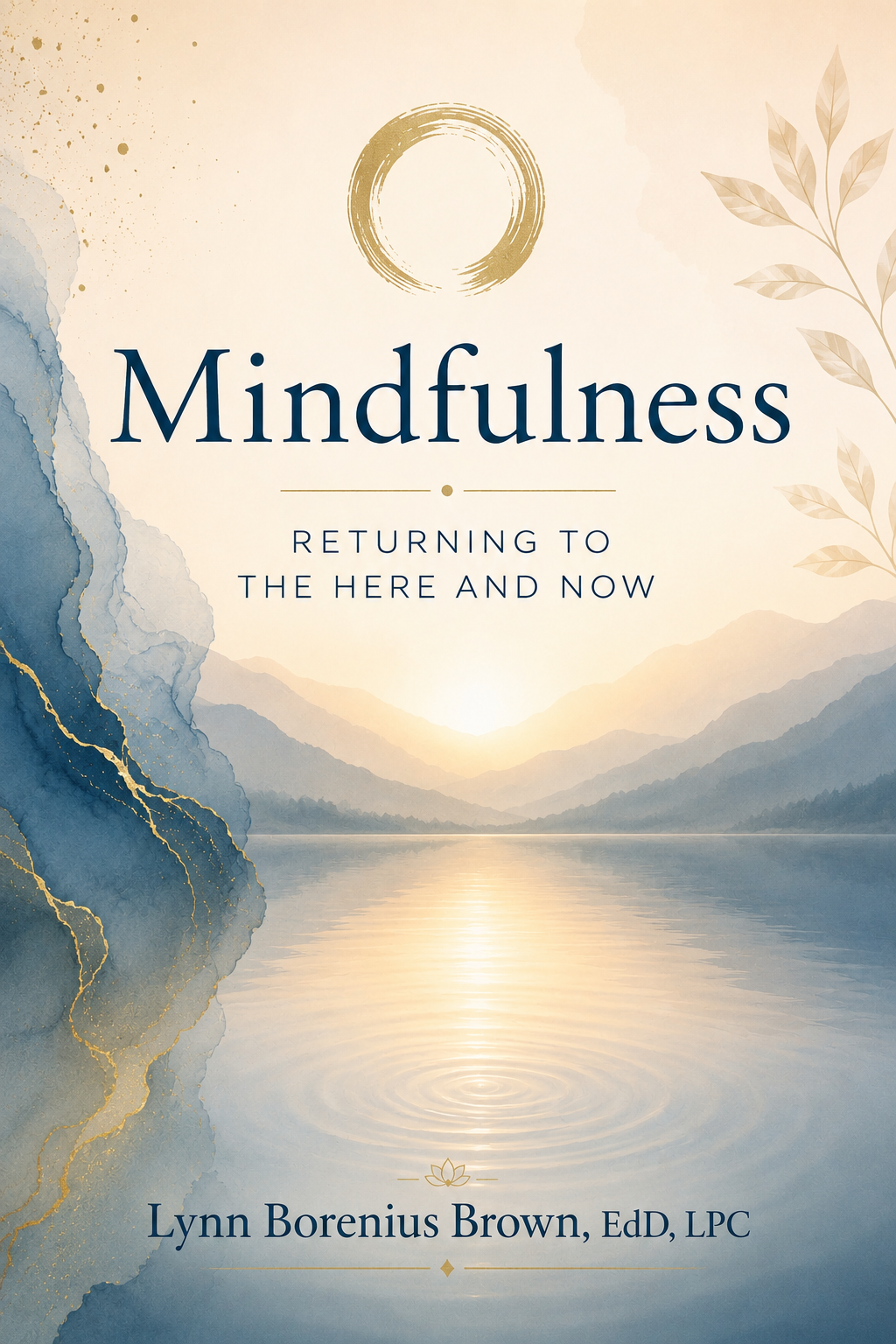
Mindfulness: Returning to the Here and Now
Mindfulness: Returning to the Here and Now
There is only one place where life is ever actually lived: here. And there is only one moment in which life is ever actually happening: now. Yet much of the time, we are somewhere else. The body may be sitting in a room while the mind revisits yesterday, rehearses tomorrow, evaluates what has happened, worries about what might happen, or imagines how things should be different. We can become so accustomed to this mental movement that we barely notice how often we are absent from the very life we are trying to live.
Mindfulness is the practice of returning. It is a gentle homecoming to the experience that is already here—the breath moving through the body, sensations arising and changing, thoughts passing through awareness, emotions asking to be acknowledged, and the ordinary world unfolding around us. Mindfulness does not require us to empty the mind, eliminate emotion, or maintain perfect calm. It asks something both simpler and more profound: Can we become aware of what is happening while it is happening?
This course, Mindfulness: Returning to the Here and Now, is an invitation to develop that capacity. Rather than approaching mindfulness merely as a relaxation technique, we will explore it as a way of relating to life. Mindfulness teaches us to see more clearly, feel more honestly, and respond more intentionally. It helps us recognize the difference between what is actually happening and the stories the mind creates about what is happening. It allows us to notice an emotion without immediately becoming consumed by it, experience an impulse without automatically obeying it, and encounter change without requiring life to remain exactly as we would prefer.
From a Buddhist perspective, mindfulness is closely connected with wisdom because awareness allows us to experience some of life's deepest truths directly. We begin to notice that everything changes. A breath begins and ends. A sensation intensifies and fades. A thought appears and disappears. An emotion moves through the body. Pleasure comes and goes. Difficulty changes too. What Buddhism calls impermanence stops being merely a philosophical teaching and becomes something we can observe within our own experience. As this understanding deepens, we may discover that much of our suffering comes not only from change itself, but from our attempts to grasp what is pleasant, resist what is unpleasant, and make permanent what was never capable of remaining unchanged.
Mindfulness also creates something essential to an empowered life: space for choice. Without awareness, we are easily governed by habit. Someone criticizes us and we defend ourselves. Fear arises and we withdraw. Anger appears and we speak before thinking. Discomfort comes and we immediately look for distraction. Praise arrives and we begin wanting more. Mindfulness introduces a pause between experience and reaction. Sometimes that pause is only one conscious breath, but within that breath we may remember that an emotion is not a command, a thought is not necessarily a fact, and an impulse does not have to become an action. We can ask, “What is happening within me, and how do I want to respond?”
This is why mindfulness is not about becoming detached from life. It is about becoming more intimately present to life. We learn to inhabit the body rather than merely judge it. We learn to listen to thoughts without automatically believing every one of them. We make room for sadness, fear, anger, joy, uncertainty, and tenderness without dividing our humanity into feelings we are permitted to have and feelings we must reject. Awareness becomes increasingly joined by compassion: This is what I am experiencing. Can I meet it without becoming my own enemy?
Throughout this course, we will move through eight interconnected practices: Arrive, Breathe, Embody, Observe, Feel, Understand, Choose, and Integrate. We will begin by learning to return to the present moment and use the breath as an anchor for awareness. We will come home to physical experience, learn to witness thoughts without automatically believing them, and meet emotions with greater compassion. We will directly explore impermanence, discover the space between reaction and response, and ultimately bring these practices beyond formal meditation and into conversations, relationships, work, decisions, disappointments, pleasures, waiting, conflict, solitude, and the countless ordinary moments that make up a human life. Each of the 16 topics offers 20-70 thought-provoking questions to enhance your experience.
There is no expectation that you will become perfectly mindful. In fact, one of the most important lessons of mindfulness is that wandering and returning belong together. The mind will wander. We will forget. Old habits will reappear. Emotions will sometimes overwhelm our best intentions. There will be moments when we react first and become aware afterward. None of this places us outside the practice. The moment we recognize that we have wandered is already a moment of awareness. We simply return. Again and again, we begin where we are.
Over time, this repeated returning can change our relationship with ourselves. We may become less harsh when we struggle, less frightened by difficult emotions, less dependent upon approval, and less compelled to control everything around us. We may begin recovering more quickly when life knocks us off balance. We may listen more carefully, appreciate ordinary pleasures more fully, recognize our limits more honestly, and choose our responses more deliberately. The changes may be subtle, but they can be profound. Mindfulness does not necessarily change everything that happens to us. It changes how consciously we participate in what happens.
And perhaps this is the deeper invitation of the course. We spend so much of life believing that peace will arrive later—when something changes, when a problem is solved, when uncertainty disappears, when we become better at something, when another person changes, or when life finally looks the way we think it should. Mindfulness gently interrupts that postponement. It does not promise that this moment will always be comfortable. It reminds us that this moment is where our life is.
So we begin not by trying to become someone else, but by becoming more fully present to who and where we already are.
One breath.
One sensation.
One thought noticed.
One emotion met with compassion.
One reaction interrupted.
One conscious choice.
One ordinary moment actually experienced.
And then another.
Welcome to Mindfulness: Returning to the Here and Now.
The journey begins with a simple recognition:
You do not have to find the present moment.
You are already in it.
The practice is learning how to return.
304 pages.