
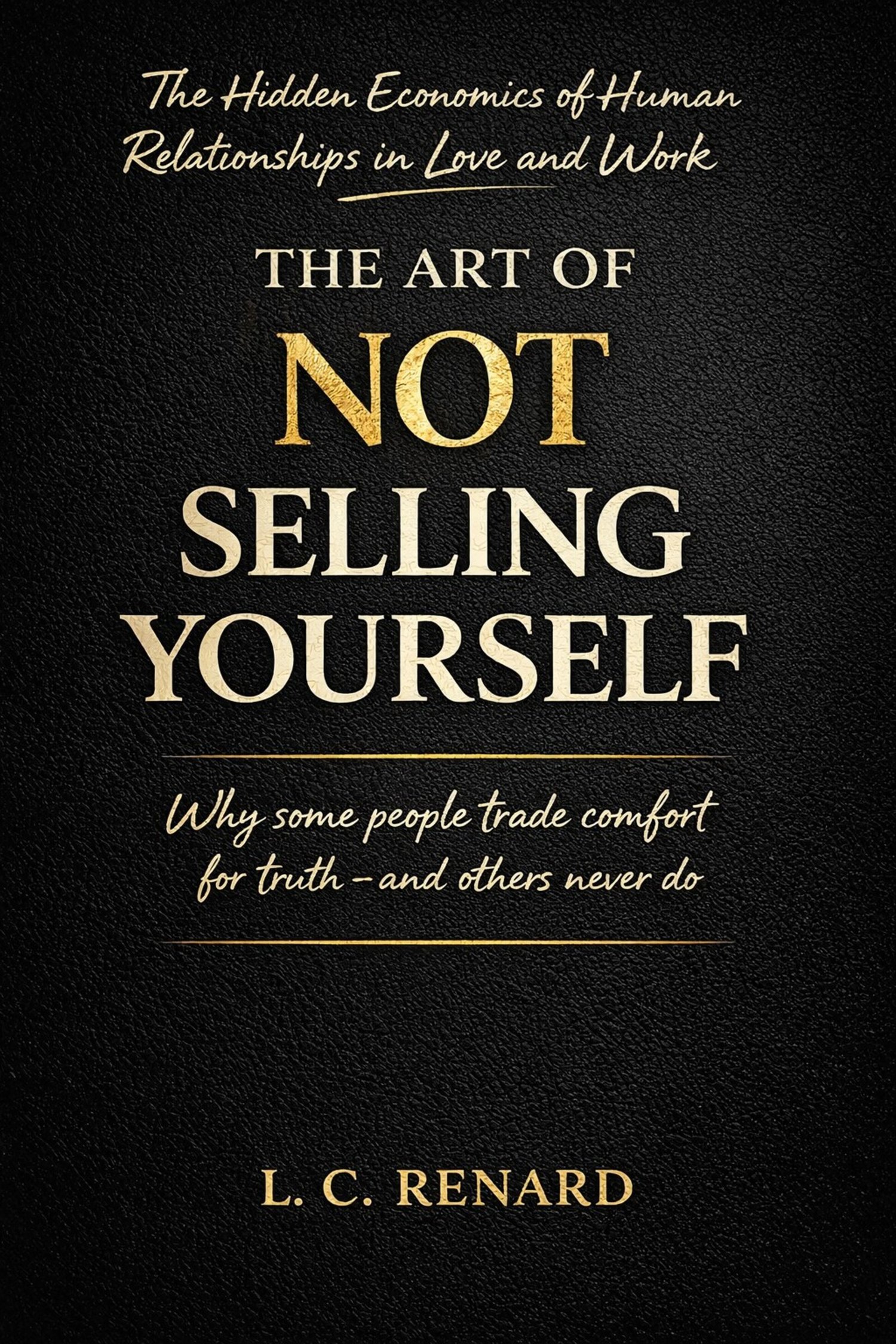
The Art of Not Selling Yourself. The Hidden Economics of Human Relationships in Love and Work
What if the problem isn't that you're bad at playing the game—but that the game asks you to become someone you don't want to be?
We are taught that successful adults know how to compromise. We are told to be practical in love, strategic at work, flexible in social situations, and willing to promote ourselves if we want to get ahead.
And most of the time, those lessons work.
But there is another kind of person—someone who can negotiate a salary but cannot pretend to believe in a company they no longer respect. Someone who can tolerate hardship more easily than emotional dishonesty. Someone who can accept an imperfect relationship but cannot remain inside one that requires them to disappear.
The Art of Not Selling Yourself examines the hidden economics of human relationships and the very different ways people respond to them.
Love can involve security, status, companionship, attraction, loyalty, and material stability. Work can involve money, identity, prestige, belonging, and the performance of enthusiasm. Social life can involve approval, access, influence, and the careful management of appearances.
None of this automatically makes people dishonest or immoral.
The more difficult question is what happens when the transaction becomes indistinguishable from the self.
Why can one person leave a job without feeling rejected while another feels as though they have lost part of themselves? Why can some people enter highly negotiated relationships and remain perfectly comfortable while others slowly become numb? Why does security feel like freedom to one person and confinement to another?
And why do some people keep adapting long after their own body has begun telling them that something is wrong?
Drawing on observations about love, ambition, money, status, work, personal branding, social expectations, and the psychology of self-worth, L. C. Renard explores the difference between making a trade and betraying yourself.
This is not a book about becoming more ruthless.
It is not an argument that transactional people are bad or that idealists are morally superior.
It is an examination of something more uncomfortable: people are built differently, and the same bargain can be freedom for one person and self-erasure for another.
Sometimes the price of comfort is reasonable.
Sometimes the price is yourself.
Knowing the difference may be one of the most important forms of self-knowledge you can have.