
Clinical Decision Series – Volume IV: Radiology (NBDHE Study Cards)
Forty clinical decision cards on technique errors, radiographic anatomy, and what a finding is asking you to do next.
Volume IV of the Clinical Decision Series helps dental hygiene students read radiographs with more confidence—spotting technique problems, naming landmarks, and recognizing findings that change the plan.
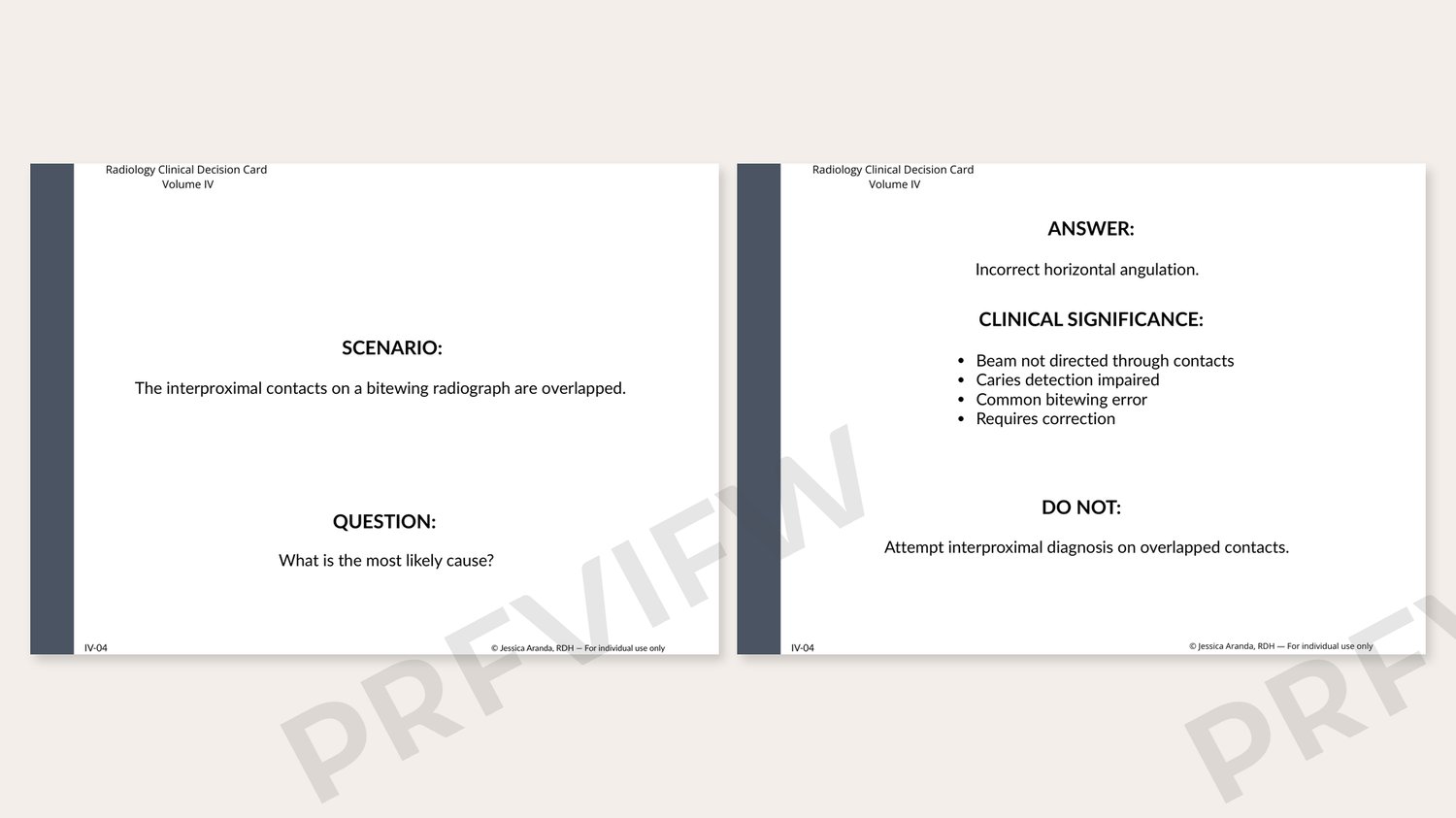
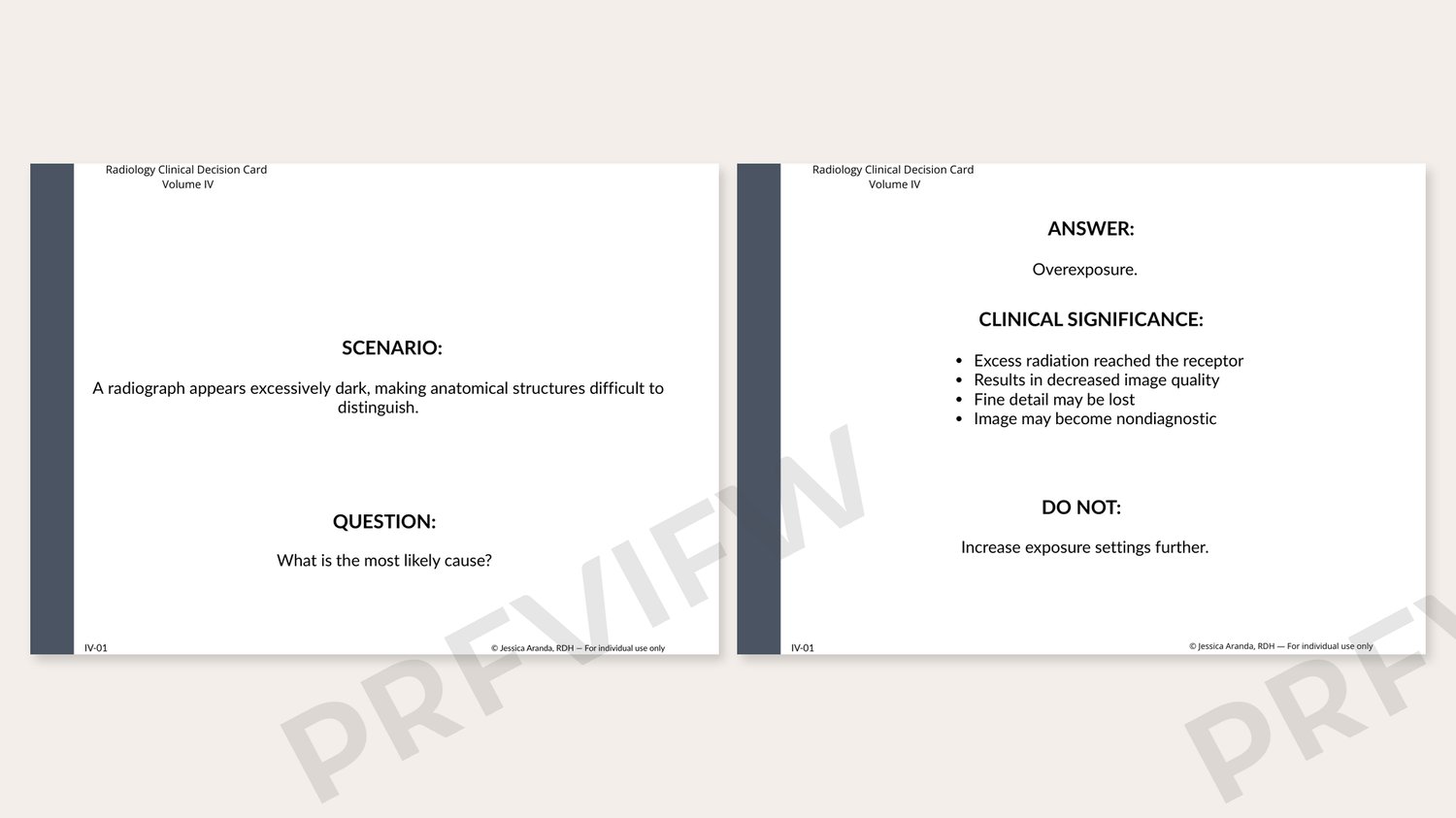
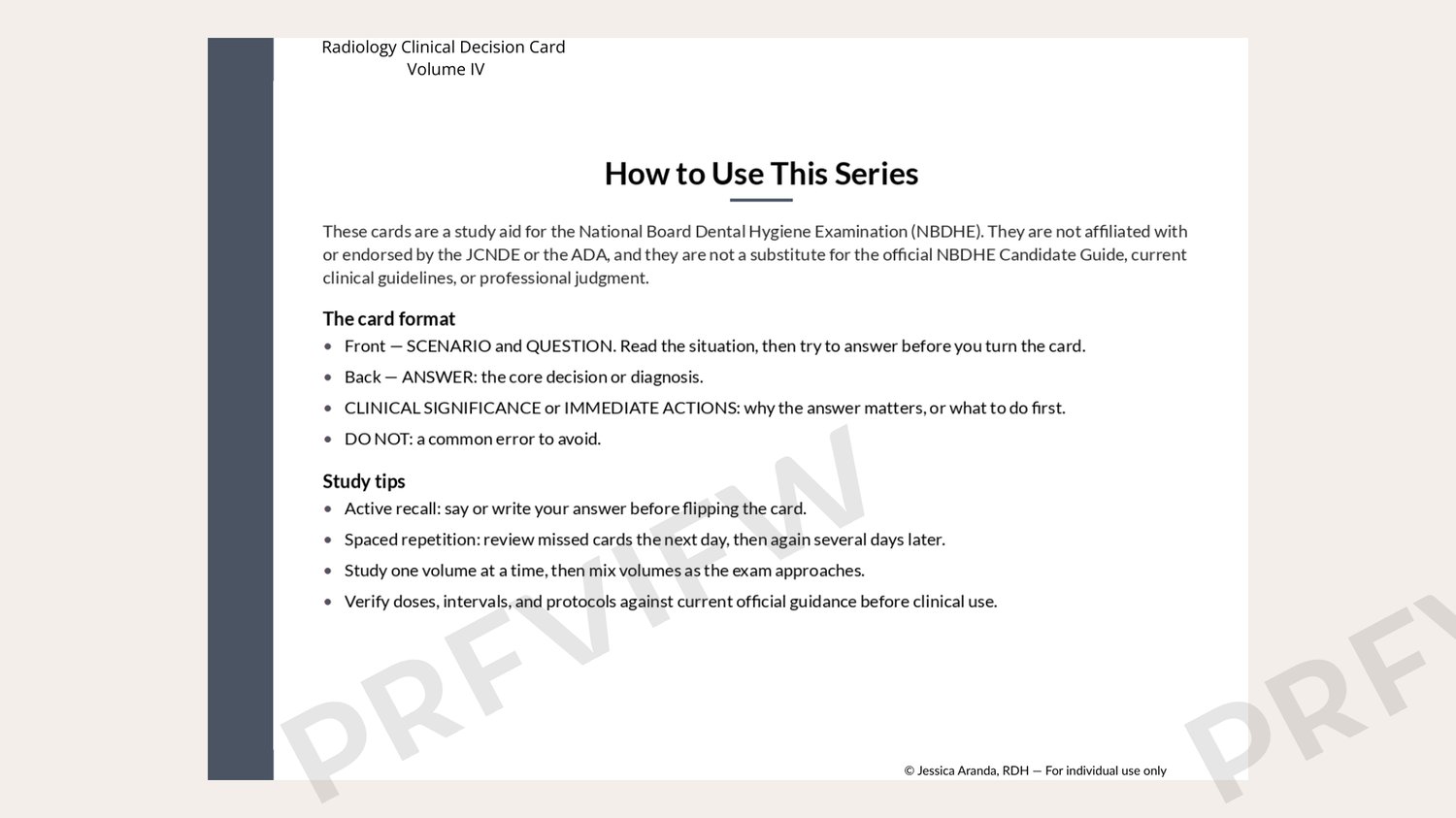
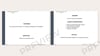
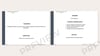
Each card presents a realistic scenario, a focused question, the core answer, clinical significance, and a “Do Not” reminder of a common error to avoid.
This volume includes 40 cards covering:
- Common technique errors, including overexposure, underexposure, cone cut, incorrect horizontal angulation, elongation, foreshortening, a backward receptor, movement, a bent or creased receptor, and poor placement
- Radiographic caries, periapical pathology, and the expected crestal bone level
- Horizontal and vertical bone loss, furcation involvement, radiographic calculus, and the lamina dura
- Anatomic landmarks, including the mental foramen, maxillary sinus, nasal septum, incisive foramen, zygomatic process, coronoid process, mandibular canal, mental ridge, genial tubercles, external oblique ridge, and submandibular fossa
- Pathologic findings such as periapical abscess, dentigerous cyst, periapical granuloma or cyst, impacted teeth, internal and external root resorption, hypercementosis, a retained root tip, and radiopaque or mixed lesions
What’s included:
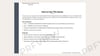
- A printable PDF of the complete 40-card set (7 × 5 inch card pages), with a How to Use page and references
- Interactive tap-to-flip flashcards (an HTML file you can open on your phone or computer; no account or internet required)
These cards are written for dental hygiene students preparing for the National Board Dental Hygiene Examination (NBDHE).
This material is a study aid for educational purposes only. It is not affiliated with or endorsed by the Joint Commission on National Dental Examinations (JCNDE) or the American Dental Association (ADA). NBDHE is a registered trademark of its owner. This material is not a substitute for current clinical guidelines or professional judgment; verify doses and protocols before clinical use.