

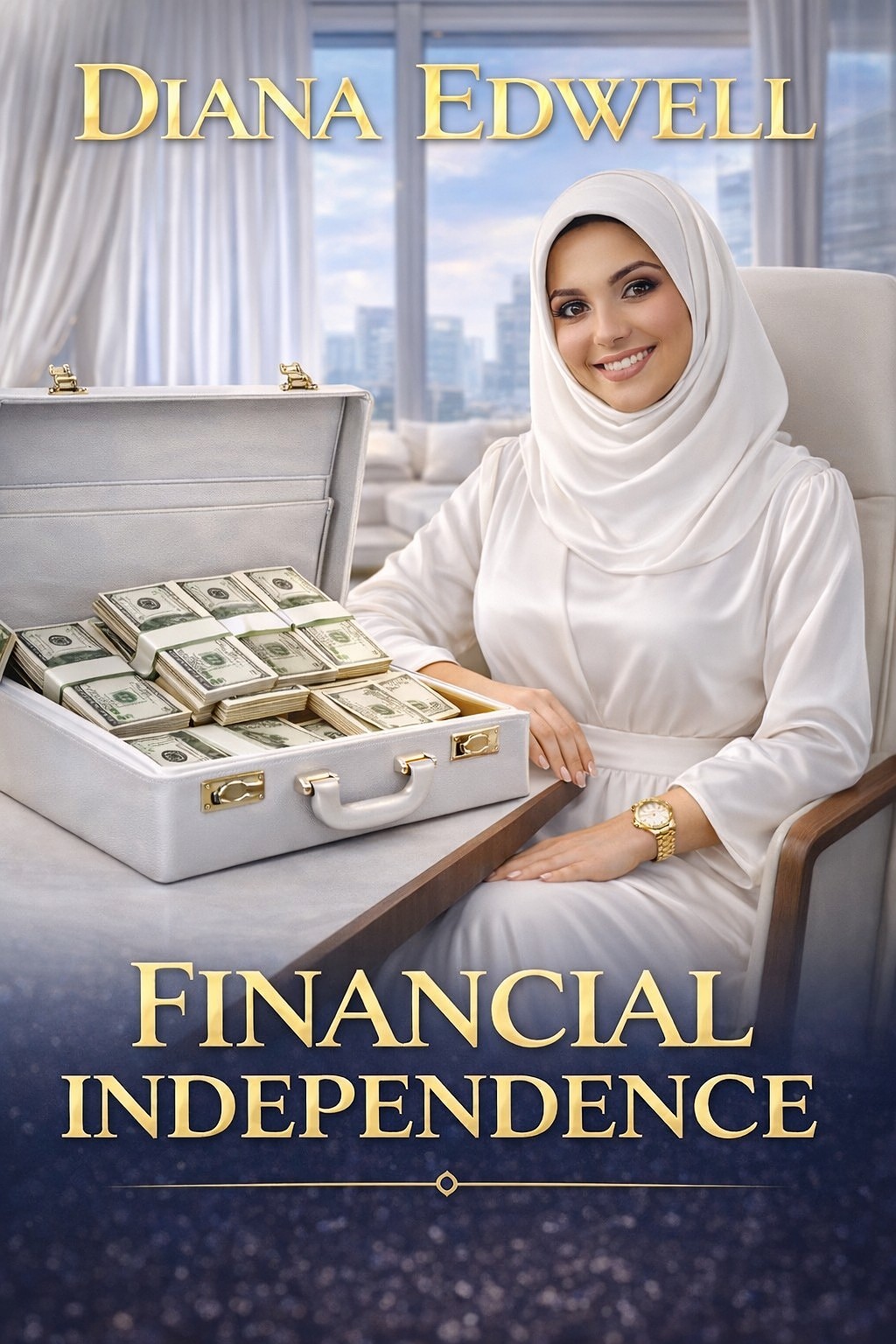
Financial Independence- 10 Wealth-Building Utilities to Millions
AUTHOR’S NOTE
By Diana Edwell
I have come to believe that wealth is not unnatural. It is not immoral. It is not mysterious. Wealth, at its root, is of nature.
Long before banks, governments, or corporations existed, human beings survived through exchange. Trade by barter was the first economy: I give what I have; you give what you have, and both of us live better than we would alone. Strength, creativity, and usefulness determined survival—not titles, certificates, or institutions. Commerce did not begin with money. Money came later.
As societies grew more complex, institutions emerged—banks, governments, enterprises—to organize trade, reduce friction, and store value. These structures brought efficiency, but over time, they also created distance between people and the original logic of wealth creation. Somewhere along the way, humanity forgot a simple truth: Value precedes money.
Today, the world is filled with brilliant mathematicians, economists, and financial theorists. Yet, despite all our equations, models, and forecasts, one question remains unanswered in any practical sense: Why does wealth remain so concentrated, while so many people—intelligent, hardworking people—struggle all their lives without ever experiencing financial freedom?
I do not believe the problem is intelligence. I do not believe it is effort. And I do not believe it is destiny. I believe the problem is misplaced focus. Much modern financial education teaches people how to participate in systems, but very little about how to design them. Theories multiply. Ego grows. But practical bridges between the “have-nots” and the “have-it-alls” remain rare.
Meanwhile, the situation across the world is becoming increasingly fragile. People work harder, earn more in nominal terms, yet feel less secure. Many will never earn USD 10,000 in a single month across an entire lifetime—let alone experience true independence. This is not because opportunity no longer exists. It is because most people are looking in the wrong direction.
We are now living in a modern version of barter—one more powerful than anything our ancestors could have imagined. Today, utility is a new trade good. If you can invent, build, or organize something that solves a real problem—something others need, want, or rely upon—you can exchange that utility for wealth. Demand and supply still govern the world. They always have it. The difference is scale.
A single utility—when designed well—can serve thousands, millions, or even billions of people. This is how modern fortunes are made, whether through platforms, software, systems, intellectual property, or infrastructure.
This book is built on a simple, achievable idea:
If a person can identify and build ten different utilities, each capable of generating approximately USD 4 million over five to ten years, that person can realistically reach a point where work becomes optional—not because they escaped society, but because they contributed meaningfully to it.
With disciplined capital preservation—such as depositing the first USD 4 million in reliable banks at modest interest—one can secure a lifetime of stability. At that point, freedom is no longer theoretical. It becomes practical, peaceful, and transferable to the next generation. This is not a fantasy. It is already happening.
Around the world—from technology founders in California, to logistics innovators in Asia, to quiet family offices in places like Monaco—wealth is not created through wages, but through ownership of utilities. Many of these stories are public. They are documented. They are repeatable in principle, even if not in exact form. Gone are the days of hunting and gathering. Gone too are the days when barter meant goats for grain. What remains is the eternal principle of exchange—now amplified by technology, networks, and global markets.
I wrote this book not to criticize the world, but to invite people into a clearer understanding of it. Financial independence is not about greed. It is about dignity. It is about choice. It is about building something useful enough that the world willingly rewards you for it. This journey does not begin with millions. It begins with clarity.
If this book helps even a small percentage of readers shift how they think, build, and exchange value, then the ratio does not need to remain 1% versus 99%. A future where many more people live freely, responsibly, and creatively is not only possible—it is necessary.
The journey of a million miles begins today. I am honored to take the first steps with you.
— Diana Edwell