
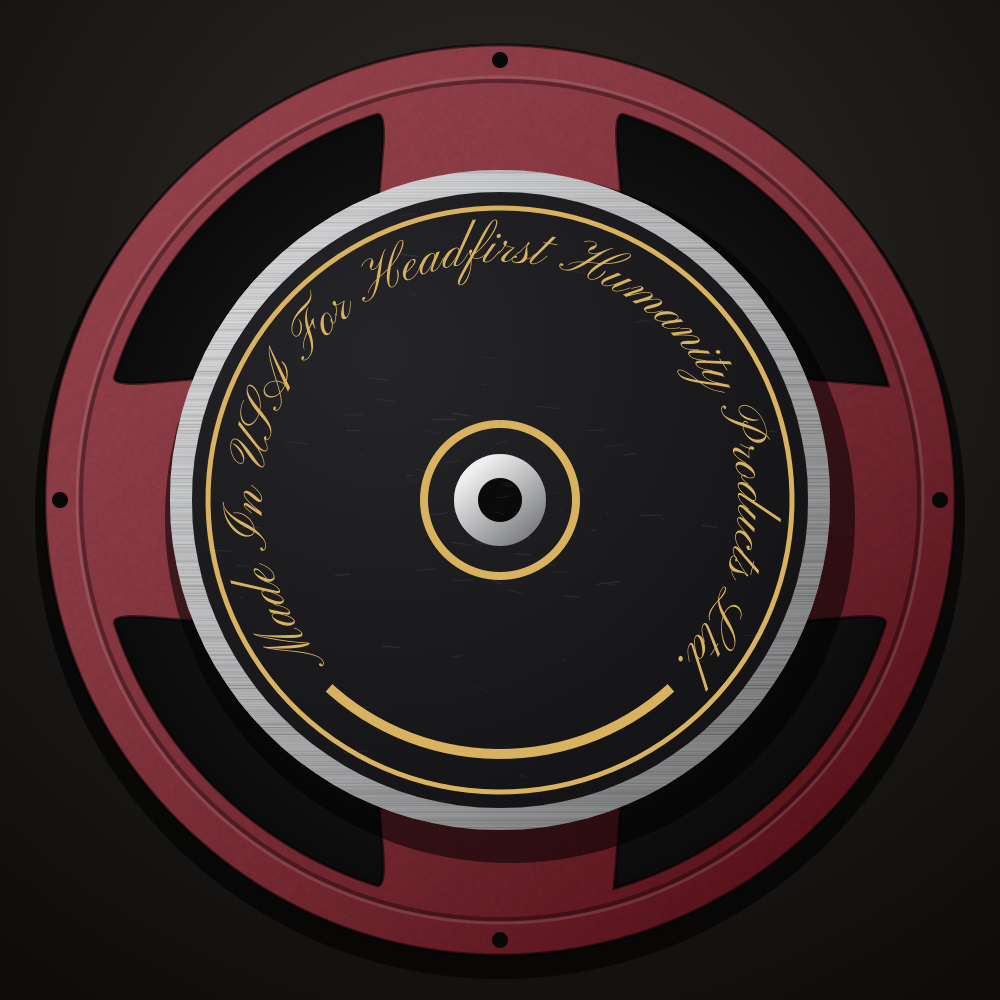


Factory & Farm 4140 Red Frame 2x12 IRs v1.0
37 impulse responses of the original red-frame McKenzie 80-watt speakers found in a late-1970s Marshall "Club and Country" 2x12 open-back combo. It’s a warm, smooth, vintage voice with a big low-mid body and a soft top end that never turns harsh, at home on everything from glassy cleans to classic rock crunch. These are speaker IRs only, not an amp sim.
48 kHz / 24-bit WAV, 200 ms. Works in ToneX, amp-sim plugins, DAW convolution and most IR loaders.
WHAT'S IN THE PACK
421/ 12 IRs - a large-diaphragm cardioid dynamic (421 type)
88RP/ 12 IRs - a figure-of-eight RP dynamic (88RP type)
201/ 12 IRs - a hypercardioid dynamic (201 type)
FF4140 Red Frame - Full Speaker (no mic).wav
Thumbnails/ artwork for loaders and presets that show pictures
Each microphone folder covers four positions at three distances:
Cap on the dust cap - brightest
Cap Edge where the cap meets the cone
Cone on the cone, between cap and edge - warmer
Cone Edge out near the edge - darkest
1in at the grille cloth (the usual live position)
4in a little back - less proximity bass, the positions blend
12in a foot back - the speaker as a whole, a touch of the cabinet
FULL SPEAKER (no mic) is the speakers themselves rather than one spot in front of
them: the measurements averaged across the cone and a foot back. Use it when you
want a neutral cabinet, or with your own microphone model.
HOW THEY WERE MADE
The speakers were measured in their own cabinet with Room EQ Wizard, a flat
omnidirectional measurement microphone and an audio interface, at about 100 dB SPL:
at the grille in front of the cap, the cap's edge and the cone, and centred 12 inches
back. Each measurement was trimmed before the room's first reflection, so these are
the cabinet, not the room. The cone-edge position was not measured: it is derived
from the cone measurement.
The microphones are MODELLED, not real microphones: each is built from its maker's
published frequency response and proximity curves and applied to the measured
speaker. That is why every position exists for every microphone, and why they line
up perfectly when you blend two.