
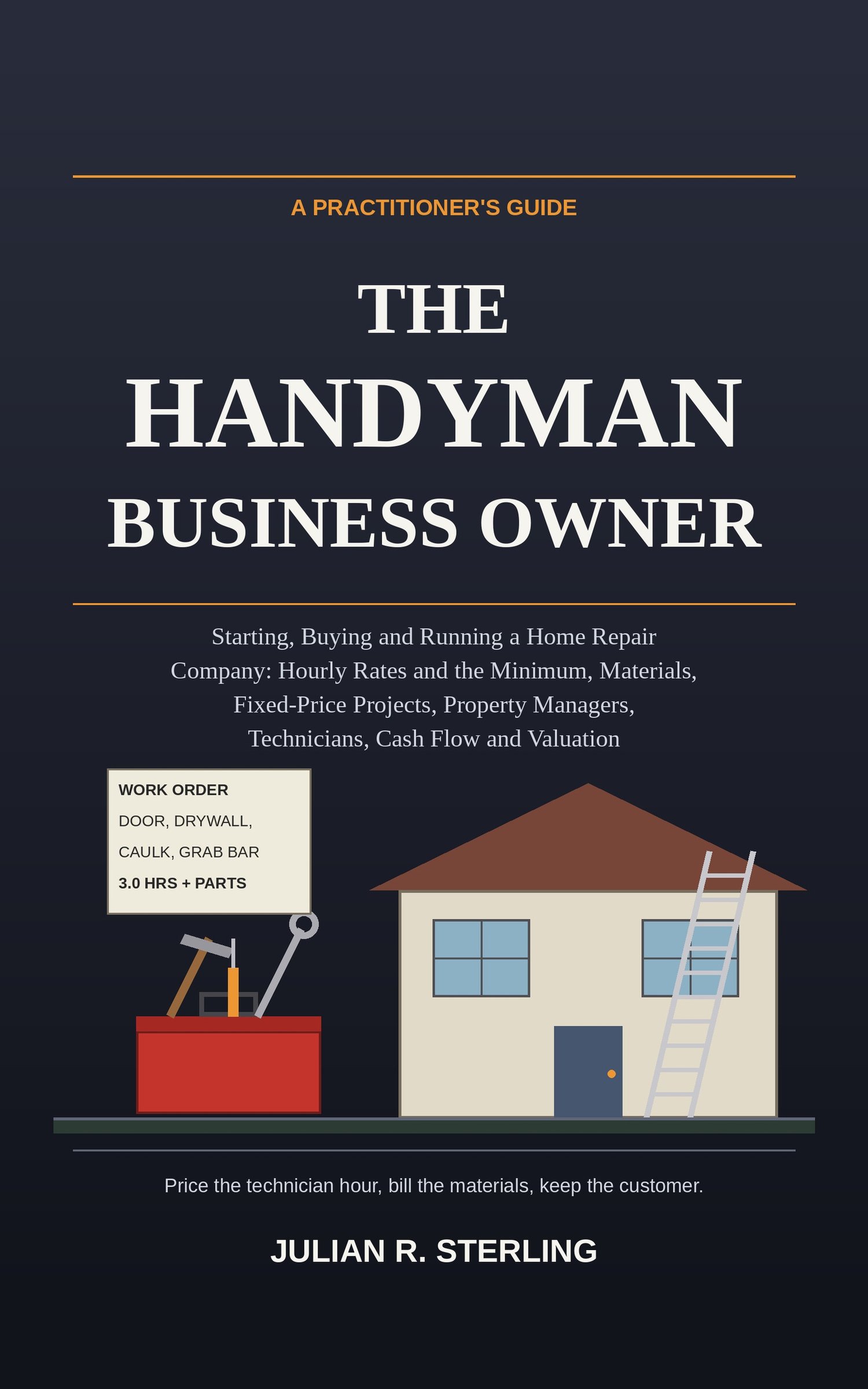
The Handyman Business Owner (PDF edition)
Owning a handyman company, with the numbers worked out.
A truck, a set of tools and a phone number are enough to start a handyman business, and not nearly enough to build a company that pays its owner and can be sold. Behind every finished list sit a technician paid for the drive and the supply run, a minimum that has to cover them, parts that never reach the invoice, a fixed-price bathroom that runs six hours over, and a payroll that falls due every two weeks.
One fictional eight-technician company runs through every chapter: licensing scope and insurance, starting alone or buying, the technician hour, the hourly rate and the two-hour minimum, materials and markup, project bids and change orders, technicians and vans, requests and the close rate, repeat customers and churn, property managers and inspection repair lists, the P&L and break-even, seasons and cash, a plan with a ninth and a tenth technician, and two offers for the company.
- Why a half-hour lockset leaves $4.54 billed by the hour and $186.61 at the minimum
- Materials at 18.1% of revenue and what the markup really pays for
- A bathroom refresh bid at $2,436: $57.97 per technician hour as planned, $30.40 after an unbilled overrun
- A first service call against the same customer five months later
- Make-ready days dense and scattered, and a seller's repair list before closing
- A regional home services company and an individual buyer with an SBA loan compared
With a free Excel model of the case at julianrsterling.com/handyman-business-owner.
This edition: PDF, A5, 85 pages, DRM-free.