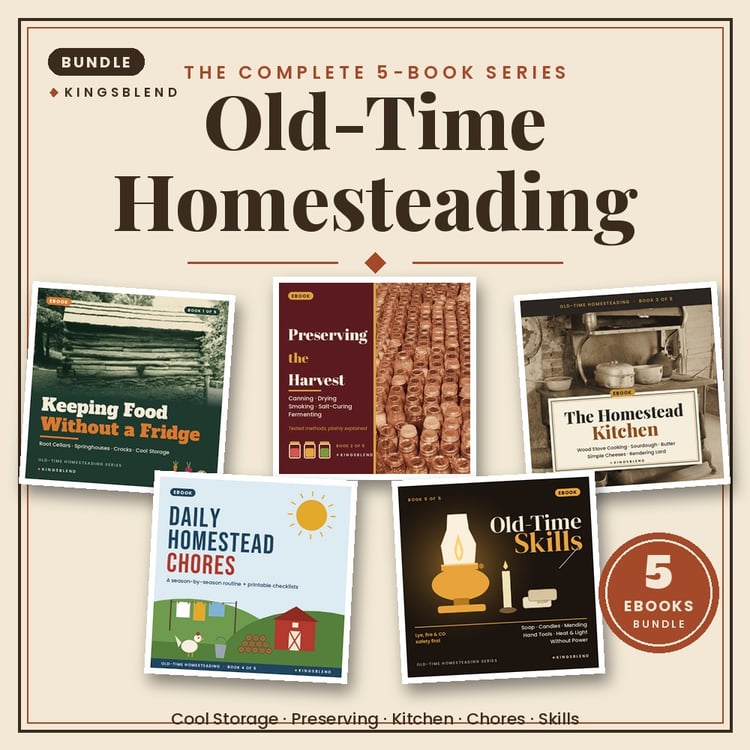

Preserving the Harvest
🔥 Preserving the Harvest — Instant Download Guide
A clear, step-by-step guide to help you get started the right way.
A ready-to-use, professionally designed guide that helps you choose the right preserving method for each food, understand botulism risk, and follow tested water-bath, pressure canning, drying, curing, smoking and fermenting methods without piecing it together from scattered sources. Perfect for beginners and returning canners who want to preserve food the safe, tested way.
✨ What You Get Inside
- 40-page plain-English guide with diagrams, checklists, logs and a glossary, with every method tied to USDA / NCHFP sources
- Chapters 1–3: how preservation works, botulism plainly explained, and where to find tested recipes
- Chapters 4–5: equipment, altitude adjustments, and acid: why low-acid foods (vegetables, meats, beans, soups) must be pressure canned and tomatoes need added acid
- Chapters 6–7: water-bath canning and pressure canning step by step
- Chapter 8: old ways that are no longer safe (open-kettle, oven and inversion canning, paraffin seals, water-bath canning low-acid foods, garlic in oil and more)
- Chapters 9–14: storing and checking jars, drying, jerky, salt-curing and nitrite safety, smoking temperatures, and pork, wild game and trichinella
- Chapters 15–17 and Appendix: fermenting with correct salt ratios and the signs of a good ferment versus spoilage, quick notes on pickles, jams and freezing, a preserving year, plus printable checklists and logs
💡 Who This Is For
- First-time canners who want to do it right
- Gardeners and hunters preserving their own food
- Anyone who learned the old ways and wants current safety guidance
🔄 Before & After Using This Guide
- Before: Unsure which foods need a pressure canner / After: A clear high-acid vs low-acid rule you can apply to any food
- Before: Following a family recipe with no tested source / After: Know where to find tested times and how to adjust for altitude
- Before: Guessing whether a ferment or jar has gone bad / After: Clear signs of a good batch and when to throw it out
🏆 What Makes This Guide Better
- Designed for real-world practice
- Built on current USDA, extension-service, CPSC and NFPA guidance, with sources listed
- Clean, modern, professional layout
- Clear, easy to follow, even for beginners
- Instant download — start using it immediately
- Saves hours of research
⚡ Get Results in Minutes
- Download instantly
- Open in any PDF reader
- Print the checklists or read it on any device
- Start using it immediately
🔒 Instant Access
Once you purchase, you get immediate access to your files.
We’re a new store, but our digital tools are built to save you time, simplify your workflow, and help your business grow. Your trust matters — and every product is designed to deliver real results.
Thank you for supporting a growing brand.
— Kyle P. Herrick, Founder
✔️ Satisfaction Guarantee
If this guide doesn’t help you save time or improve your workflow, message me and I’ll make it right. Your success matters.
💬 Need Help?
Message me anytime — I’m here to help you get the most out of your guides.
🚀 Ready to Use This Guide?
Click “Buy Now” to get instant access and start using it today.
General educational guide only. Not professional, medical, legal, veterinary, electrical or fire-safety advice, and no health claims are made. Food safety: follow current USDA / National Center for Home Food Preservation tested methods and use a tested recipe for every batch; this guide does not invent processing times. Laws and codes vary by location (cellars and excavation, wood stoves and chimneys, raw milk, animals, wells, burning), so always check your local codes and laws. Part of the Old-Time Homesteading series (5 ebooks) from Kingsblend: https://payhip.com/Kingsblend