
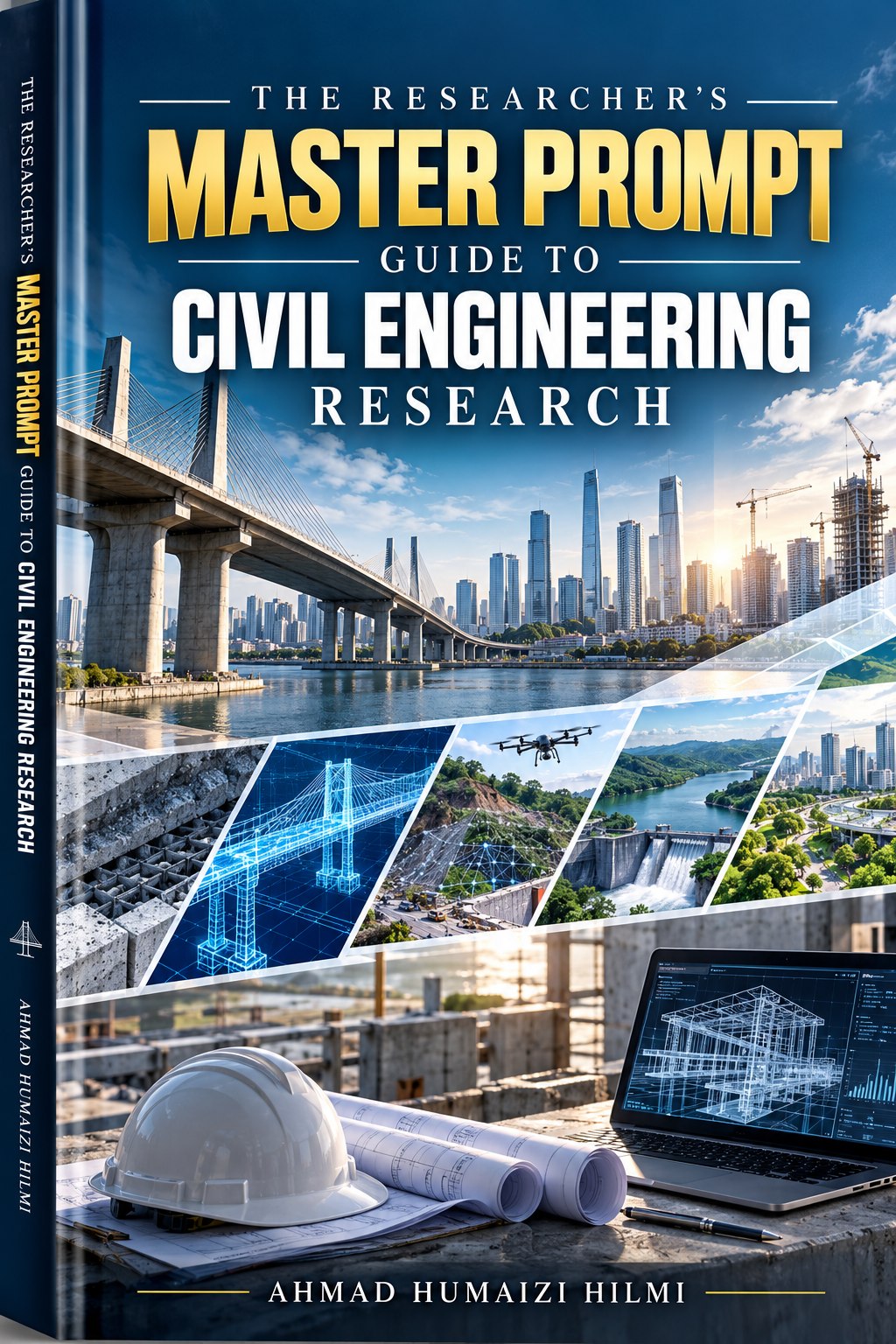
10. CIV-SYN-010 — Integrated Civil Engineering Research, Interdisciplinary Evidence Synthesis, Systematic Literature Reviews, Bibliometric Analysis, Meta-Analysis, Research Validation, Engineering Innovation and Future Directions
Description
This Master Prompt provides an integrated and interdisciplinary framework for synthesizing theoretical perspectives, empirical evidence, experimental investigations, computational methodologies, engineering technologies and practical applications across the major domains of contemporary civil engineering research. It connects structural engineering, geotechnical engineering, advanced construction materials, structural health monitoring, digital engineering, artificial intelligence, construction management, environmental engineering, sustainable infrastructure and engineering education to develop comprehensive interpretations of complex engineering problems. The framework incorporates systematic literature reviews, scoping reviews, bibliometric analysis, science mapping, citation network analysis, thematic synthesis, comparative research evaluation, meta-analysis, evidence gap mapping and integrated conceptual framework development. Particular attention is given to identifying relationships among engineering theories, experimental observations, numerical predictions, computational intelligence, infrastructure performance, sustainability outcomes and real-world implementation constraints. The Master Prompt examines methodological heterogeneity, differences in engineering testing standards, inconsistencies in material characterization, variations in structural loading conditions, uncertainty in computational models, limitations in research datasets and challenges associated with comparing findings across different engineering environments. Researchers are guided in establishing transparent literature search strategies, defining eligibility criteria, extracting and evaluating engineering evidence, assessing methodological quality, synthesizing quantitative and qualitative findings, evaluating publication bias where appropriate and developing defensible research conclusions. The framework also integrates research validation, sensitivity analysis, uncertainty quantification, reproducibility, ethical research practices and responsible artificial intelligence. Emerging research directions include intelligent and autonomous infrastructure, quantum-enabled engineering computation, advanced metamaterials, digital twin integration, climate-resilient construction, circular infrastructure systems and human–AI collaboration in engineering research. The ultimate objective is to support rigorous interdisciplinary knowledge integration, identify meaningful research gaps, develop innovative engineering frameworks and establish evidence-based future research agendas that advance civil engineering science, technology, sustainability and professional practice.