




HSC Maths Ext 1 + 2: Investigation: Think. Explore. Prove
HSC Mathematics Extension 1 + 2: Investigation
Think. Explore. Prove.
A curated collection of 21 guided mathematical investigations for students ready to conquer the most challenging and rewarding frontiers of NSW Extension 1 and Extension 2 Mathematics.
Investigation-style problems represent the pinnacle of the NSW HSC Mathematics curriculum. Designed to fulfill NESA's requirement for deep problem-solving in practical and unfamiliar contexts, they test far more than rote technique, they demand genuine mathematical intuition, logical stamina, and the ability to synthesize concepts across disciplines.
Rather than offering repetitive drills or formulaic past-paper regurgitation, this booklet guides you through multi-step journeys of discovery. You begin with familiar syllabus fundamentals and build systematically toward proving profound theorems and modeling complex physical phenomena, bridging the gap between secondary school mathematics and university-level STEM thinking.
What’s Inside
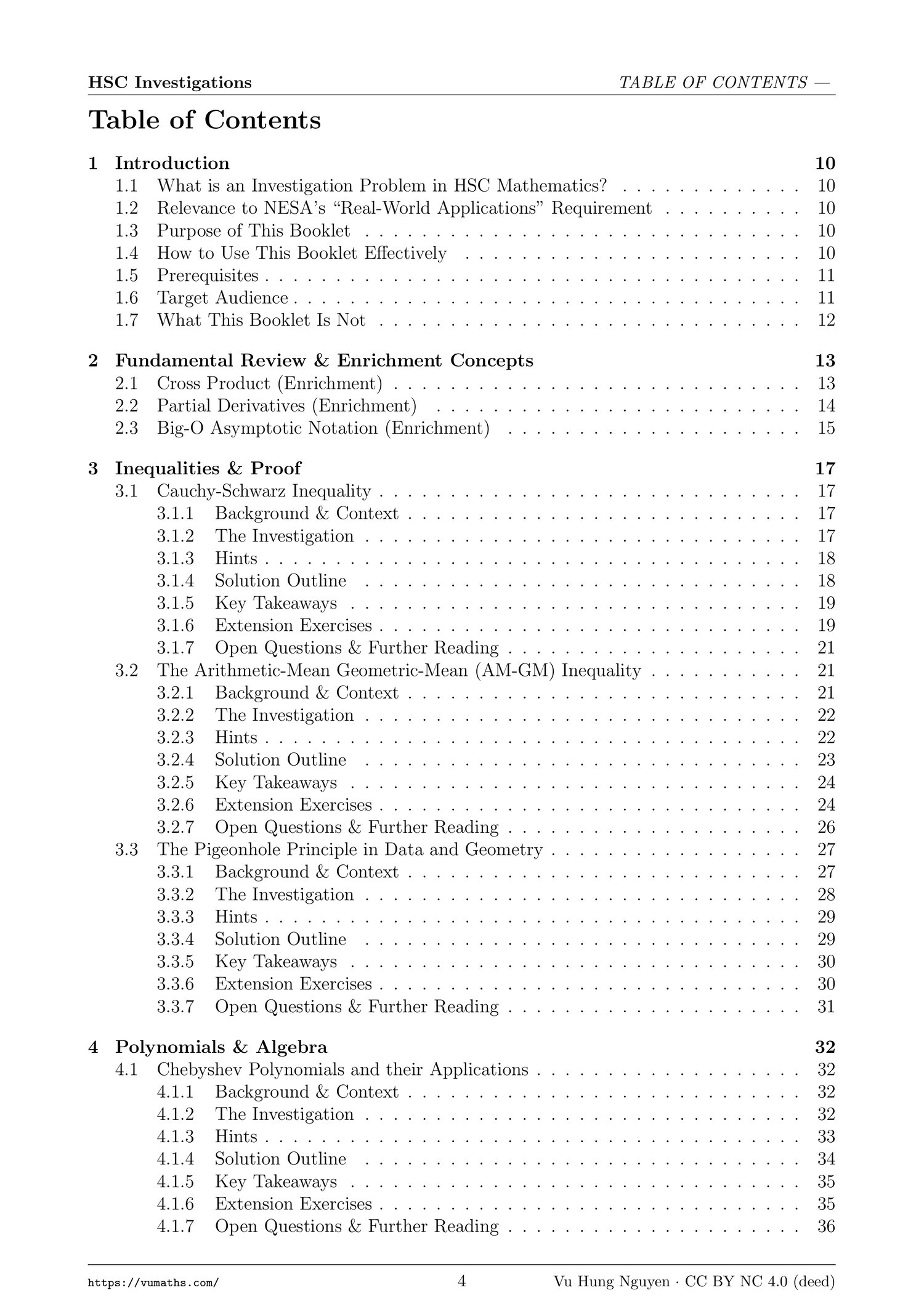
The collection spans the full breadth of the NSW Mathematics Extension 1 (MX1) and Extension 2 (MX2) syllabuses, cross-referenced to both the 2017 framework and the updated 2024 NESA syllabus outcomes (ME1 and ME2).
Across seven comprehensive modules, you will explore 21 self-contained mathematical investigations:
- Proof & Inequalities: Cauchy-Schwarz inequality, the AM-GM inequality, and the Pigeonhole Principle.
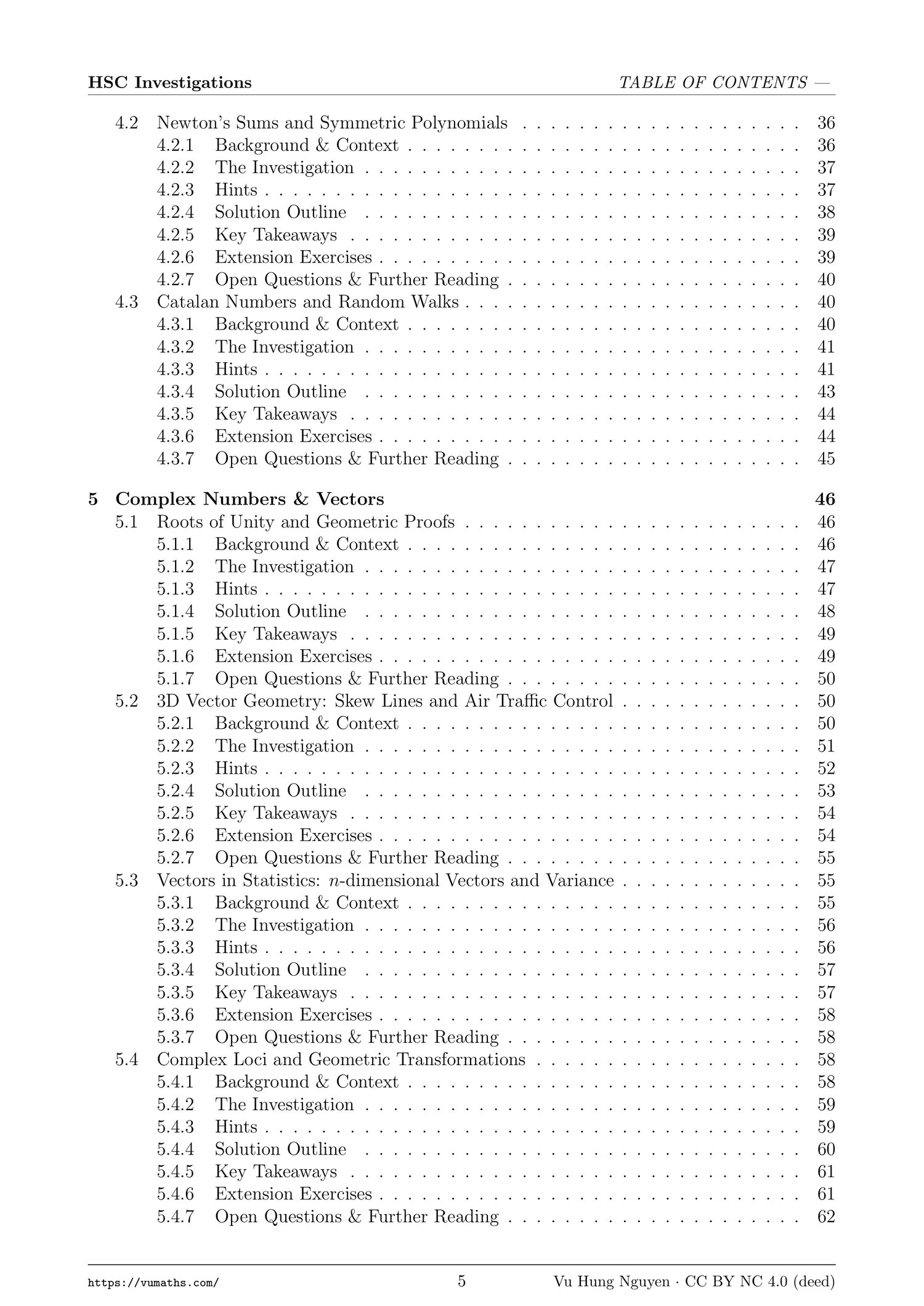
- Polynomials & Algebra: Orthogonal Chebyshev polynomials, Newton’s sums and symmetric relations, and Catalan numbers with random walks.
- Complex Numbers & Vectors: Roots of unity in geometric proof, 3D vector geometry and closest-approach flight paths, n
- n-dimensional vectors and statistical variance, and complex loci under transformations.
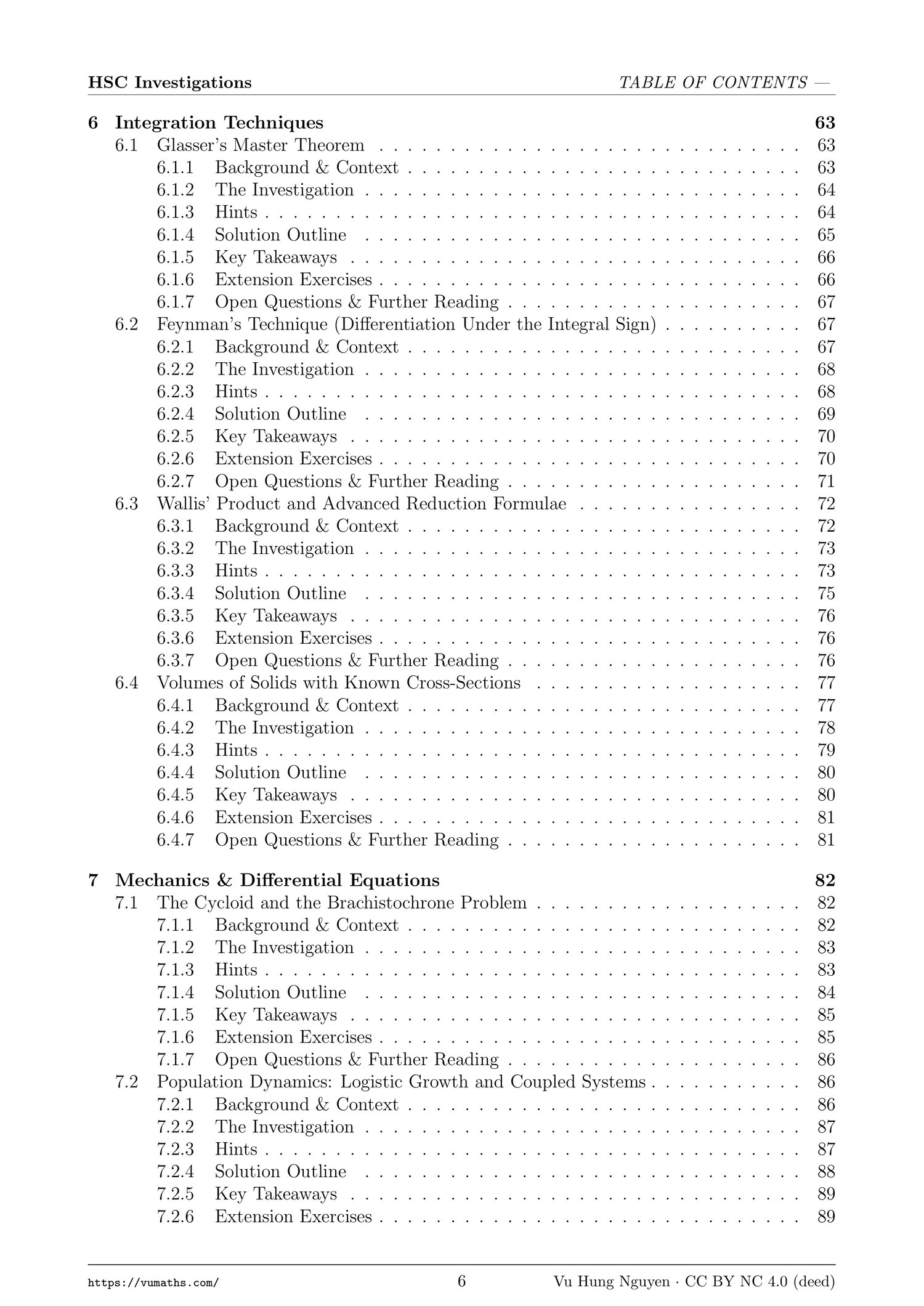
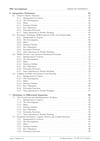
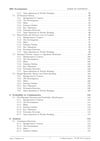
- Advanced Integration Techniques: Glasser’s Master Theorem, Feynman’s technique (differentiation under the integral sign), Wallis’ product, and volume calculations via general slicing.
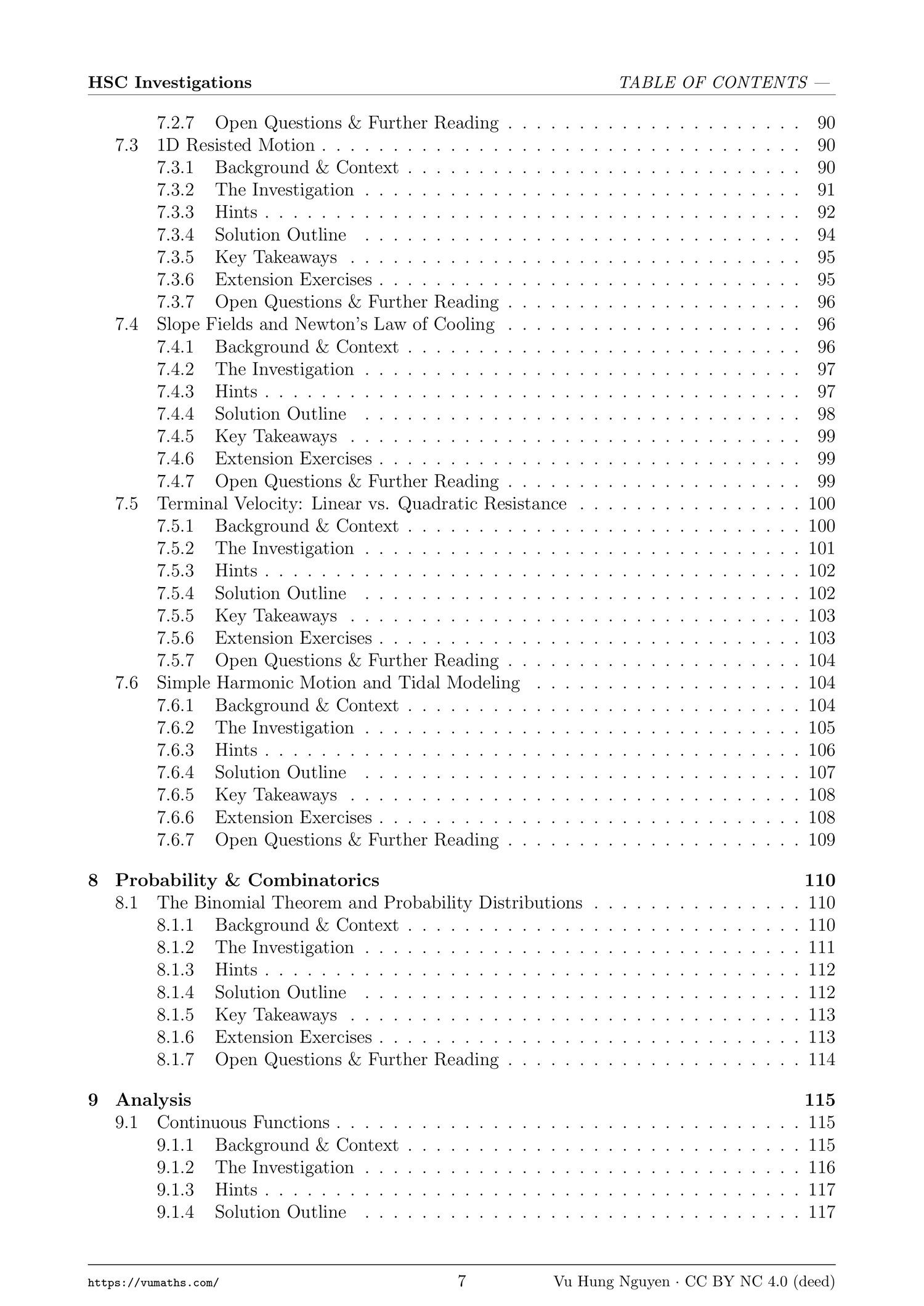
- Mechanics & Differential Equations: The brachistochrone and cycloid curve, logistic population dynamics, resisted projectile motion, slope fields with Newton’s Law of Cooling, terminal velocity under drag, and simple harmonic motion in tidal modeling.
- Probability & Combinatorics: Binomial expansions, combinatorial proofs, and discrete probability distributions.
- Foundations of Analysis: Rigorous limits, continuity via epsilon-delta definitions, and the classification of discontinuities.
Uniform Pedagogical Structure
Every topic is presented in a uniform, carefully engineered 7-part structure:
- Background & Context Historical origin, mathematical motivation, and real-world relevance.
- The Investigation Fully scaffolded, multi-part problem statements (parts a, b, c...) crafted in authentic HSC examination style.
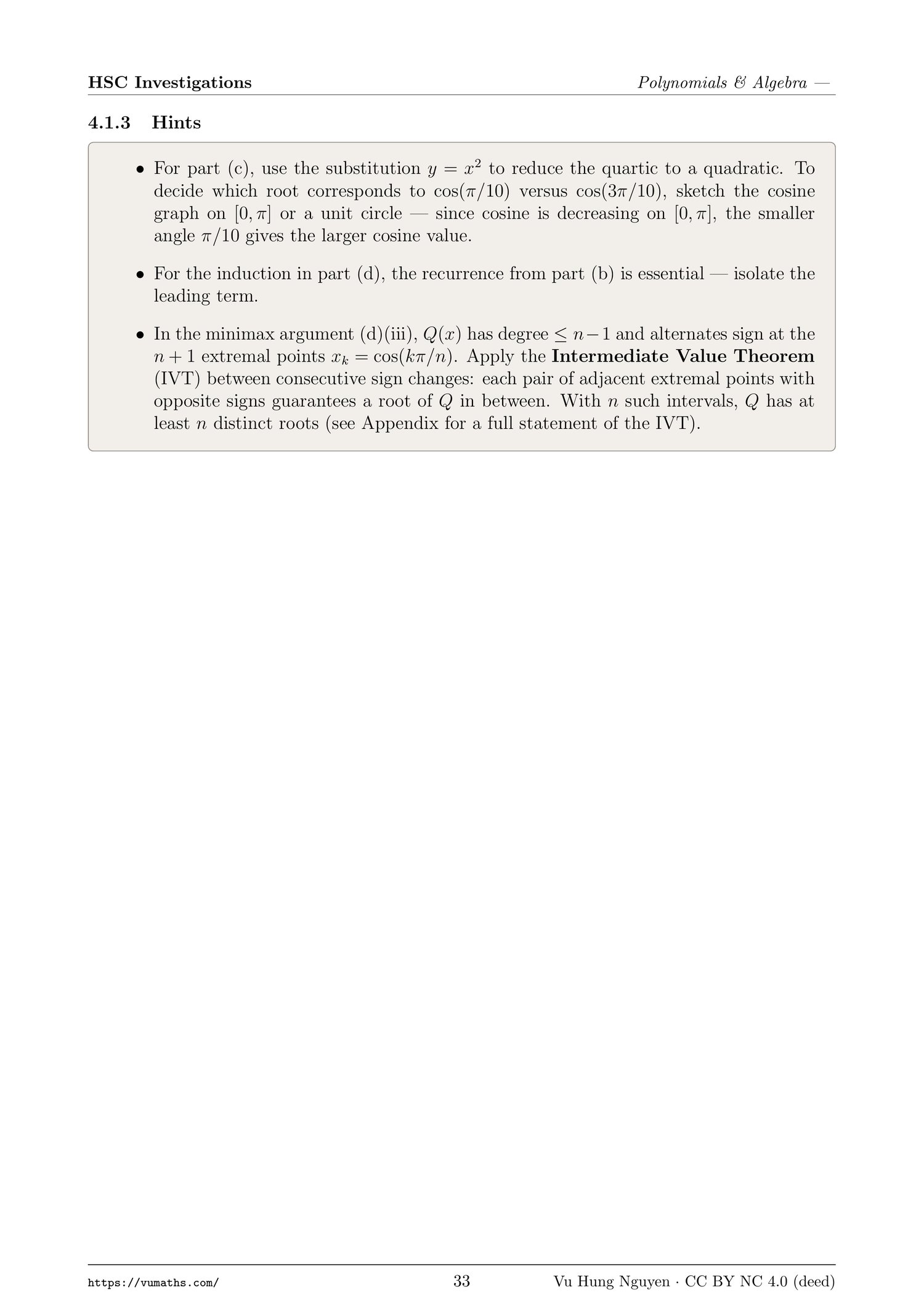
- Hints Carefully pitched nudges to unblock you at critical junctures without giving away the breakthrough.
- Solution Outline Step-by-step mathematical reasoning, highlighting key theorems and structural arguments.
- Key Takeaways Clear summaries connecting the methods directly to examinable syllabus outcomes.
- Extension Exercises Further problems to test your ability to transfer techniques to new scenarios.
- Open Questions & Further Reading Pointers connecting each topic to undergraduate mathematics, physics, and engineering.
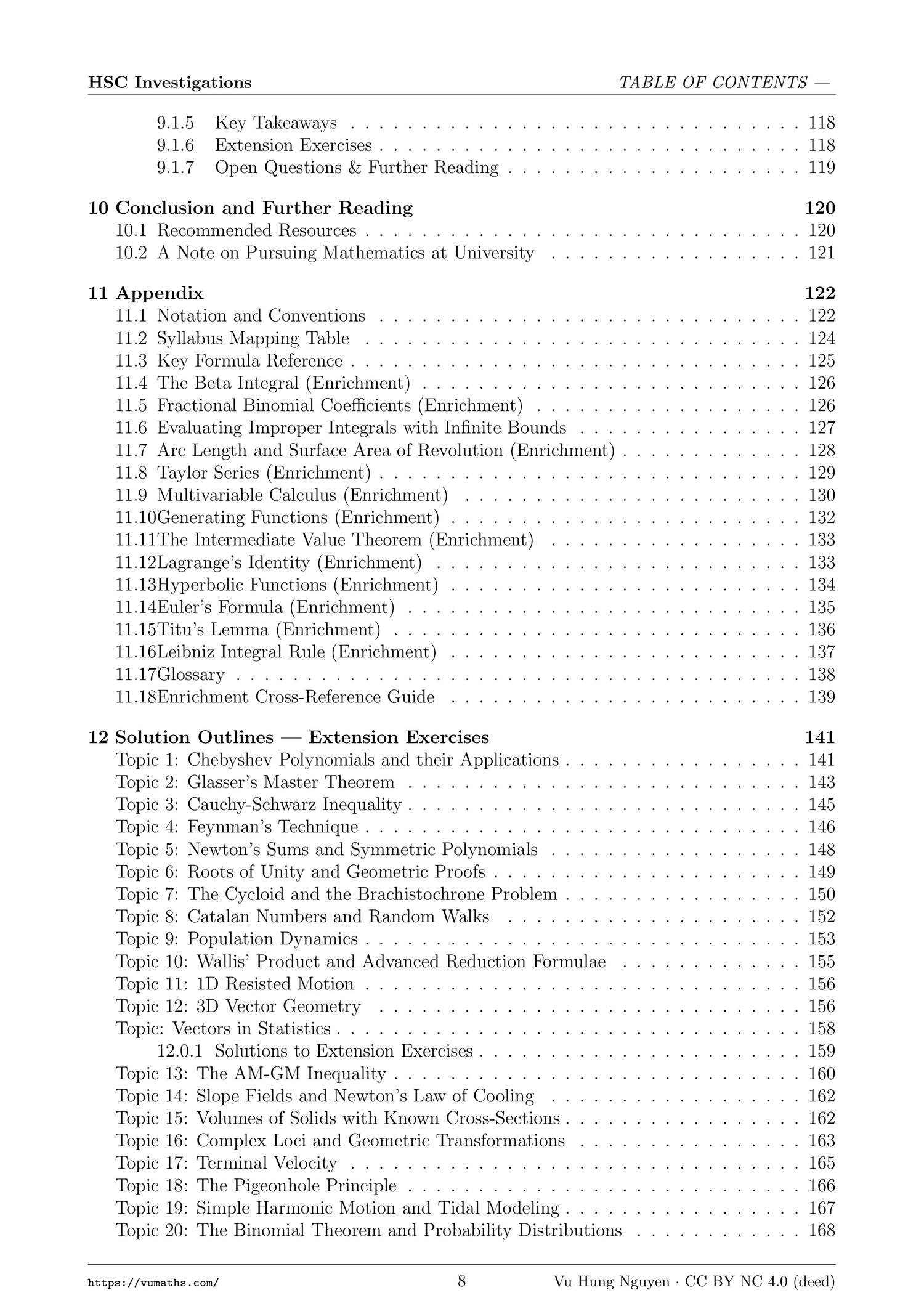
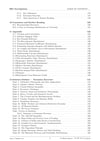
Bonus Reference Materials: The booklet includes complete solution outlines for all extension exercises, an extensive Notation and Conventions guide, and enrichment toolkits covering cross products, Big-O asymptotic notation, and generating functions.
How to Use This Booklet
Treat each investigation as a mathematical journey:
- Attempt first: Give each scaffolded part a genuine, independent effort before consulting the hints.
- Use hints sparingly: If you hit a roadblock, take the hint as a subtle nudge, return to the problem, and push the argument through yourself.
- Study the solutions: Evaluate the elegance, precision, and rigor of your reasoning against the provided solution outline.
- Work flexibly: The 21 topics are completely self-contained. Work through them in any order to complement your current school units, or use the Syllabus Mapping Table in the Appendix to target specific NESA outcomes.
Quality of understanding always trumps speed.
Who It’s For
- HSC Extension 1 & Extension 2 Students: Aiming for Band E4 results who want to master unseen, high-difficulty multi-part questions and build supreme exam confidence.
- High School Teachers & Tutors: Seeking rich, syllabus-linked investigation tasks, classroom extension material, and contest-level inquiry problems.
- Aspiring University STEM Undergraduates: In Mathematics, Engineering, Physics, and Computer Science looking for a solid conceptual springboard before their first semester.
- Curious Problem Solvers: Who love mathematics and want to experience the thrill of discovering why formulas work rather than merely applying them.
Book Details
- Author: Vu Hung Nguyen
- Book: HSC Mathematics Extension 1 + 2: Investigation: Think. Explore. Prove.
- Contents: 21 comprehensive, scaffolded investigations spanning Proof, Polynomials, Vectors, Complex Numbers, Integration, Mechanics, Combinatorics, and Analysis, complete with hints, detailed solution outlines, syllabus takeaways, extension problems, and reference appendices.