


The Deceptive Click
There is a feeling, a low-grade hum of unease that has come to define modern life. It is the feeling you get after an hour has vanished into the hypnotic, endless scroll of a social media feed. It is the jolt of frustration when you see a mysterious charge on your credit card for a subscription you never remember wanting. It is the quiet sense of being outmaneuvered as the price of a plane ticket inflates with a cascade of hidden fees just before you click “buy.” It is the weary resignation of trying to navigate a customer service labyrinth designed to exhaust you into submission.
For years, we have accepted these moments as the cost of doing business in the digital age. We have blamed ourselves. I should have been more disciplined. I should have read the fine print. I was careless. We have internalized the friction, the anxiety, and the small, daily thefts of our time, our money, and our attention as personal failings.
This book is an argument that you are not at fault.
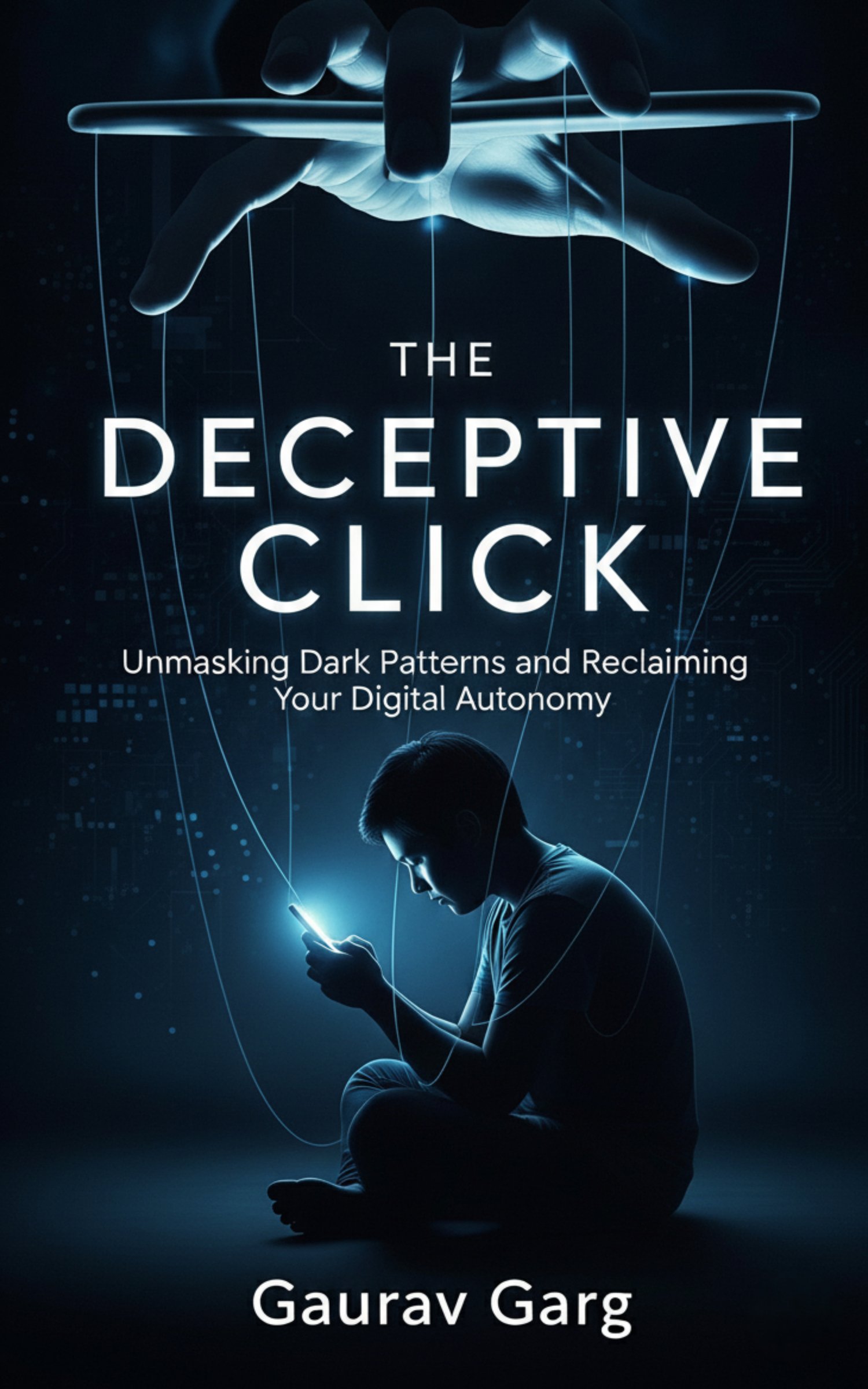
That feeling of being managed, herded, and subtly coerced is not a product of your imagination. It is the intended result of a vast and invisible architecture of manipulation built into the very fabric of the websites and apps we use every day. The digital world is not a neutral space; it is a meticulously crafted environment designed to guide our behavior. And while much of that design is for our benefit, a darker, more predatory philosophy has taken root.
It has a name: dark patterns.
Coined in 2010 by user experience (UX) designer Harry Brignull, the term describes a form of design that is not merely bad or confusing, but is intentionally crafted to trick, manipulate, or coerce you into choices you would not otherwise have made. These are not bugs in the system; they are the system’s most ruthlessly effective features. They are the product of a sophisticated, data-driven, and often cynical understanding of human psychology, used to exploit our predictable mental shortcuts and emotional vulnerabilities for profit .
This is the central, unsettling truth that this book will uncover: the most effective manipulations in the digital world are not technological tricks. They are not complex viruses or lines of malicious code. They are psychological ones. They are a form of mental judo, using the momentum of your own mind against you.
The architects of these systems understand your brain’s operating system better than you do. They know that most of our decisions are made by a fast, intuitive, and emotional autopilot that is prone to certain predictable biases. They know that our capacity for slow, deliberate, rational thought is a finite resource that can be easily exhausted. The architecture of manipulation is designed to speak directly to your impulsive autopilot while lulling your rational co-pilot to sleep. It is a science of making you act before you can think.
The stakes of this silent, undeclared war are immense. The costs are not abstract; they are measured in the tangible realities of our lives. They are measured in the billions of dollars siphoned from our accounts every year through the “silent tax” of junk fees, unwanted renewals, and unintentional purchases . They are measured in the countless hours of our most finite resource—our attention—that are deliberately hijacked by addictively designed Skinner boxes built to maximize our time on their device.
But the most profound cost is the slow, systematic erosion of our own agency—our fundamental ability to make conscious, autonomous choices about our own lives. We are being conditioned to be passive, to accept the defaults, to give up in the face of manufactured friction, and to exist in a state of digital learned helplessness. It is a crisis that threatens to redefine the relationship between humanity and technology, from one of mastery to one of submission.
Yet, this book is not a work of dystopian despair. It is a work of exposure, but it is also one of empowerment. The era of impunity for these manipulative practices is ending. A global regulatory backlash has begun, and lawmakers are finally starting to codify our digital rights into law . More importantly, the greatest force for change is an aware and educated public. The power of these patterns dissipates the moment they are exposed to the light.
That is the promise of this book. It is your guide to turning on the lights.
Over the next thirty-five chapters, we will embark on a journey.
· First, we will deconstruct the psychological blueprint of deception, exploring the cognitive biases and emotional triggers that these patterns exploit.
· Next, we will enter the wild, armed with a comprehensive field guide to identify, name, and understand the most common and pernicious dark patterns you will encounter.
· We will then audit the full, sobering human cost of these designs, moving from the financial to the psychological and the societal.
· Finally, and most importantly, we will build your arsenal. You will learn the mental techniques, the technological tools, and the strategic playbooks to defend yourself, to fight back, and to reclaim your digital autonomy.
This is more than just a book; it is a course in digital self-defense. It is an invitation to transform your role from a passive user, buffeted by the invisible currents of a manipulative architecture, to an empowered, critical, and sovereign citizen of the digital world. The journey begins now, with a single, deceptive click.