
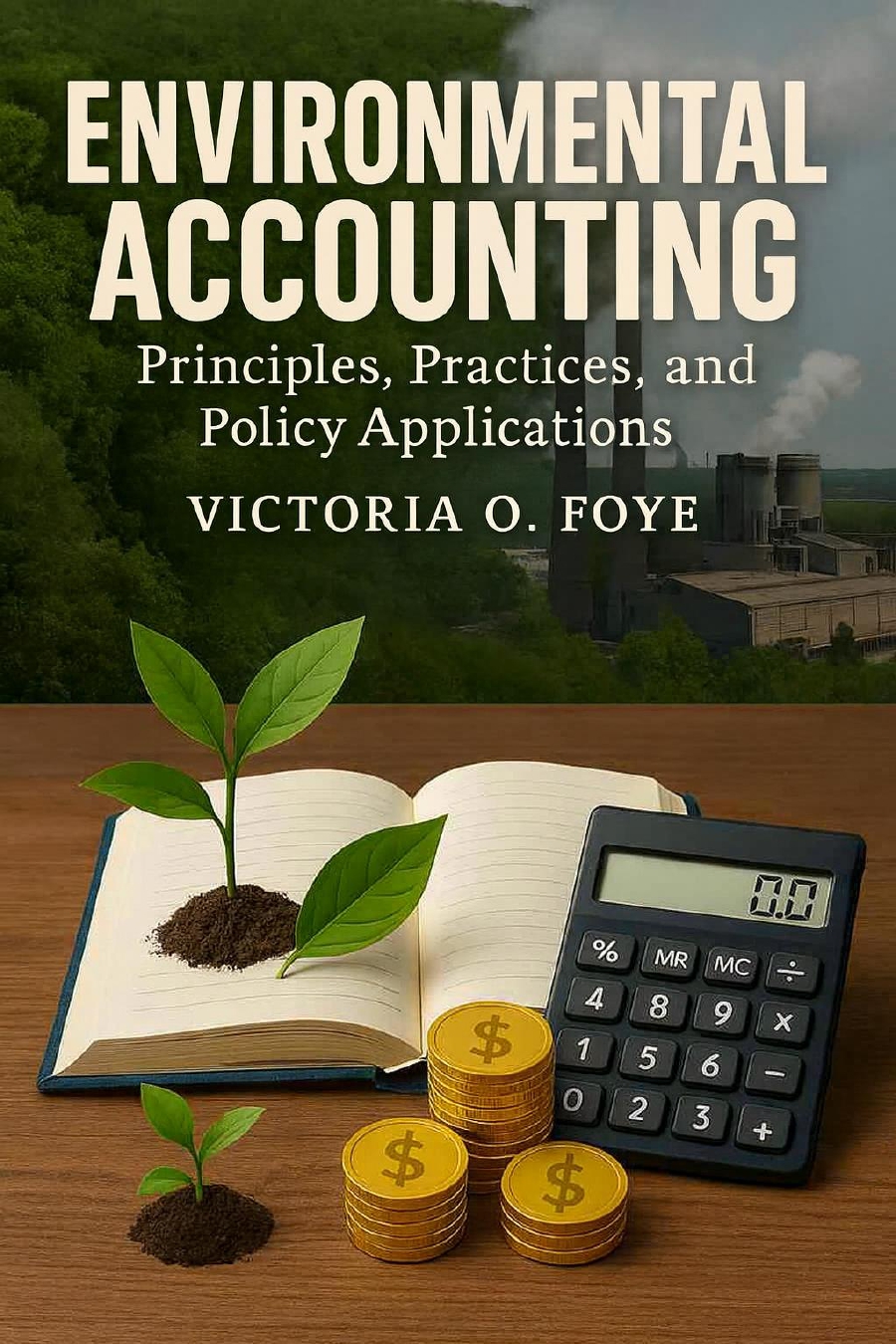
Еnvіrоnmеntаl Аccоuntіng Prіncіplеs, Prаctіcеs, аnd Pоlіcy Аpplіcаtіоns
Environmental sustainability has become one of the defining challenges of contemporary economic development. As economies pursue growth, the consequences of resource depletion, environmental degradation and ecosystem loss have become increasingly difficult to ignore. Understanding these challenges requires more than conventional accounting approaches; it demands frameworks that recognise the economic value of natural resources and make environmental costs and benefits visible in decision-making. This is where environmental accounting becomes indispensable.
This textbook, Environmental Accounting, provides an introduction to the principles, concepts and applications of environmental accounting, highlighting its importance in understanding the relationship between economic activities, the environment and sustainable development. It presents an integrated perspective that brings together economic reasoning, environmental considerations and accounting approaches to deepen understanding of how natural resources and environmental assets can be recognised, assessed and incorporated into economic and policy decisions.
Drawing on insights from economics, environmental and resource management, and quantitative analysis, the book underscores the importance of accounting for environmental costs, valuing natural resources and strengthening the information base for sustainable development. It also highlights the relevance of environmental accounting to contemporary policy debates on resource management, environmental protection and the pursuit of inclusive and sustainable economic growth.
Written with students and practitioners in mind, this textbook will be a useful resource for undergraduate and postgraduate students, lecturers, researchers, economists, accountants, environmental professionals, development practitioners and policymakers. It will also serve as a valuable reference for anyone seeking to understand how accounting for the environment can contribute to better economic decisions, more effective public policy and a more sustainable future.