

The Art of Piano Pedalling
Develop clearer, more expressive and more confident pedalling — and learn to listen to the sound you’re creating.
The pedals can completely transform the sound of the piano. They can create warmth, resonance, colour and atmosphere — but they can also leave our playing sounding muddy, blurred or disconnected when we’re not quite sure how to use them.
For many pianists, pedalling is something they have simply picked up along the way. Perhaps you follow the markings in the score, change the pedal when the harmony changes, or rely on instinct — but still find yourself wondering:
Am I using too much pedal? When exactly should I change it? Should I pedal Bach or Mozart? What does the una corda really do? And how do I decide what sounds right?
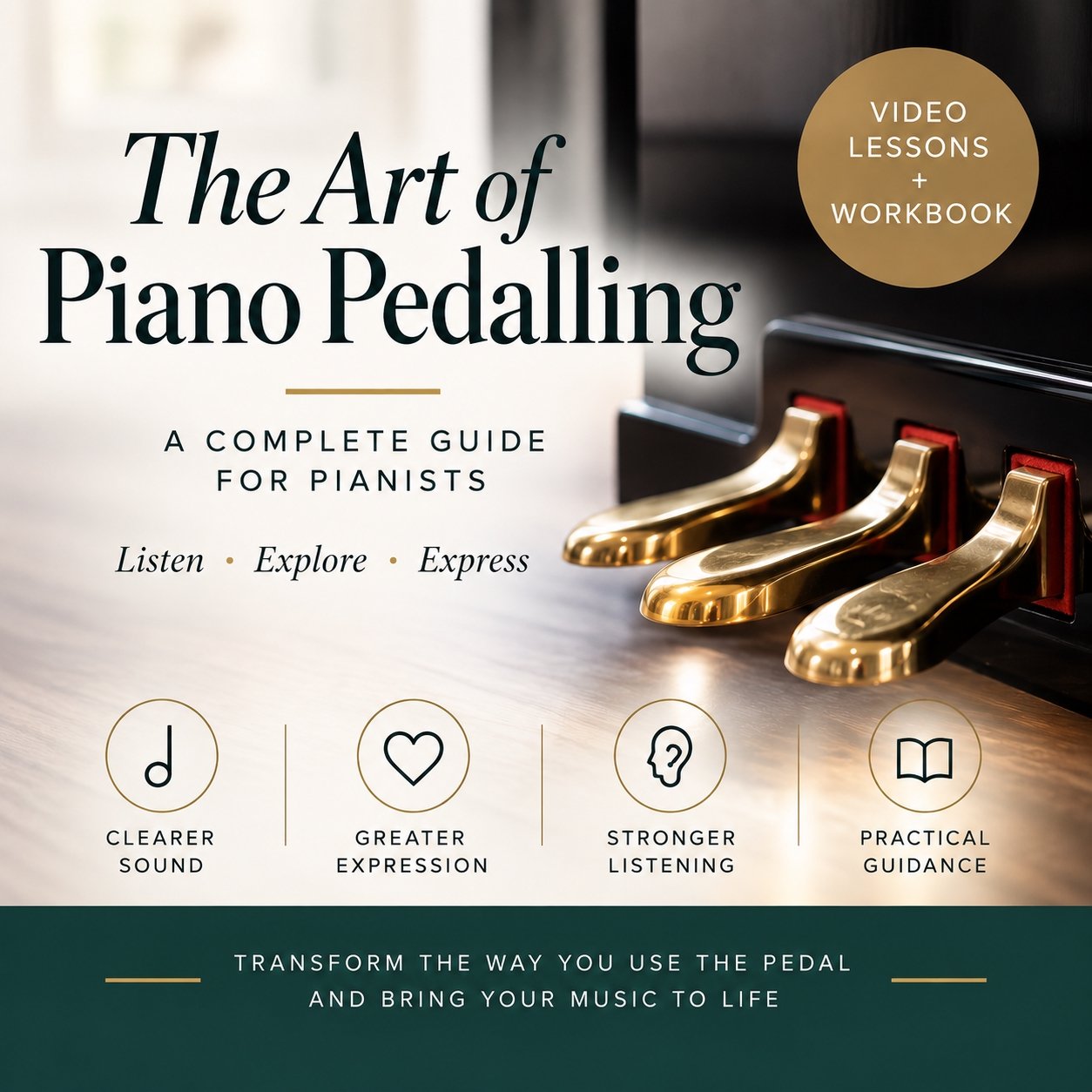
The Art of Piano Pedalling is a practical nine-module video course designed to answer those questions and help you develop a more confident, listening-led approach to the pedals.
What you'll learn
Throughout the course, I'll take you step by step through the principles and practical techniques behind effective pedalling. You'll discover how the pedals actually work, how to coordinate the fingers and pedal cleanly, and how to recognise and correct some of the most common pedalling problems.
We'll explore how pedalling changes across different styles and periods, from Bach and Mozart through Beethoven and Chopin to Debussy, as well as looking at the expressive possibilities of the una corda and sostenuto pedals.
Most importantly, you'll learn how to make your own musical decisions, rather than simply relying on printed pedal markings.
The course includes
9 practical video modules, taking you from the fundamentals through to applying pedalling confidently in your own repertoire.
You'll also receive a comprehensive 18-page course workbook, packed with listening exercises, practical tasks, repertoire worksheets, quick-reference material and space to apply the ideas to the pieces you're currently learning.
You'll also receive the Five Step Pedalling Method quick-reference guide:
PLAY → IDENTIFY → ADD → LISTEN → REFINE
It's a simple process you can return to whenever you're deciding how to pedal a passage.
The nine modules
1. Welcome
An introduction to the course and how to get the most from it.
2. Understanding the Pedals
Discover what the damper, una corda and sostenuto pedals actually do to the sound of the piano.
3. The Golden Rule of Pedalling
Learn one of the most important principles of clean pedalling: the fingers lead; the pedal follows.
4. Listening Before Looking
Move beyond simply following pedal markings and learn to let your ears guide your decisions.
5. Common Pedalling Mistakes
Recognise muddy harmonies, gaps, poorly timed changes and other common problems — and learn how to correct them.
6. Pedalling Through the Musical Periods
Explore different approaches to pedalling in Baroque, Classical, Romantic, Impressionistic and later repertoire.
7. Una Corda and Sostenuto
Discover how these less frequently discussed pedals can add colour and new expressive possibilities to your playing.
8. Applying Pedalling to Your Own Pieces
Bring everything together using my practical Five Step Pedalling Method.
9. Your Pedalling Practice Plan & Conclusion
Turn what you've learned into a practical routine you can continue using long after completing the course.
Who is this course for?
This course is particularly suitable for adult pianists who already have some playing experience and want to develop a more sophisticated understanding of pedalling.
You don't need to be an advanced pianist. The principles can be applied to repertoire at many different levels, and the emphasis throughout is on practical experimentation and listening, rather than complicated theory.
About your tutor
I'm Jonathan Delbridge, a pianist, piano teacher and music examiner. Much of my teaching focuses not simply on what pianists should do, but on helping them understand how to practise, listen and solve musical problems for themselves.
I've created this course to give pedalling the focused attention it deserves — combining clear explanations with demonstrations at the piano and practical exercises you can immediately apply to your own playing.
Start developing more confident pedalling
Good pedalling isn't about memorising a set of rules.
It's about listening to the sound you're creating and using the pedal to enhance the music.
Work through the course at your own pace, experiment at your own piano, and return to the videos and workbook whenever you're working on new repertoire.
The Art of Piano Pedalling — £35
9 video modules • 18-page workbook • Five Step Pedalling Method guide • Lifetime access