

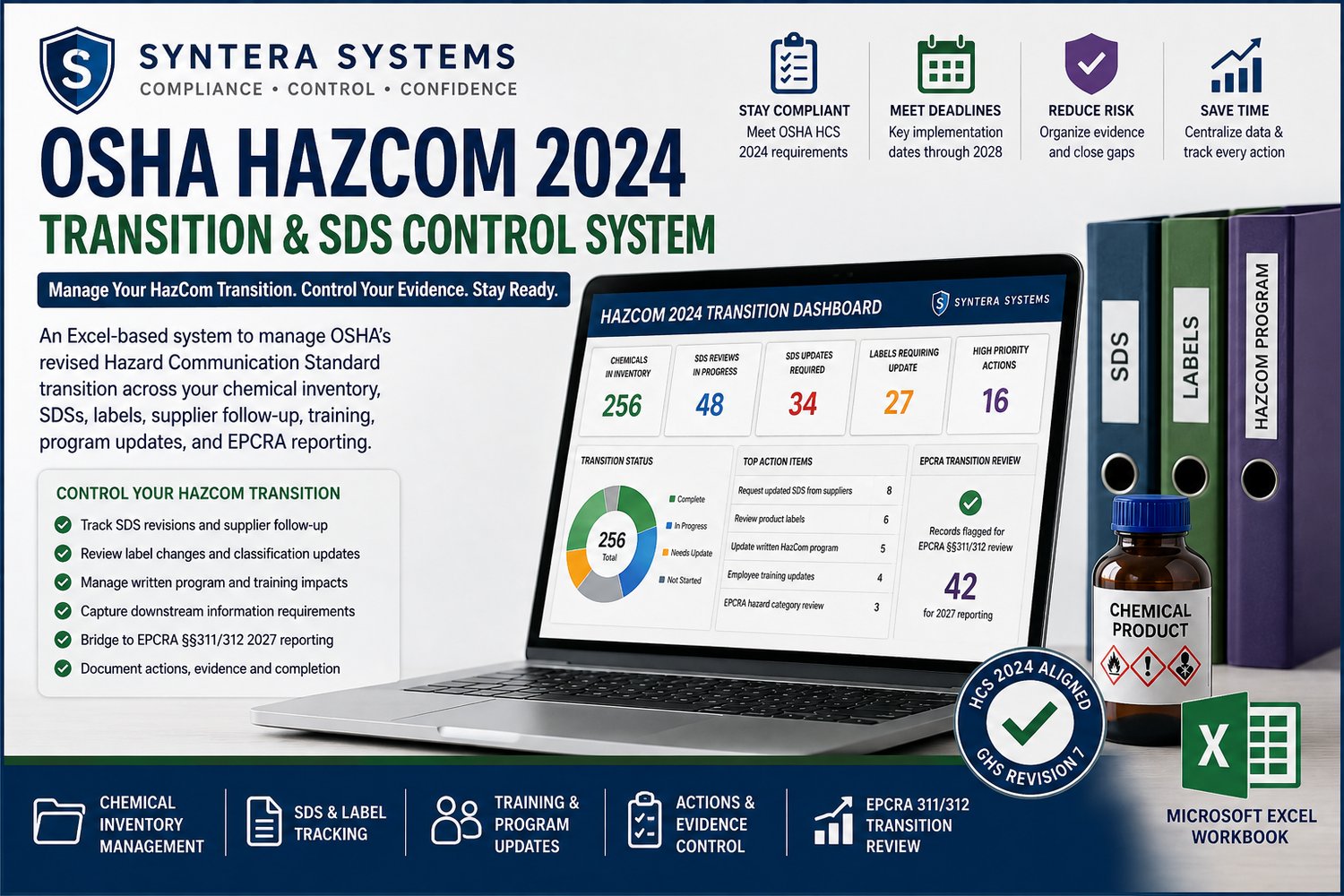
OSHA HazCom 2024 Transition & SDS Control System
OSHA HazCom 2024 Transition & SDS Control System
An Excel-based transition and evidence-control system for organizations implementing OSHA’s revised Hazard Communication Standard.
OSHA’s updated Hazard Communication Standard changes important requirements involving chemical classifications, Safety Data Sheets (SDSs), labels, downstream information, and other hazard-communication processes.
The OSHA HazCom 2024 Transition & SDS Control System gives EHS, compliance, regulatory, and operations teams one structured place to manage that transition across their chemical inventory.
Instead of tracking revised SDSs, supplier requests, label reviews, training impacts, and implementation issues through scattered spreadsheets and emails, this system creates a centralized, reviewable transition record.
What the System Helps You Control
• Chemical and hazardous-product inventory
• Manufacturer and supplier information
• Current SDS versions and revision dates
• SDS transition reviews
• Supplier SDS requests and follow-up
• Hazard-classification change flags
• Label review and update status
• Small-container label considerations
• Downstream-use information
• Written HazCom program impacts
• Employee information and training actions
• Supplier and purchasing controls
• Transition gaps and corrective actions
• Supporting evidence and document locations
• EPCRA §§311/312 transition review
Included Worksheets
Dashboard — See chemical inventory, SDS reviews, required updates, label issues, high-priority actions, EPCRA review items, and overall transition readiness at a glance.
Chemical Master — Build a controlled master inventory of chemicals and products, suppliers, business roles, facilities, SDSs, labels, owners, and transition status.
SDS Transition — Track current SDS revisions, review status, potential classification changes, supplier follow-up, evidence, and required updates.
Label Review — Control label reviews, including product/container information, small-container considerations, classification changes, and update requirements.
Downstream Info — Track known or anticipated downstream uses, information sources, additional data requests, and related transition evidence.
Program & Training — Identify impacts to written Hazard Communication programs, workplace procedures, employee information/training, and purchasing controls.
EPCRA Transition — Flag chemical records that may require review under EPA’s revised EPCRA §§311/312 hazard-category structure and track the transition to the 2027 reporting framework.
Actions & Evidence — Convert transition gaps into prioritized assignments with owners, target dates, supporting evidence, and documented completion.
Sources & Scope — Maintain the official OSHA and EPA sources underlying the system and clearly document the product’s compliance boundaries.
Built for a Real Transition — Not Just a Checklist
This isn't a generic HazCom checklist.
The system is designed to help organizations answer operational questions such as:
Which chemicals have been reviewed? Which SDSs are current? Which suppliers still owe us information? Which labels may require attention? What changed? Who owns the next action? Where is the supporting evidence?
It also creates a bridge between HazCom transition work and EPA’s revised EPCRA hazardous-chemical inventory reporting structure, allowing organizations to identify records that warrant additional EHS review before future Tier II reporting.
Who This Is For
Designed for:
• EHS managers and coordinators
• Chemical manufacturers and importers
• Distributors
• Manufacturing facilities
• Warehouses and industrial operations
• Regulatory and compliance teams
• Safety professionals
• Organizations managing significant chemical inventories
• Consultants assisting clients with HazCom transition projects
Format: Microsoft Excel workbook
Price: $149 one-time
Instant digital download
No subscription
This product is an operational transition, evidence, and document-control aid. It does not classify chemicals, author or certify Safety Data Sheets or labels, determine whether a chemical is hazardous, determine legal applicability, determine EPCRA reporting obligations or thresholds, replace a written Hazard Communication program, provide employee training, or provide legal/EHS advice. Users remain responsible for applying current OSHA, State Plan, EPA, and other applicable requirements to their specific products and workplaces.