












Fred Rogers: A Hearing—But Was There Listening? | High School ELA & History Unit | Grades 9–12
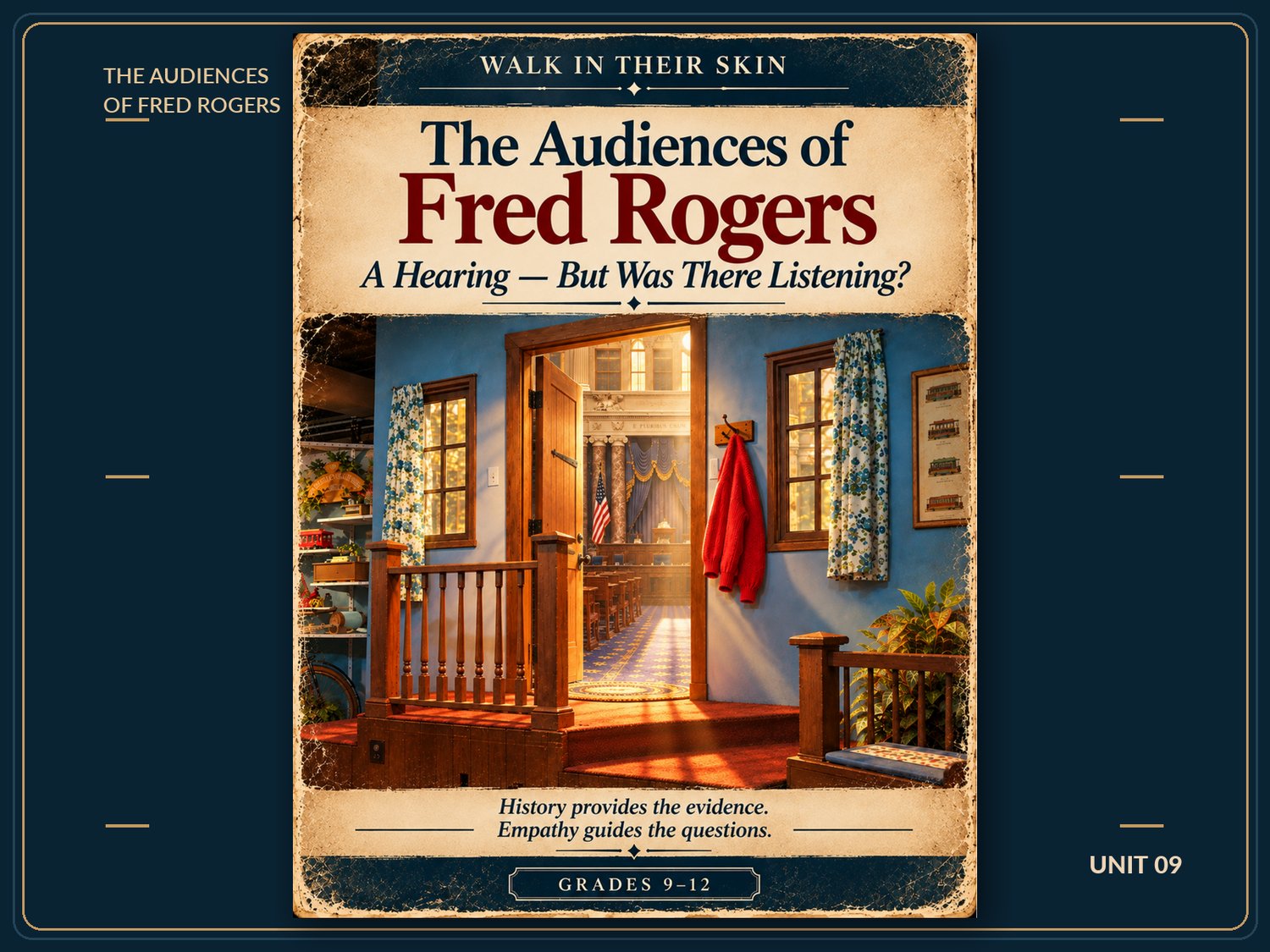
Walk in Their Skin: The Audiences of Fred Rogers
A Hearing — But Was There Listening?
42-Page High School ELA, History & Critical Thinking Study | Grades 9–12
Hearing receives the words. Listening seeks the meaning.
Fred Rogers spent decades communicating with children through music, carefully chosen words, puppetry, and television. But on May 1, 1969, he faced a very different audience: members of the United States Senate.
Did his approach to communication change? Did his audience truly listen? And how can we distinguish being heard from being understood?
In this investigative unit from Hancock Learning Studio's Walk in Their Skin series, students explore these questions through historical research, music, primary-source recordings, and evidence-based writing.
Students aren't asked to admire Fred Rogers or accept a predetermined conclusion. They're asked to investigate the evidence and develop their own interpretations.
What's Included
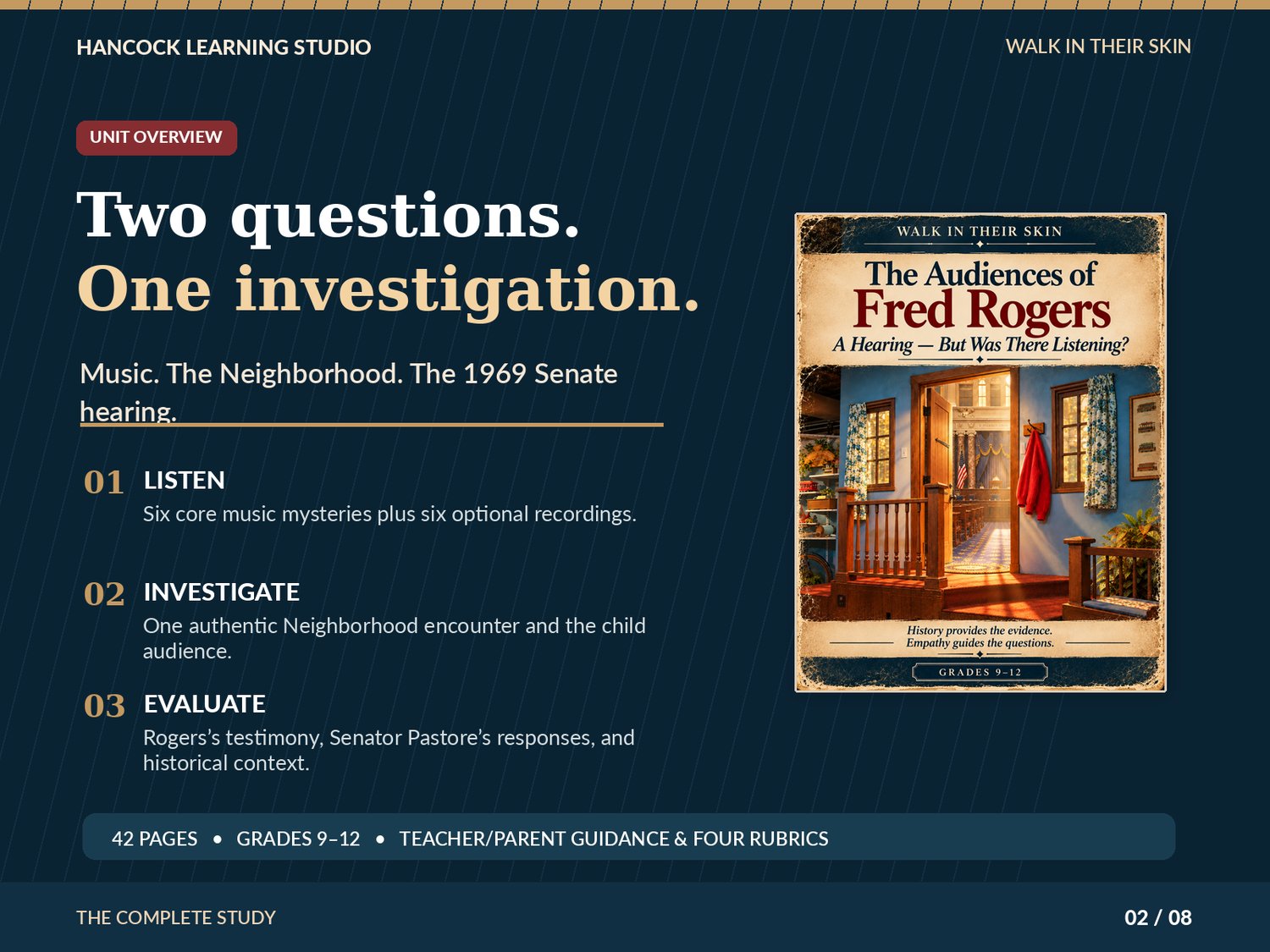
1. Decoding Musical Themes
Students investigate how music communicates emotion, meaning, and purpose before they know its identity.
6 required mystery recordings and 6 optional extensions
Listening activities exploring musical choices and audience interpretation
Reflection on how familiarity and experience influence understanding
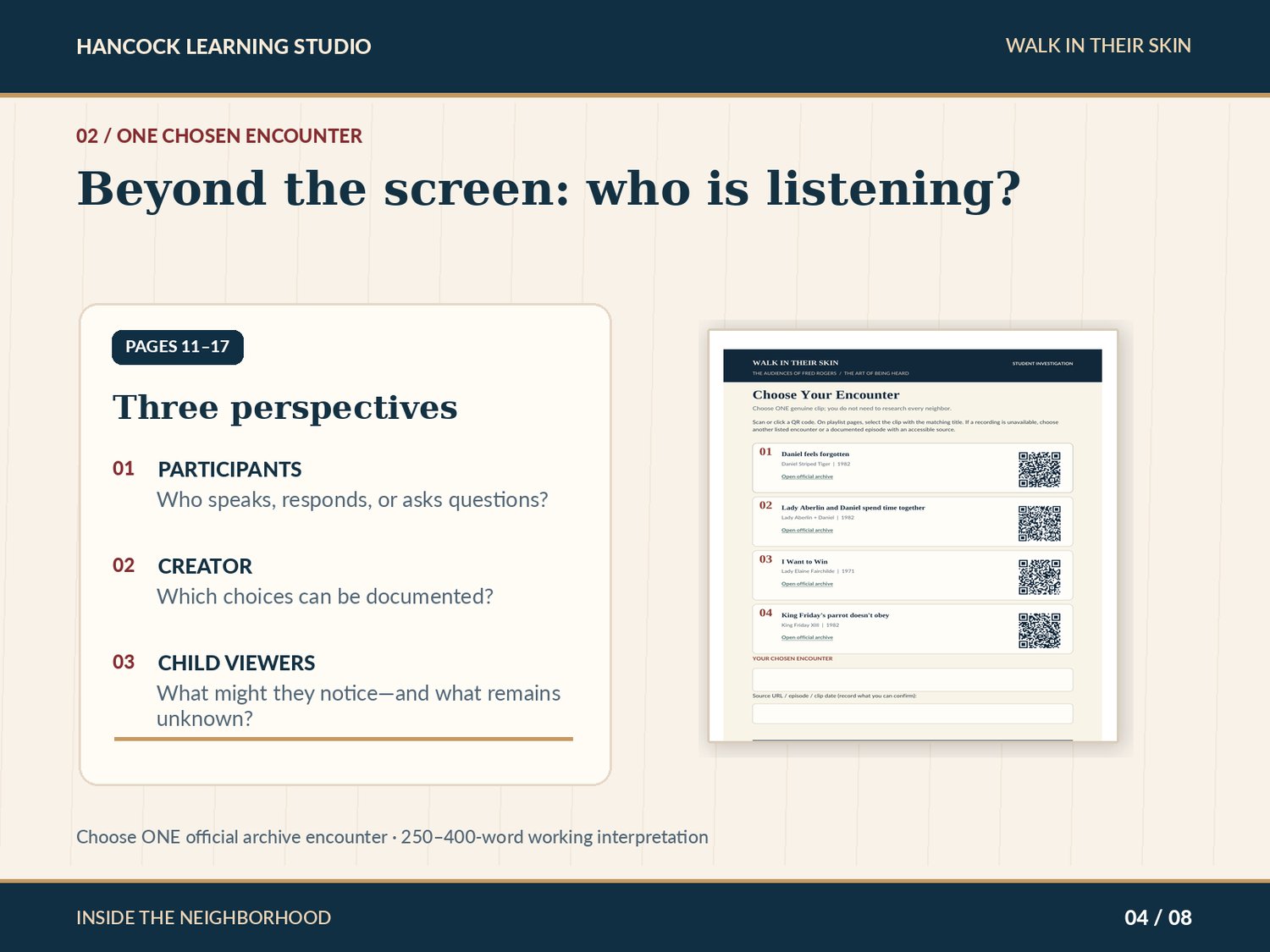
2. Inside the Neighborhood
Students select ONE authentic Mister Rogers' Neighborhood encounter to investigate.
Analyze words, gestures, pacing, questions, and silence
Consider the perspectives of participants, creator, and child viewers
Distinguish observable evidence from assumptions
Complete a 250–400-word preparatory interpretation
3. The 1969 Senate Hearing
Students investigate Rogers's May 1, 1969 testimony before Senator John Pastore's subcommittee.
Listen to the testimony before watching the video
Examine historical context, communication choices, and audience responses
Investigate the responsibilities of speakers and listeners
Develop a 350–500-word preliminary evidence finding
4. The Final Investigation: The Words He Chose
Students bring their findings together in ONE integrated investigative essay of approximately 1,000–1,300 words.
Two questions guide their writing:
Why did Fred Rogers choose those particular words, for those particular people, on that particular day?
A Hearing — But Was There Listening?
Students support their conclusions with historical context, primary-source evidence, and careful reasoning. Differing interpretations are welcome when supported by evidence.
Teacher & Parent Resources
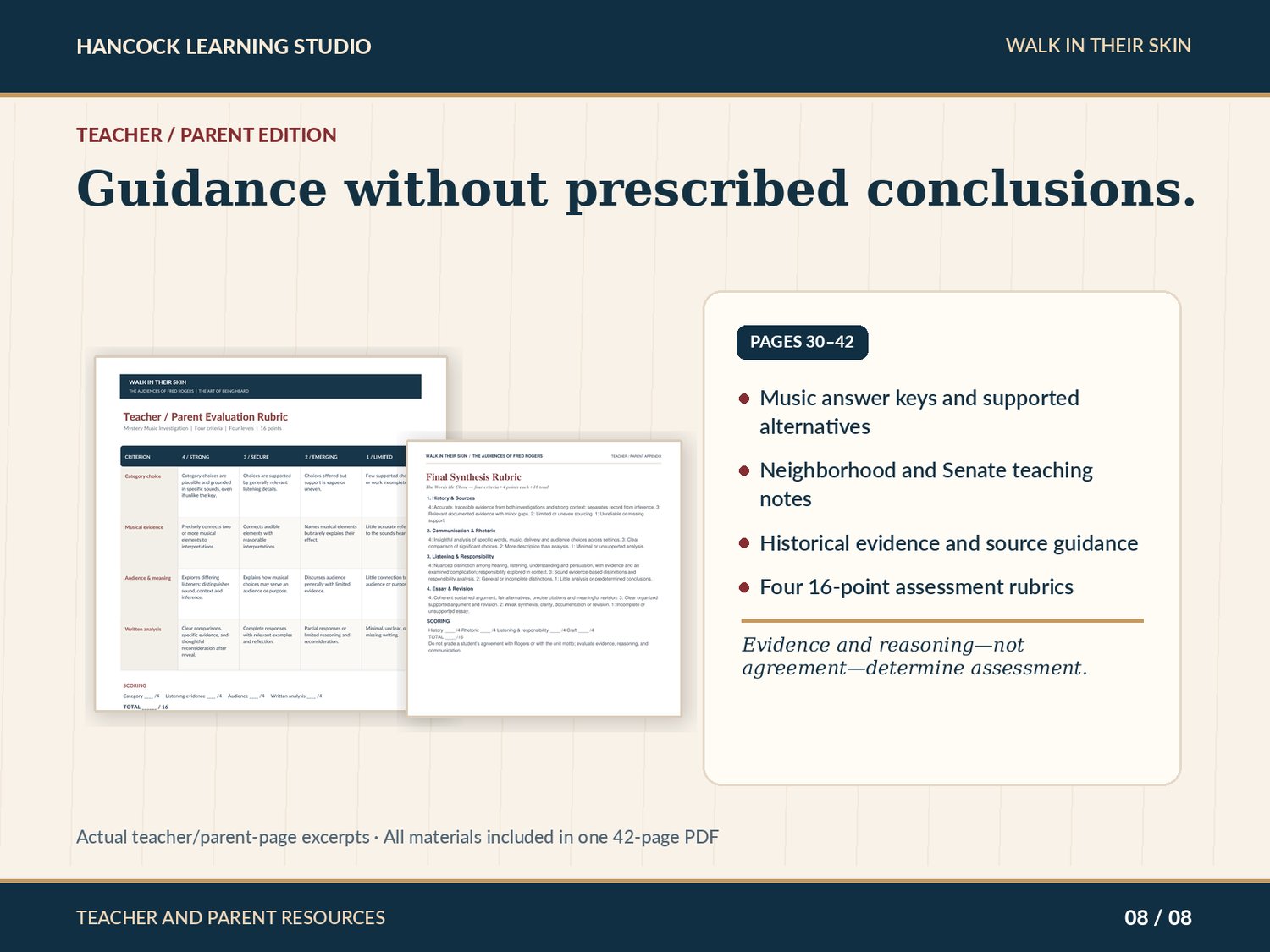
The 42-page printable PDF includes:
Student investigation worksheets and response areas
Historical background and research guidance
18 QR codes and clickable resource links
Teacher/parent answer keys and instructional guidance
Four 16-point assessment rubrics
Source references and an ungraded concluding reflection
Skills Developed
Critical listening • Primary-source analysis • Historical inquiry • Media literacy • Audience awareness • Evidence-based argumentation • Analytical writing • Ethical interpretation
Who Is This For?
Designed for Grades 9–12, this unit works well for homeschool high school, English Language Arts, American history enrichment, media studies, and interdisciplinary instruction.
Students work toward independent, evidence-supported conclusions rather than simply identifying the "correct" interpretation.
Digital Product Information
Format: 42-page downloadable PDF, US Letter (8.5 × 11 inches).
Internet access is required for linked audio, video, and research materials. External recordings are accessed through QR codes or clickable links and are not included as downloadable media files.
This is a digital educational resource. No physical product will be shipped.
History provides the evidence.
Empathy guides the questions.
Hearing receives the words.
Listening seeks the meaning.
Walk in Their Skin | Hancock Learning Studio