
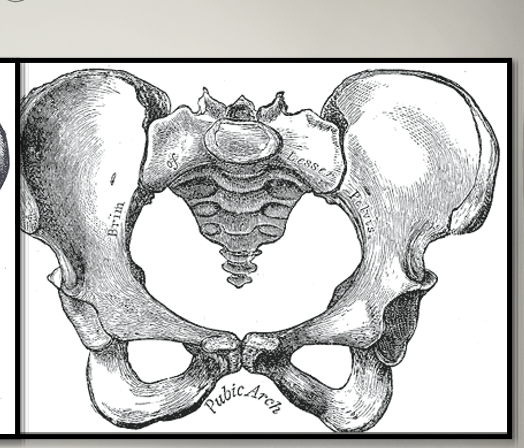
Pain-free and Anatomically Correct: The Hip and Sacroiliac Joint
Your clients come in with "hip pain" and you nod like you know exactly what that means. But anterior hip pain and lateral hip pain are two completely different things with completely different sources, and if you're treating the IT band when the problem is the iliopsoas bursa, you're in the wrong neighborhood.
This is the longest and most clinically dense session in the Anatomically Correct Certification series, and it is worth that runtime. Two hours covering the hip joint and the sacroiliac joint in full: how they're built, what they actually do, why they hurt, and what you can actually do about it.
You'll learn why the femoral head drops back as the knee comes up (and what happens to the anterior hip when it can't); which of the three gluteus muscles is responsible for keeping the pelvis level when your client stands on one leg; and why the sacroiliac joint (the most misunderstood joint in the body) has three millimeters of motion, not three inches. (That fact alone will change how you talk about it with clients.)
You'll also get the clinical breakdown on snapping hip, trochanteric bursitis, labral tears, iliopsoas bursitis, and the connection between the pelvic floor and SIJ stability that most practitioners miss entirely.
This is two hours of anatomy that pays for itself the first week you use it.
What you get: approximately two hours of live instruction with on-body tape demonstrations, palpation guidance, live participant Q&A, and clinical takeaways organized by pain location and mechanism.
What your clients get: a practitioner who knows why their hip hurts, where to look for the source, and how to work with it without guessing.
© Somatic Anatomy. This content may not be used to train, fine-tune, or develop AI or machine learning models. Period.