








Smart Money Concepts – Complete Trading Guide
SMART MONEY CONCEPT – Dr. FX
Are You Facing the Same Problem?
You’ve learned Smart Money Concepts, watched countless trading videos, and probably understand terms like BOS, Liquidity, Supply & Demand, Market Structure, and Liquidity Sweeps.
Lekin jaise hi real chart open karte hain, sabse pehla confusion wahi hota hai:
“Ab mujhe actually dekhna kya hai?”
Kabhi BOS dekhte hi trade le lete ho, kabhi Supply & Demand zone ko strong setup samajhkar entry kar lete ho, aur kabhi Liquidity Sweep hote hi expect karte ho ki market ab reverse hoga.
Lekin itne saare concepts jaane ke baad bhi problem wahi rehti hai — Stop Loss baar-baar hit hota hai, aur samajh nahi aata ki galti concept me hai ya use karne ke tareeke me.
Ek timeframe par setup almost perfect lagta hai, lekin Higher Timeframe completely different story dikha raha hota hai.
Kabhi direction sahi hoti hai, but entry timing wrong hoti hai. Kabhi entry sahi mil jaati hai, lekin Stop Loss logical place par nahi hota.
Aur kabhi ek losing trade ke baad emotions take control — lot size increase kar dete hain, recovery ke chakkar me unnecessary trades lete hain, aur ek small loss gradually bigger loss me turn ho jata hai.
“Real problem ye nahi hai ki aapko concepts kam pata hain — problem ye hai ki real chart par un concepts ko kab, kahan aur kaise use karna hai, ye clear nahi hai.”
Market Structure kab important hai?
Liquidity ko kis context me dekhna hai?
Higher Timeframe ko Lower Timeframe ke saath kaise align karna hai?
Entry kab leni hai — aur kab simply trade avoid karna hai?
Agar aap baar-baar strategy change kar rahe hain, naye concepts seekh rahe hain aur chart par ek ke baad ek confirmation add kar rahe hain, lekin phir bhi aapke paas ek clear, repeatable aur rules-based trading process nahi hai...
Then this book is for you.
SMART MONEY CONCEPTS by Dr. FX is designed to help you move from simply knowing trading concepts to understanding how those concepts work together inside a structured trading approach.
📖 WHAT WILL YOU LEARN IN THIS BOOK?
Smart Money Concept book ko 7 Parts aur 35 Chapters me carefully structure kiya gaya hai.
Hum basic foundation se start karenge aur step-by-step Market Structure, Liquidity, Supply & Demand, Institutional Entry Models, Risk Management, Psychology aur Final Trade Execution tak jayenge.
The goal is simple:
Aap sirf individual concepts na seekhein — balki ye samjhein ki un concepts ko real chart par kis order me aur kis context me use karna hai.
PART 1 — FOUNDATION
Chapter 1: Smart Money Concept Kya Hai?
Chapter 2: Retail Trader Kyu Haarta Hai?
Chapter 3: Market Makers Kaise Kaam Karte Hain?
Chapter 4: Kya Retail Trader Kabhi Smart Money Ki Tarah Soch Sakta Hai?
Chapter 5: Market Ka Actual Engine Kya Hai?
Every strong trading framework needs a strong foundation.
Is section me aap samjhenge ki Smart Money approach actually kya hai, retail traders repeatedly same mistakes kyu karte hain, aur market movement ko samajhne ke liye kis tarah ka mindset develop karna zaroori hai.
Yahin se hum market ko sirf candles ke collection ki tarah dekhna chhodkar logic aur context ke saath read karna start karenge.
PART 2 — MARKET STRUCTURE
Chapter 6: Market Structure Kya Hota Hai?
Chapter 7: Fractal Nature of Price
Chapter 8: Higher High, Higher Low / Lower High, Lower Low
Chapter 9: BOS — Break of Structure
Chapter 10: CHoCH — Change of Character
Chapter 11: Structure Lock
Chapter 12: External Structure / Internal Structure
Market Structure is the language of price.
Is part me aap seekhenge ki chart ko random bullish aur bearish candles ki tarah nahi, balki a structured price movement ke roop me kaise read karna hai.
Aap Higher Highs, Higher Lows, Lower Highs aur Lower Lows se lekar BOS, CHoCH, Internal Structure aur External Structure tak concepts ko systematically understand karenge.
Goal ye hai ki chart dekhte hi aapko market ki current structure aur possible direction ka clear picture mil sake.
PART 3 — LIQUIDITY
Chapter 13: Liquidity Kya Hoti Hai?
Chapter 14: Types of Liquidity
Chapter 15: Inducement
Chapter 16: Liquidity ke Golden Rules
Chapter 17: Liquidity Trading Checklist
Liquidity is one of the most important elements of price movement.
Is section me aap understand karenge ki liquidity generally kahan build hoti hai, market us liquidity ko kaise approach karta hai aur har liquidity sweep ko reversal samajhna kyu galat ho sakta hai.
Aap liquidity ko isolated signal ki tarah nahi, balki Market Structure aur overall context ke saath read karna seekhenge.
End me aapko ek practical Liquidity Trading Checklist bhi milegi, jisse trade plan karne se pehle important conditions evaluate ki ja sakein.
PART 4 — SUPPLY & DEMAND
Chapter 18: Supply aur Demand ka Concept
Chapter 19: Big Players Zones Kaise Banate Hain?
Chapter 20: Supply-Demand aur Order Block ka Difference
Chapter 21: Institutional Zone Model
Not every zone on the chart deserves a trade.
Is part me hum Supply & Demand zones, institutional buying/selling areas aur Order Blocks ke beech ka difference samjhenge.
Aap seekhenge ki stronger zones ko kaise identify karna hai aur kisi zone ko sirf isliye trade nahi karna hai kyunki price wahan pehle move kar chuka tha.
The focus is on understanding why a zone matters within the larger market context.
PART 5 — INSTITUTIONAL ENTRY FRAMEWORK
Chapter 22: SMC Core Entry Model
Chapter 23: Mitigation Entry Model
Chapter 24: BPR Entry Model
Chapter 25: IFC Entry Model
Chapter 26: The Consistency Formula
This is where analysis begins to turn into execution.
Yahan aapko multiple structured entry models milenge jo Market Structure, Liquidity aur important zones ko combine karke trade setup build karne me help karte hain.
Har trader ko har entry model use karne ki zarurat nahi hoti.
Aap ko models ko understand aur backtest karke decide karna hota hain ki kaunsa framework aapke trading style aur personality ke saath better fit karta hai.
Is section ka purpose more trades lena nahi hai.
Purpose hai better-defined trades lena.
PART 6 — RISK MANAGEMENT & TRADING PSYCHOLOGY
Chapter 27: Position Splitting Strategy
Chapter 28: Safe Stop Loss Range
Chapter 29: Capital Protection Rules
Chapter 30: Loss Recovery Protocol
Chapter 31: From Random Trader to System Trader
A good setup without proper risk management can still become a bad trade.
Is section ka focus sirf profit par nahi, balki capital protection, position sizing, Stop Loss placement, loss management aur emotional discipline par hai.
Aap samjhenge ki ek losing trade ke baad impulsive recovery attempts, unnecessary lot-size increase aur revenge trading kis tarah trading account ko damage kar sakte hain.
The objective is to move from random decisions to a more disciplined, rules-based trading process.
PART 7 — TRADE EXECUTION & COMPLETE TRADING PLAN
Chapter 32: HTF Zone Refinement Method
Chapter 33: HTF to LTF Trading Plan
Chapter 34: Rule-Based Trading Plan
Chapter 35: Final Trade Execution Blueprint
This is where everything comes together.
Book ke final section me hum pehle seekhe gaye concepts ko ek complete framework me connect karenge.
Aap samjhenge:
Higher Timeframe se analysis kaise start karna hai.
Important zones ko kaise identify aur refine karna hai.
Lower Timeframe par confirmation kaise dekhni hai.
Liquidity aur structure ko ek saath kaise read karna hai.
Trade kab plan karni hai — aur kab trade avoid karni hai.
Final execution ko predefined rules ke according kaise approach karna hai.
The goal is to give you a clearer sequence:
What to look for → Where to look → When to wait → When to execute.
7 PARTS • 35 CHAPTERS • 195 PAGES • FOUNDATION TO FINAL TRADE EXECUTION
👤 WHO IS DR. FX?
Dr. FX is a trader, market researcher and trading educator who has spent the last 6 years actively studying financial markets and trading behaviour.
In years of market study, unhone kisi ek trading concept ya strategy par depend rehne ke bajay Price Action, Smart Money Concepts (SMC), ICT Concepts aur CRT jaise different trading approaches ko study, observe aur backtest kiya hai.
But the journey was never only about learning more concepts.
Different market conditions me strategies test karna, trading mistakes analyse karna, risk ko understand karna aur gradually ek repeatable trading process develop karna is journey ka important part raha hai.
Dr. FX has also successfully passed multiple funded-account challenges during his trading journey.
Lekin experience ke saath ek important lesson clear hota gaya:
Retail traders often believe that the more concepts they learn, the better trader they will become.
Lekin trading me zyada information hamesha advantage nahi hoti.
Jab har chart par aap BOS, Liquidity, Order Block, Supply & Demand, FVG, SMT aur multiple confirmations ek saath dekhne lagte ho, to clarity badhne ke bajay confusion badhne lagta hai.
More concepts can create more noise, more hesitation and more conflicting signals.
Real progress tab aati hai jab aap limited concepts ko deeply samajhkar unhe ek clear, repeatable aur rules-based process me use karna seekhte ho.
Isi practical experience, years of observation aur extensive backtesting se develop hui understanding ko Smart Money Concept book me ek structured form me present kiya gaya hai.
This book does not promise a “secret strategy”, guaranteed profits or overnight success.
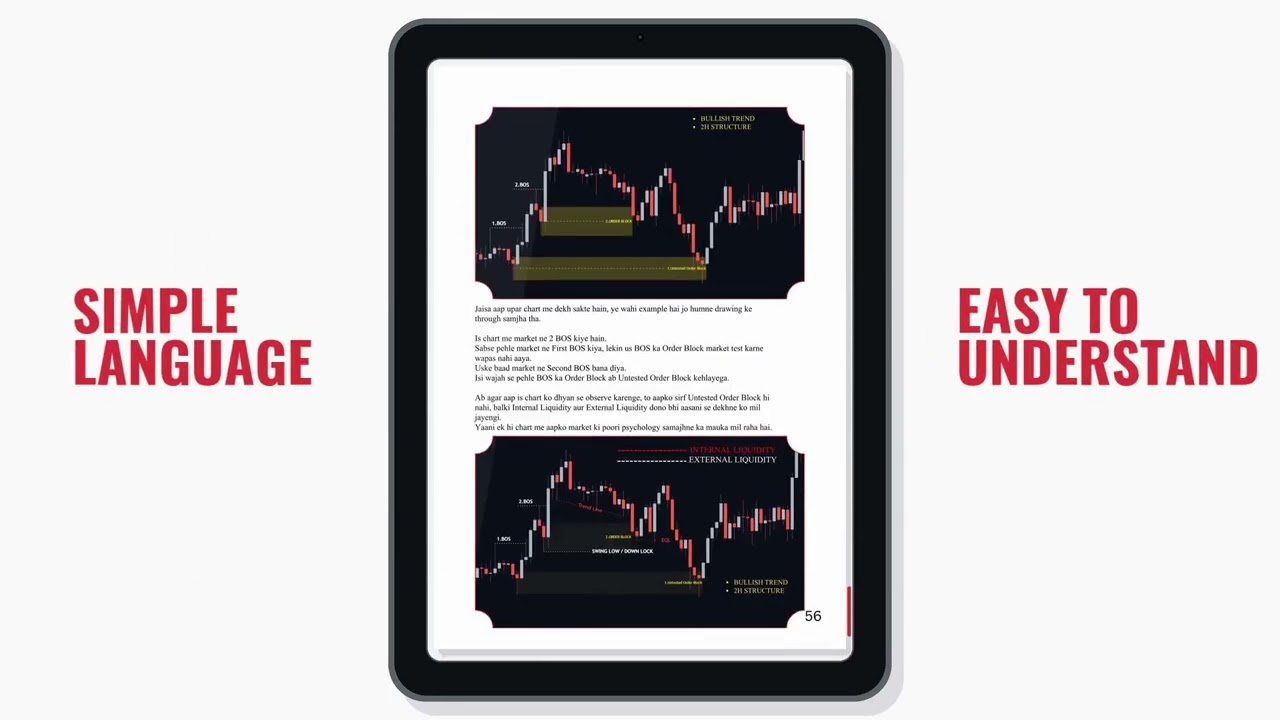
Instead, its purpose is to explain complex trading concepts through simple language, clear rules, visual understanding and a step-by-step framework — so that a developing trader can gradually move away from random decisions and build a more structured approach to the market.
DR. FX BELIEVES:
“Aapko market ka har concept seekhne ki zarurat nahi hai. Aapko apne concepts ko itna clearly samajhna hai ki changing market conditions me bhi aap apne predefined rules ko follow kar sakein.”
— Dr. FX
Author, Smart Money Concept
⚠️ RISK DISCLAIMER
The information provided in this book is intended strictly for educational and informational purposes only and should not be considered financial, investment, trading, or legal advice.
Trading and investing in financial markets involve substantial risk and may result in the loss of part or all of your capital. Past performance does not guarantee future results.
The author, Dr. FX, is not a SEBI-registered Investment Adviser, Research Analyst, or financial advisor and accepts no responsibility for financial losses, damages, or trading decisions made based on the information contained in this book.
Readers are solely responsible for conducting their own research and making their own trading and investment decisions.
Nothing contained in this book should be interpreted as a recommendation or instruction to buy, sell, hold, or trade any financial instrument.
Forex and financial-market regulations vary between countries and jurisdictions. Readers are responsible for ensuring that their trading activity complies with the laws and regulations applicable in their respective country.
By purchasing, accessing, or reading this book, you acknowledge that trading involves risk and that all trading and investment decisions are made entirely at your own responsibility and risk.