
Friendship Check-In Worksheet for Children | Healthy Friendships & Red Flags Activity | Self-Esteem, Boundaries & PSHE Resource | A4 PDF Printable
Helping children understand the difference between healthy friendships and potential red flags.
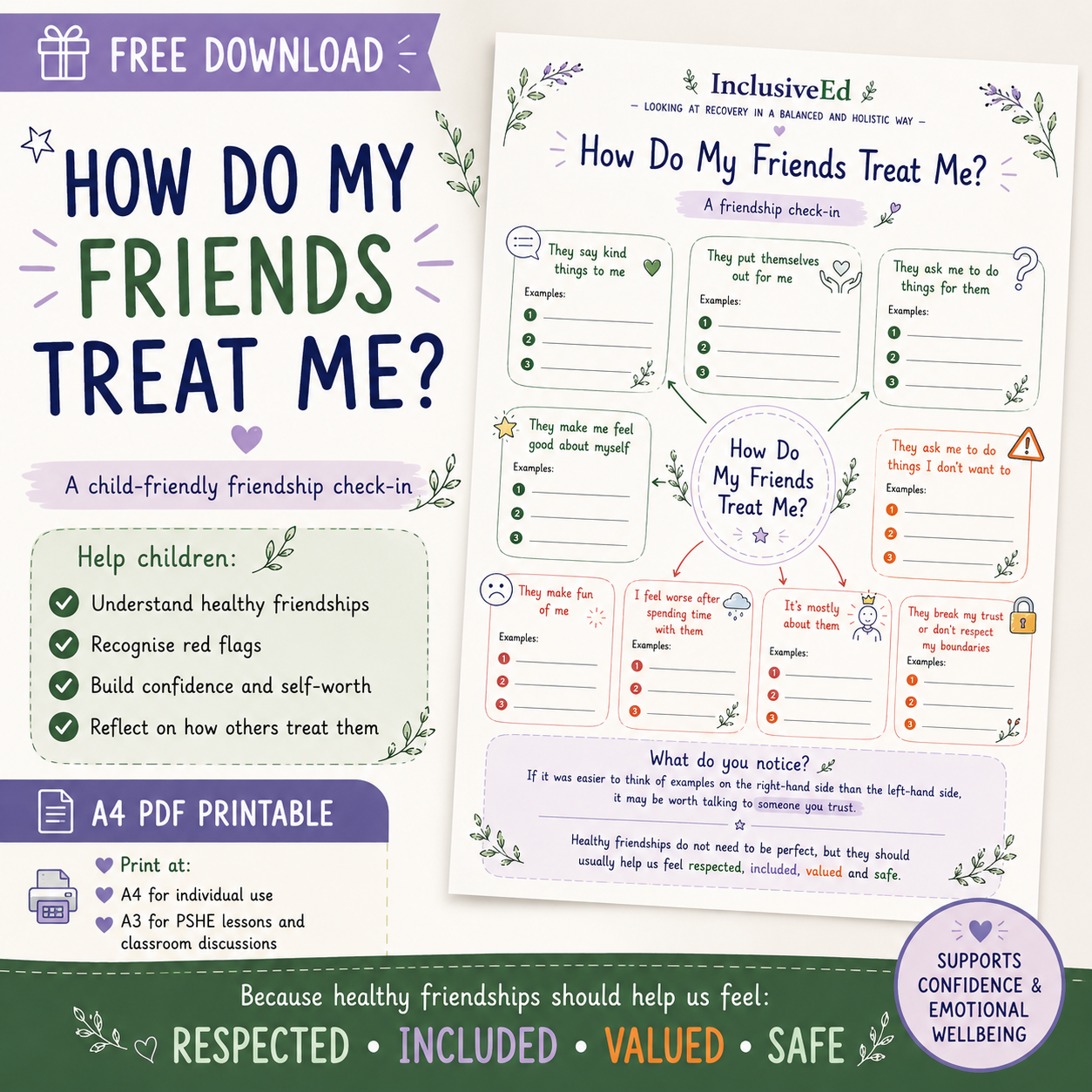
Friendships play an important role in children's confidence, wellbeing and sense of belonging. This reflective worksheet encourages children to think carefully about how the people around them treat them, how those interactions make them feel and whether their friendships are helping them feel respected, included and valued.
Rather than focusing on labels or judgement, this activity encourages thoughtful reflection and discussion about healthy relationships, boundaries, self-worth and mutual respect.
Perfect for PSHE, wellbeing activities, pastoral support, ELSA sessions, home education and parent-child conversations.
What Children Will Explore
Positive Friendship Behaviours
✔ They say kind things to me
✔ They put themselves out for me
✔ They make me feel good about myself
✔ They support and encourage me
Potential Friendship Red Flags
✔ They ask me to do things I don't want to do
✔ They make fun of me
✔ I feel worse after spending time with them
✔ It's mostly about them
✔ They don't respect my boundaries
Reflection Section
Children are encouraged to notice patterns and consider whether their friendships are helping them feel:
✔ Respected
✔ Included
✔ Valued
✔ Safe
What's Included
✔ Friendship Check-In Worksheet
✔ High-quality A4 PDF
✔ Instant Digital Download
Printing Options
This resource is supplied as an A4 PDF and can be printed:
✔ A4 for individual reflection
✔ A3 for classroom displays, PSHE discussions, wellbeing sessions and group activities
✔ At home or school
Ideal For
- PSHE lessons
- Friendship activities
- Self-esteem work
- Wellbeing programmes
- Emotional literacy
- Social skills development
- Pastoral support
- ELSA sessions
- Home education
- Counselling support
Suitable For
- Parents and carers
- Teachers
- SENCOs
- ELSAs
- Pastoral teams
- Home educators
Recommended for approximately ages 8–16.
Why This Resource Matters
Many children are taught how to be a good friend.
Fewer are taught how to recognise whether the people around them are being good friends to them.
This reflective activity helps children develop self-awareness, confidence and healthy relationship skills that can support them throughout childhood, adolescence and beyond.