
How To Program Guide
Stop copying programs. Start understanding how they're built.
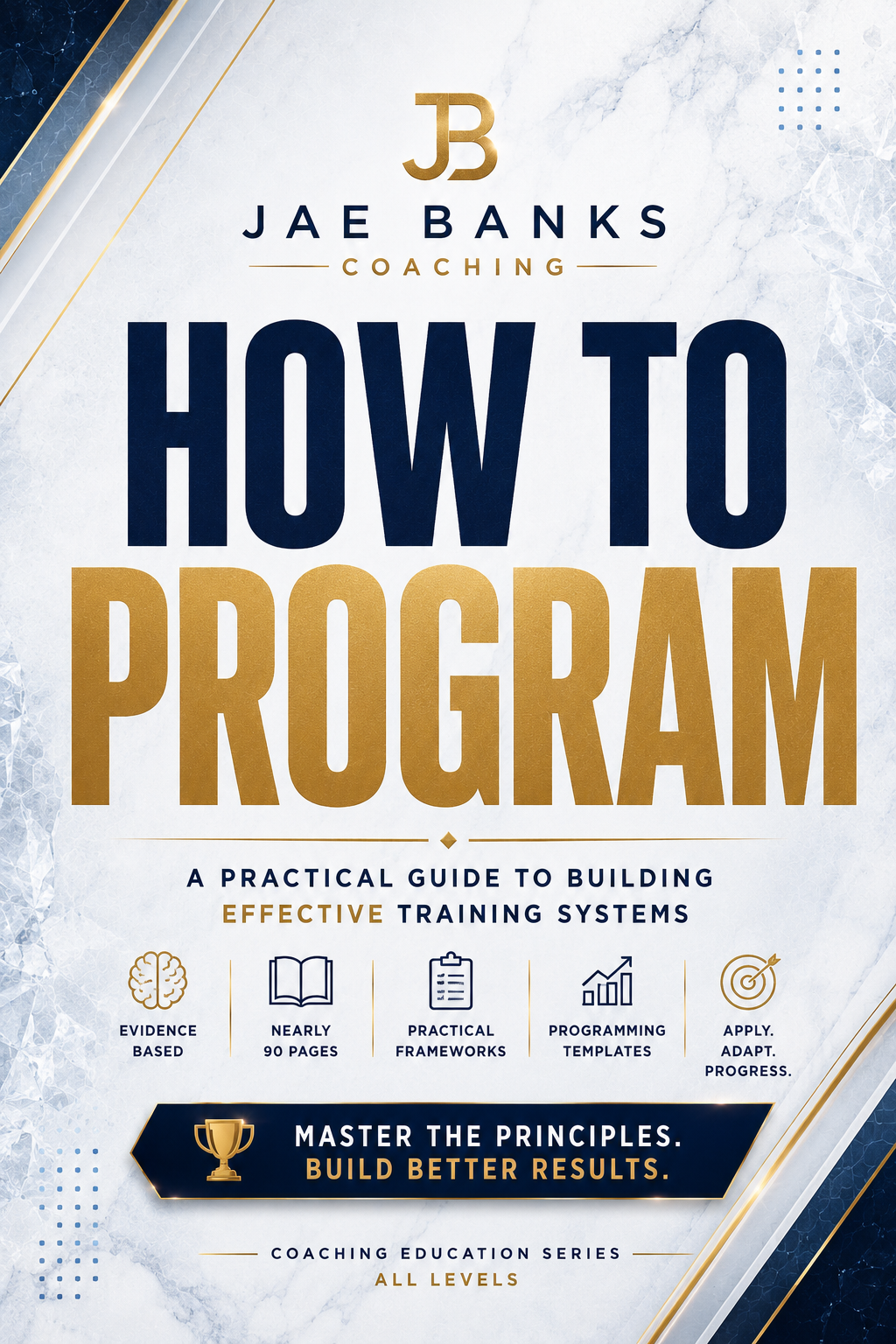
How to Program is a comprehensive educational guide designed to teach the principles behind effective hypertrophy and strength programming. Instead of handing you another workout routine, this guide explains why programs work—giving you the knowledge to build, evaluate, and modify training plans with confidence.
Across nearly 90 pages, you'll learn how to organize training around evidence-based principles such as mechanical tension, progressive overload, exercise selection, volume, intensity, frequency, recovery, and fatigue management. Each concept is broken down into practical, easy-to-understand explanations that can be applied to your own training immediately.
Whether you're looking to optimize your own workouts or deepen your understanding of programming as a coach, this guide provides the framework needed to make informed training decisions.
Inside You'll Learn:
- The foundations of effective program design
- How to select exercises based on movement and muscle function
- How to manage volume, intensity, frequency, and recovery
- Progressive overload and long-term progression strategies
- Fatigue management and autoregulation principles
- Cardio integration without compromising muscle growth
- How to structure Full Body, Upper/Lower, and Push/Pull/Legs splits
- Programming templates and practical implementation examples
- Common programming mistakes and how to avoid them
Who It's For
- Lifters who want to understand why their training works
- Beginners looking to build a strong foundation
- Intermediate and advanced lifters ready to optimize their programming
- Personal trainers and coaches seeking a structured programming framework
This isn't just another workout PDF—it's a resource built to help you think critically about training, apply evidence-based principles, and create programs that are effective, sustainable, and adaptable over time.
Master the principles. Build better programs.
All program materials, descriptions, educational content, and documents are protected by copyright and may not be reproduced, distributed, or resold without permission.