

NCLEX-RN Antibiotic Stewardship & Anti-Infectives Guide: Classes, Spectrum, Renal Dosing & Allergies
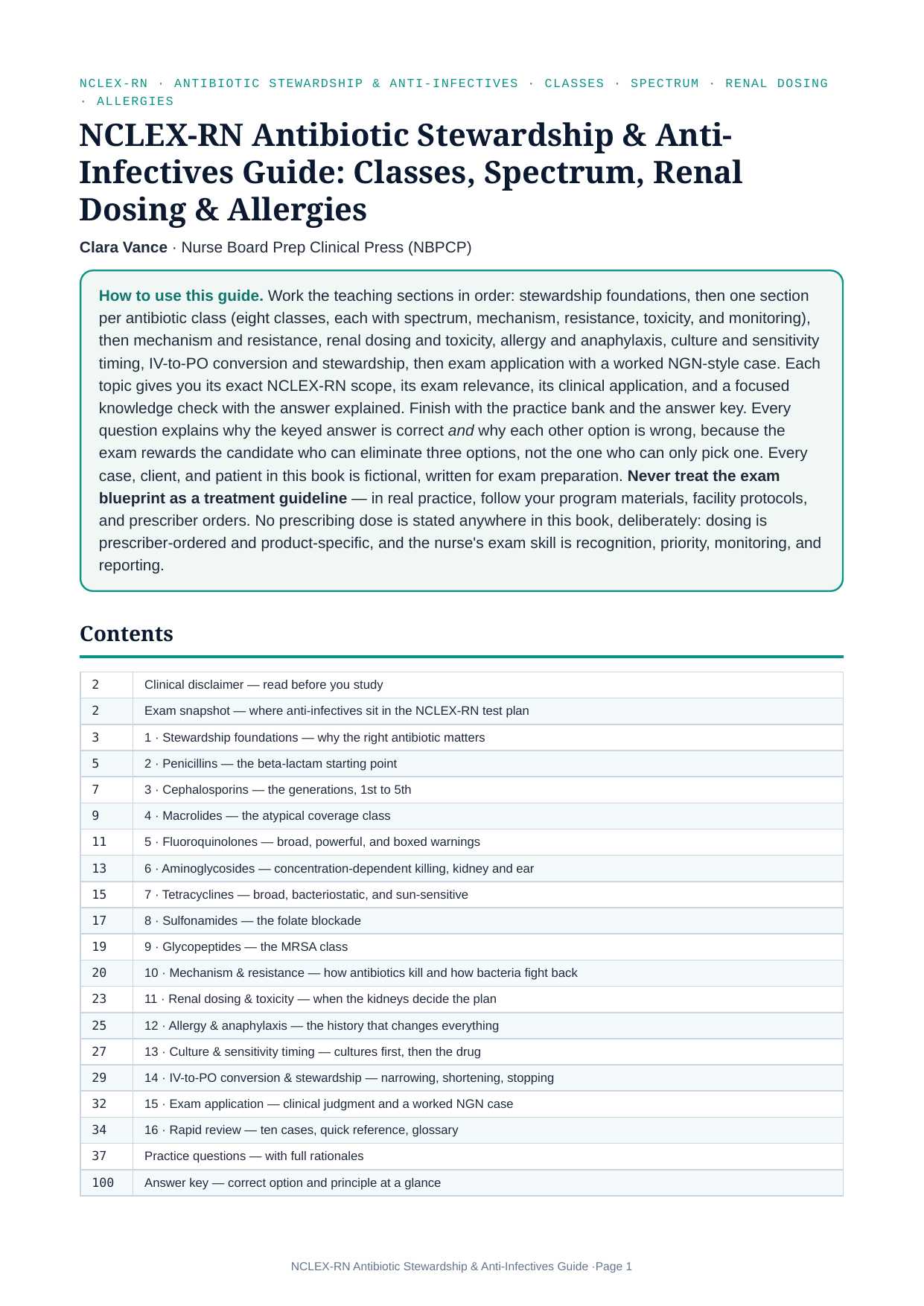
Antibiotic stewardship and anti-infectives for the Next-Gen NCLEX-RN — every class with its spectrum, mechanism, resistance, toxicity, and monitoring, plus renal dosing, allergy, culture timing, and IV-to-PO conversion. Every topic gives its exact exam scope, its clinical application, and a focused knowledge check with the answer explained.
Inside:
- Stewardship foundations: the four questions before any antibiotic, bactericidal vs. bacteriostatic, narrow vs. broad spectrum, and the cost of broad
- Penicillins: beta-lactam mechanism (PBPs, cell wall), natural / aminopenicillin / antipseudomonal groups, beta-lactamase and MRSA resistance, allergy as the priority
- Cephalosporins: the generations 1st to 5th — 1st gram-positive skin (cefazolin), 3rd gram-negative and meningitis (ceftriaxone; ceftazidime adds Pseudomonas), 4th broad (cefepime), 5th MRSA (ceftaroline); ESBL
- Macrolides: 50S ribosome, bacteriostatic, atypical coverage (Mycoplasma, Legionella, Chlamydia), QT prolongation, clarithromycin CYP3A4 interactions
- Fluoroquinolones: DNA gyrase and topoisomerase IV, bactericidal; ciprofloxacin (Pseudomonas), levofloxacin (respiratory), moxifloxacin (anaerobes, not Pseudomonas); tendon, nerve, QT, C. difficile, blood sugar, sun
- Aminoglycosides: 30S ribosome, bactericidal, concentration-dependent, oxygen-dependent (no anaerobes), synergy with beta-lactams; kidney and ear toxicity, levels and hearing monitoring
- Tetracyclines: 30S ribosome, bacteriostatic; doxycycline as the tick drug (Lyme, Rocky Mountain spotted fever); sun, teeth, and minerals that block absorption
- Sulfonamides: TMP-SMX sequential folate blockade; urinary tract, PCP, MRSA skin; hypersensitivity (blistering = stop and escalate), blood counts, potassium, kidney crystals, G6PD haemolysis
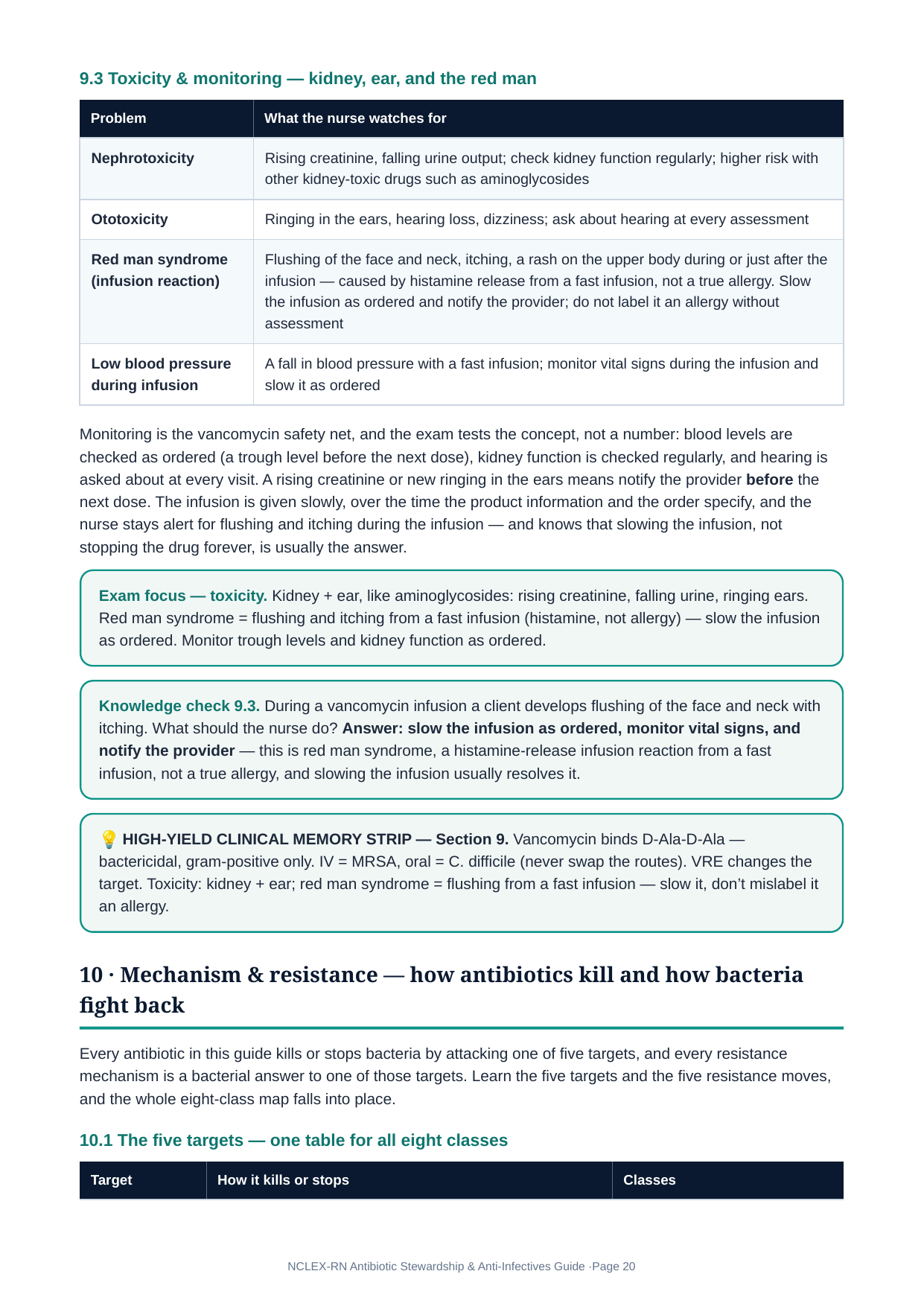
- Glycopeptides: vancomycin binds D-Ala-D-Ala, gram-positive only; IV = MRSA, oral = C. difficile (never swap the routes); kidney and ear, red man syndrome
- Mechanism and resistance: five targets (wall, 30S, 50S, DNA, folate) and five resistance moves (destroy, change the target, pump out, block entry, bypass); MRSA, VRE, ESBL, CRE, C. difficile, and contact precautions
- Renal dosing and toxicity: which drugs accumulate (aminoglycosides and vancomycin most), the kidney dashboard (creatinine, urine output, hearing), nephrotoxic combinations; notify before the next dose
- Allergy and anaphylaxis: allergy vs. side effect, anaphylaxis steps (stop, call, airway, oxygen, adrenaline as ordered), penicillin–cephalosporin cross-reactivity, Stevens-Johnson and DRESS red flags
- Culture and sensitivity timing: cultures before the first dose in a stable client, never delay the antibiotic in deteriorating sepsis; blood (two sets, two sites), urine (port, never the bag)
- IV-to-PO conversion and stewardship: the switch criteria, the 48–72 hour review, shortest effective course with a stop date, the daily stewardship list
- Exam application: NCJMM applied to antibiotics, NGN formats, a worked case with a dated cue timeline and an answer-to-cue crosswalk
- Rapid review: 10 cases, eight-class quick-reference table, glossary
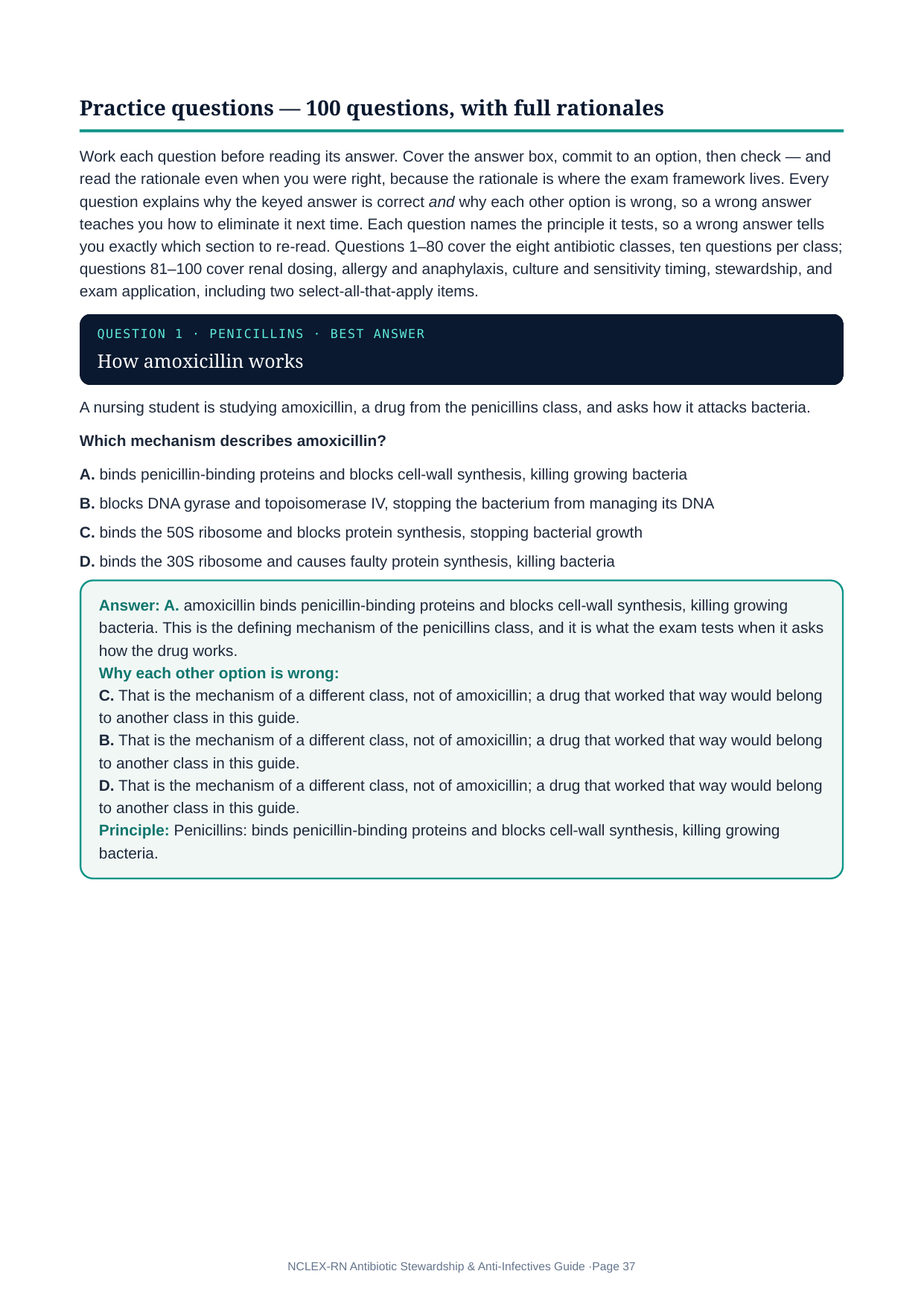
- 100 practice questions with full rationales — why the keyed answer is correct AND why each other option is wrong — plus an answer key (10 questions per class, 80, plus 20 on renal dosing, allergy, culture timing, stewardship, and exam application, including 2 SATA items)
Note on the practice bank: the spec asks for a 200-item bank. This guide contains 100 genuinely-written, verified practice items with full per-distractor rationales — the actual verified count, stated honestly. It does not claim 200.
No real medicine doses are asserted in this book — dosing is prescriber-ordered and product-specific. Original teaching cases written for exam practice. This guide is not affiliated with NCSBN and does not guarantee a pass. If you find an error, a corrected version will be sent free.