
ARROW - Alpine Robust Roadway Operations Workstation
Alpine Robust Roadway Operations Workstation
What It Is
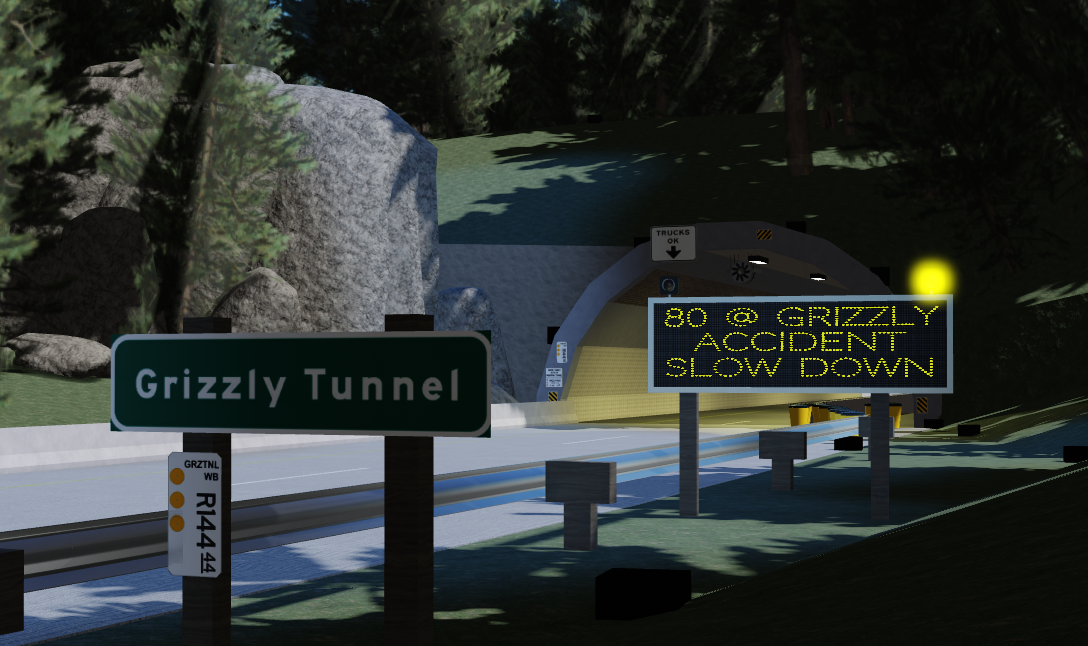
This AlpineOS VMS system is a fully server-authoritative, multi-board electronic sign management platform built for Roblox communities that want realistic highway and roadway infrastructure. It replicates the function of real-world variable message signs — the dynamic overhead boards you see on freeways displaying travel times, closures, chain requirements, and hazard warnings — with operator control, remote management, and ambient lighting all handled automatically.
Core Display Control
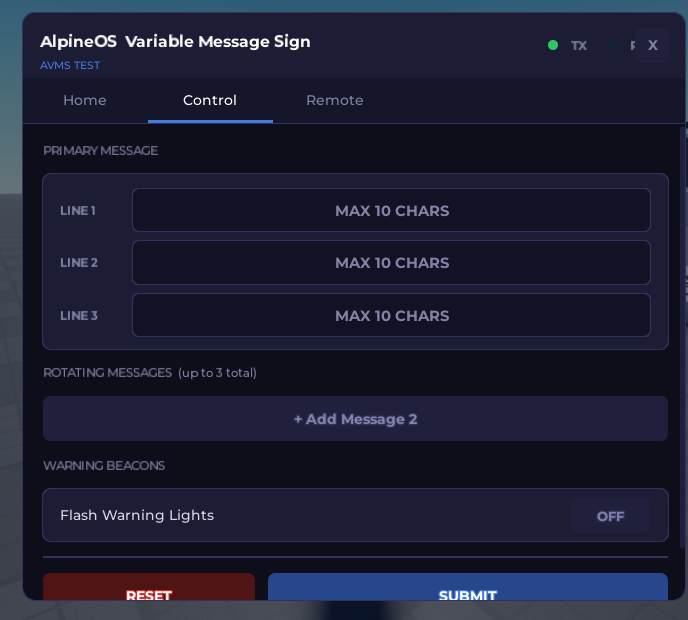
Each board has three independently controlled lines, each accepting up to ten characters of uppercase text. The ten-character limit is enforced at the input level the textbox physically stops accepting characters rather than letting the operator type past it and have text cut off on the physical sign. All input is forced uppercase automatically, matching the visual style of real highway signage.
The submit sequence adds a layer of realism that distinguishes this from a simple text-setter. When an operator submits new content, the board first displays a row of periods across all three lines for three seconds — the visual equivalent of a sign cycling through its startup routine before the actual message appears. If warning beacons are enabled they start flashing during this transition, making the moment the message appears feel deliberate and weighted.
Rotating Messages
Operators can configure up to three complete board states that the sign cycles through automatically every five seconds. Each rotating message is a full set of all three lines, so a closure board might rotate between road condition information, an alternate route suggestion, and a chain requirement notice without any operator input after the initial setup. If only one message is configured the board simply holds it statically with no rotation logic running at all, no unnecessary threads, no wasted cycles.
Adding and removing message slots is handled through a clean expandable interface. Slot 2 and Slot 3 are hidden by default and revealed with a single button press, keeping the UI uncluttered for operators who just need a simple static message.
Warning Beacons
The alternating beacon system flashes Light1 and Light2 in opposing phase when one is on the other is off — at 0.6-second intervals. This is the correct behavior for real warning beacons, which alternate rather than flash in sync, because alternating draws the eye more effectively. The toggle is a single button in the control panel with a clear amber ON / grey OFF state. Beacons and text are fully independent you can run beacons without text, text without beacons, or both together.
Ambient Sign Glow
When any line on the board contains text, a SurfaceLight on the sign face enables automatically to cast ambient light onto the surrounding road surface. This fires the moment the dots appear during a submit sequence, holds through the entire rotation cycle, and extinguishes the moment the board is reset to blank. It requires zero operator involvement and makes lit signs visible and atmospherically correct in nighttime or low-visibility conditions.
Remote Management
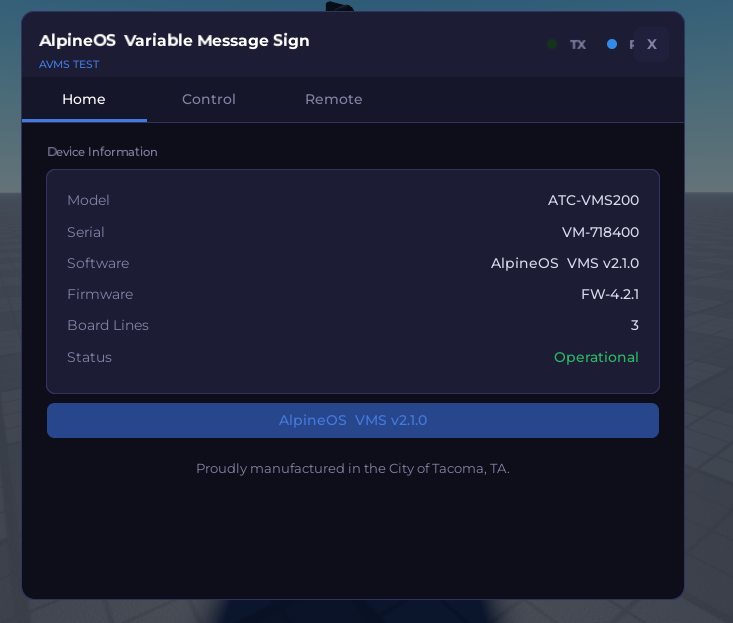
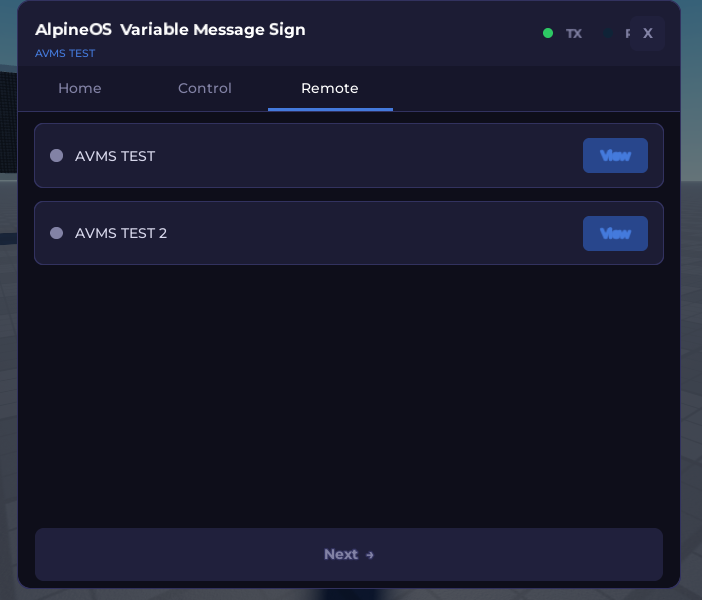
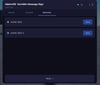
This is the feature that separates ARROW from any comparable system. Any board in your workspace named starting with AVMS is automatically discoverable from the control panel of any other board. An operator sitting at one sign can open the Remote tab, see every other AVMS board listed by name, select as many as they want, and push a complete message configuration to all of them simultaneously with a single button press.
The selection interface is intentional boards are selected with a toggle so the operator has a clear visual record of exactly which boards will receive the update before they commit. The Next button is visually disabled until at least one board is selected, preventing accidental empty pushes. The remote control interface is identical to the local one, including all three lines, rotating messages, and warning beacon toggle, so operators don't need to learn a different workflow for remote boards.
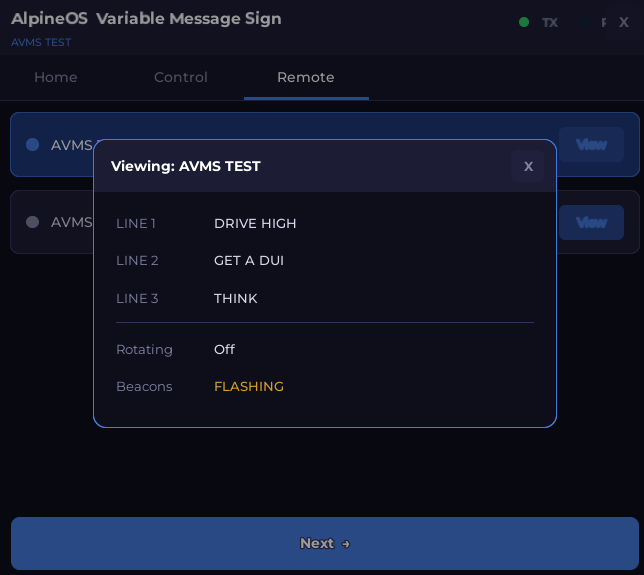
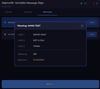
View mode lets an operator check the current state of any remote board without travelling to it. Clicking View opens a popup that fires a live status request to that board's server and displays the response current line content, how many messages it's rotating through, and whether beacons are active. The connection is made fresh on each view request and closed immediately after the response arrives, so there are no persistent listeners accumulating over time lagging your server.
Access Control
The group gate is enforced server-side on every single command. The client does a preliminary check for UI responsiveness but the server validates group membership independently before executing any operation. An exploiter who bypasses the local UI and fires RemoteEvents directly will have every command silently rejected. Non-authorised players who click the control box receive a brief access-denied toast at the bottom of their screen and nothing more. The system supports two separate authorised group IDs simultaneously, making it suitable for communities with split staffing structures.
Multi-Board Architecture
Each VMS board script creates its own pair of RemoteEvents in ReplicatedStorage namespaced by the board's model name. Multiple boards in the same game never conflict with each other's events. The universal open event (AlpineOS_VMS_OpenPanel) is shared across all boards and carries the board identifier with each fire, so the single client script in StarterPlayerScripts handles every board in the game without duplication. A community can deploy twenty boards across a map and manage all of them from one installed client script.
The click detector finder retries for up to fifteen seconds after the client loads, which means boards placed inside complex model hierarchies or loaded via streaming will be found reliably without requiring any special placement configuration.
Robustness Considerations
Every active operation submit sequences, beacon flash loops, message rotation — runs as a cancellable task thread. When Reset is called, all threads are cancelled cleanly before the board goes blank. When a new Submit arrives while a previous one is still in the three-second dot phase, the old thread is cancelled and the new one starts immediately. There is no state that can get stuck between modes.
The ambient light, all TextLabels, and all beacon lights initialise to their off/blank state the moment the server script runs. A board that has never been configured by an operator shows nothing — no leftover text from a previous session, no lights on, nothing. This also means that in a game with streaming enabled, a board that loads in mid-session will always start correctly blank rather than in an undefined state.