






Looking for Alaska Novel Study | 4-Week Literature Unit, Worksheets & Answer Keys | Grades 9–12
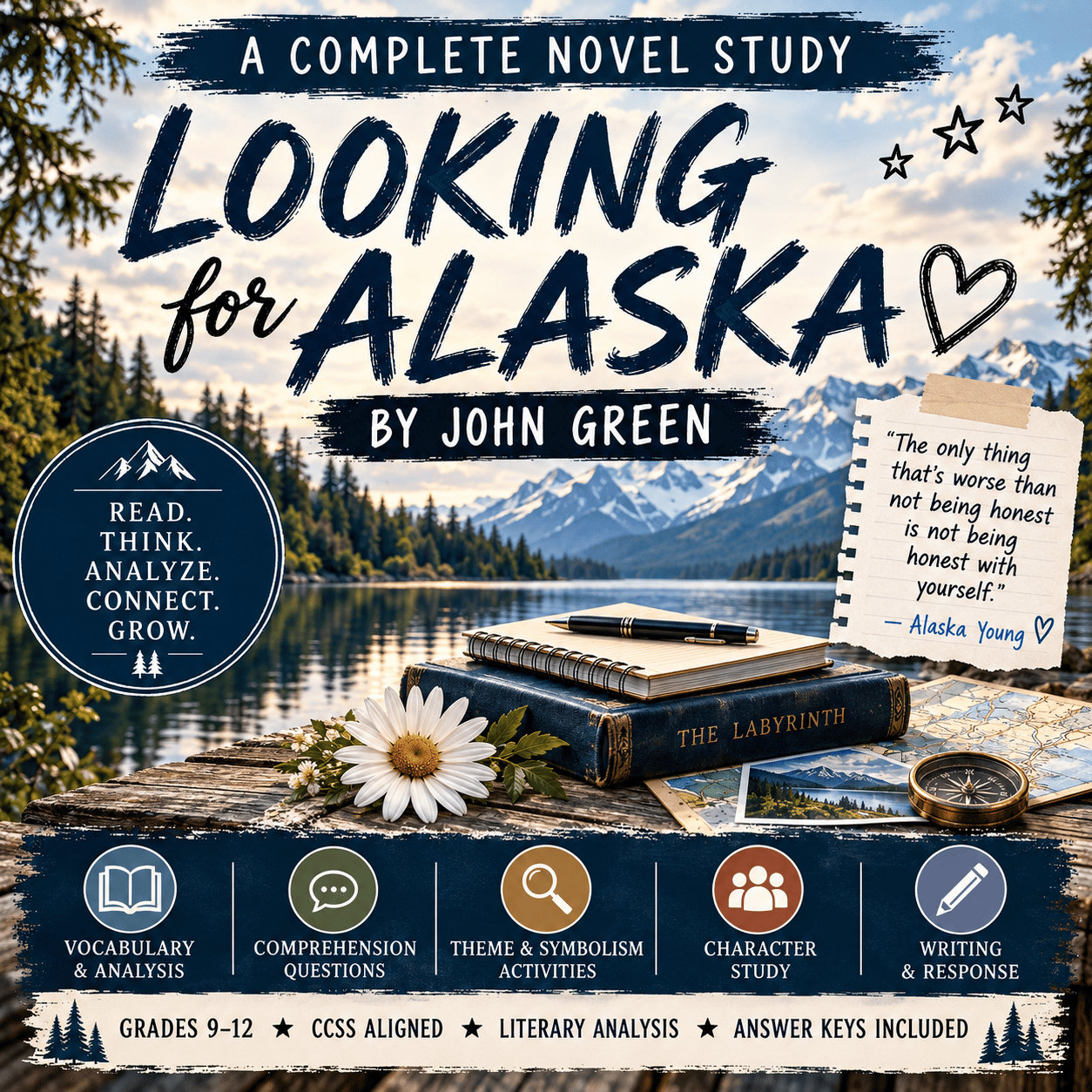
Looking for Alaska by John Green – Complete 4-Week Novel Study for High School ELA & Homeschool
Take your students beyond basic reading comprehension with this engaging, thought-provoking, and academically rigorous Looking for Alaska novel study!
Designed for grades 9–12, this comprehensive four-week literature unit helps students explore John Green’s powerful coming-of-age novel through meaningful reading activities, vocabulary development, character analysis, literary interpretation, and evidence-based writing.
Whether you’re a high school English teacher searching for engaging literature activities or a homeschool parent looking for a structured high school English curriculum, this printable novel study provides an organized approach to teaching Looking for Alaska.
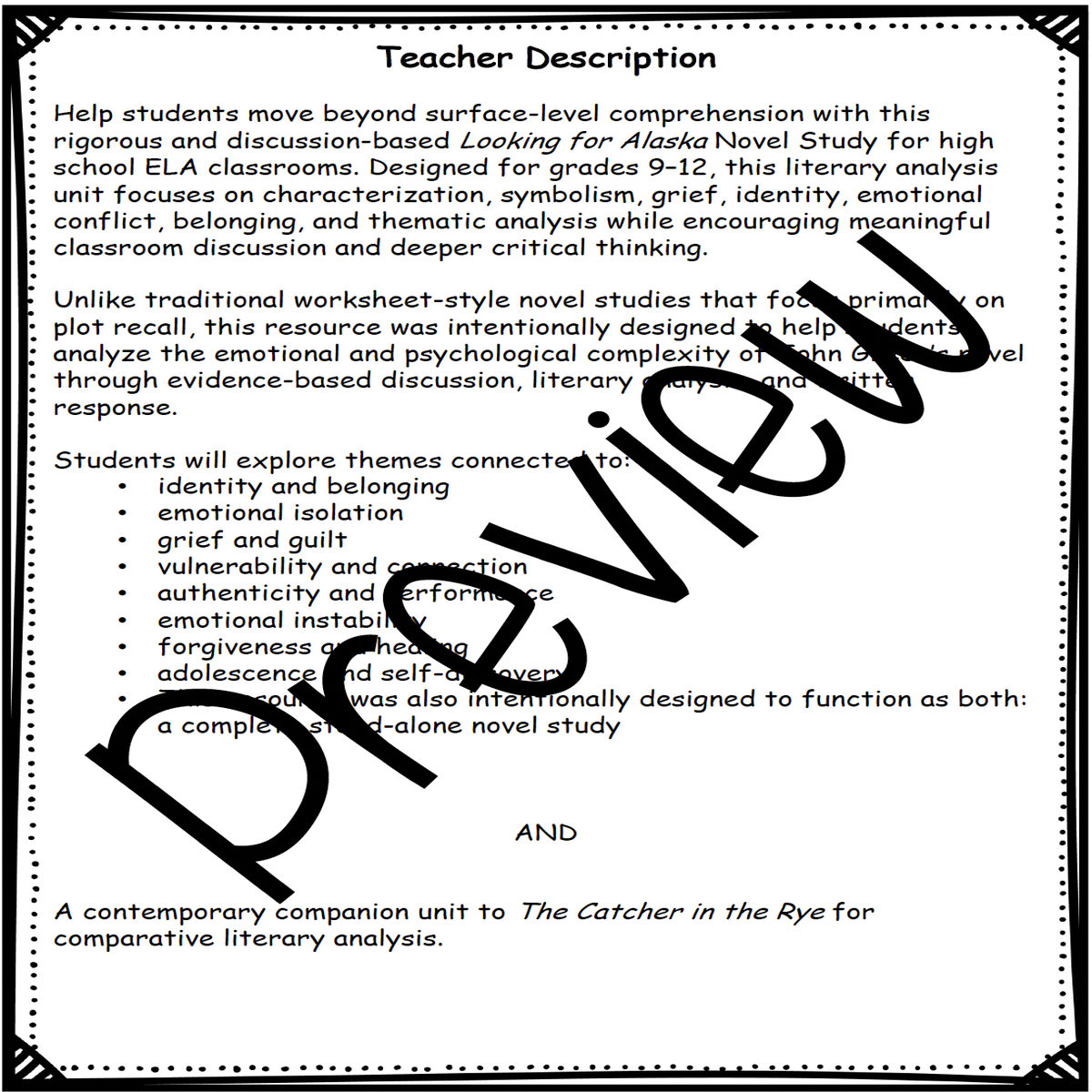
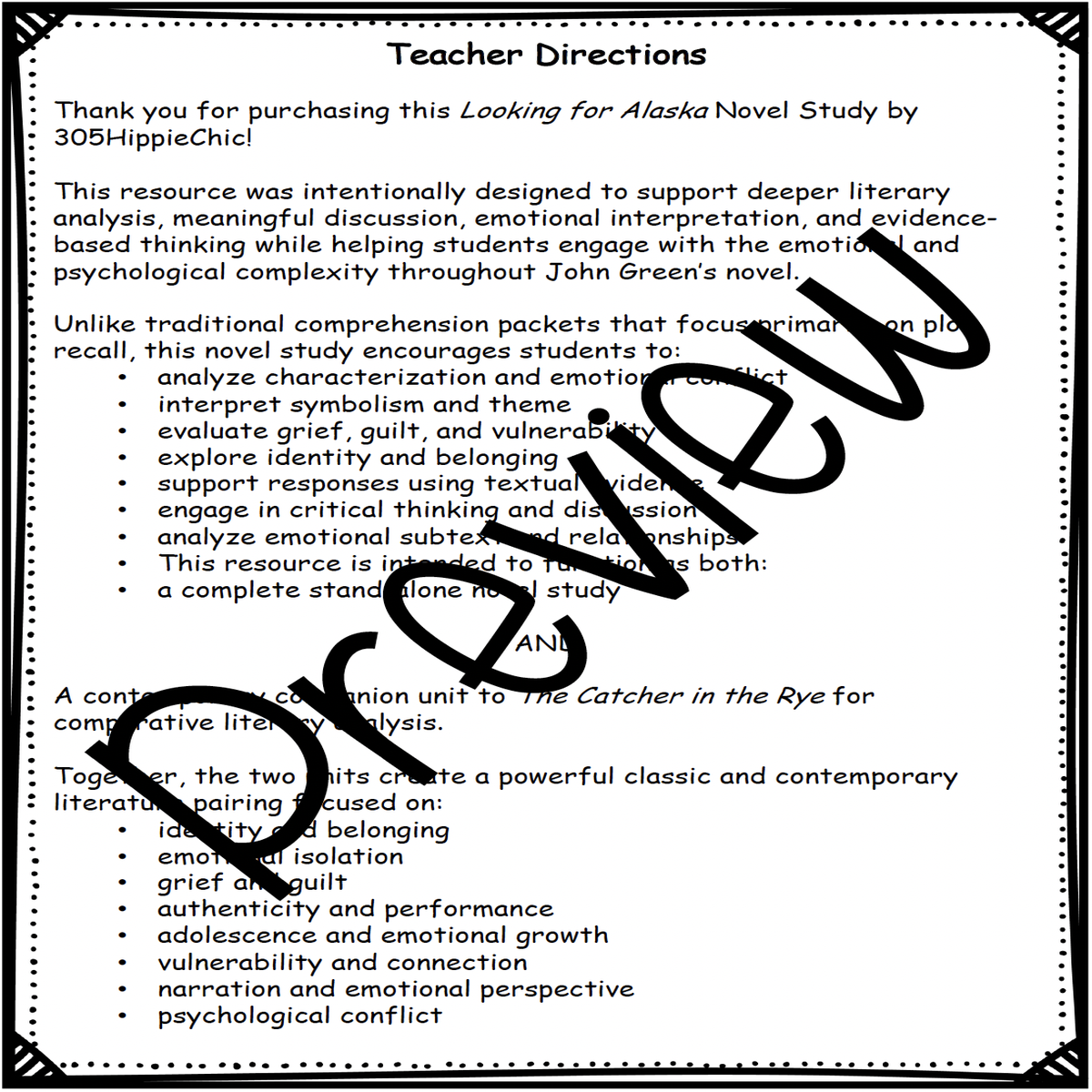
Rather than focusing exclusively on plot recall, this resource encourages students to examine the deeper emotional, psychological, and literary elements of the novel.
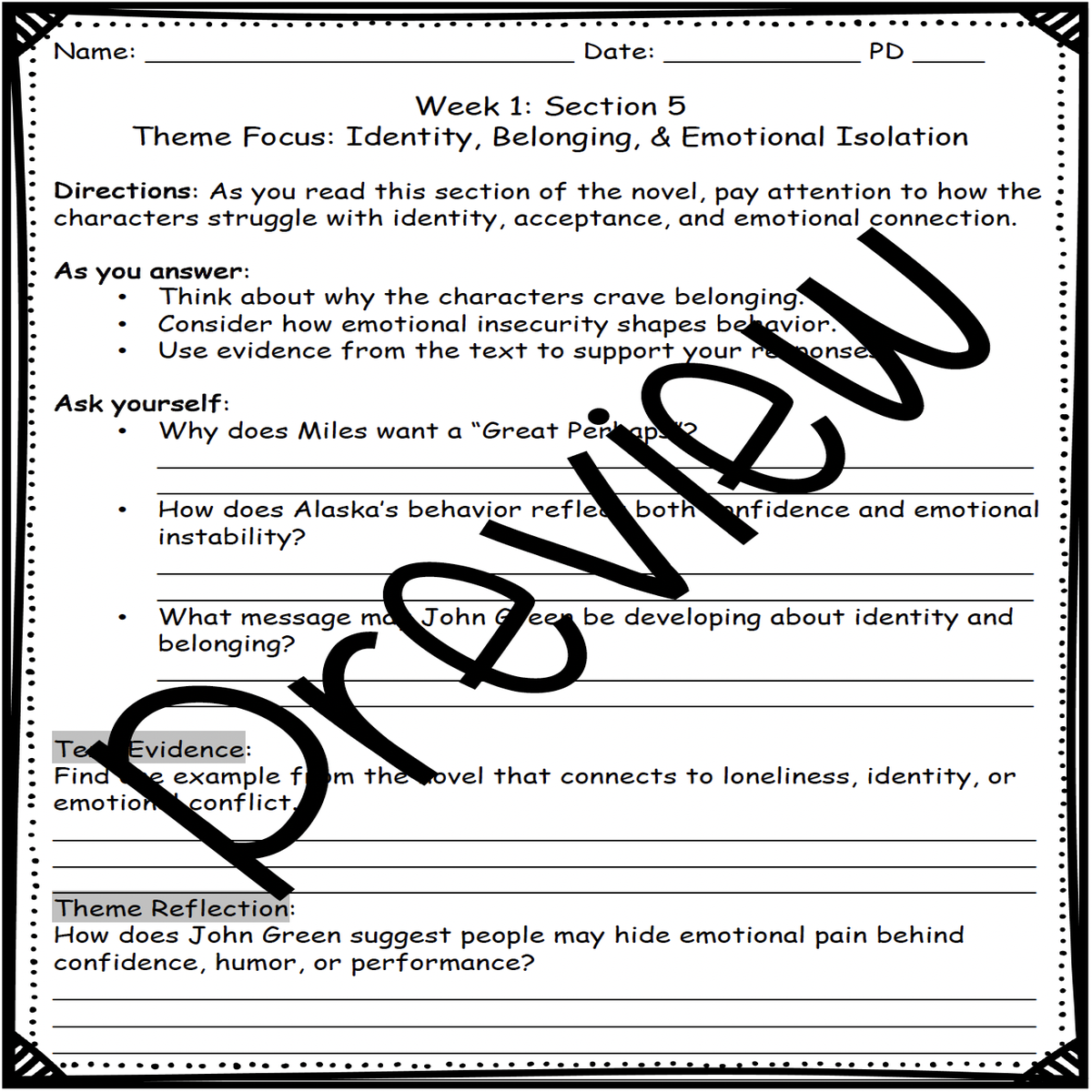
Students will investigate themes of identity, belonging, grief, guilt, friendship, emotional isolation, forgiveness, and personal growth while developing essential reading comprehension and critical-thinking skills.
Perfect for high school English classrooms, homeschool literature studies, independent reading assignments, and small-group instruction!
WHAT’S INCLUDED IN THIS LOOKING FOR ALASKA NOVEL STUDY?
This comprehensive literature resource includes:
- 4 Weeks of Structured Instruction: Organized activities that guide students through the novel.
- Weekly Reading Focus: Clearly identified literary concepts and themes to guide reading.
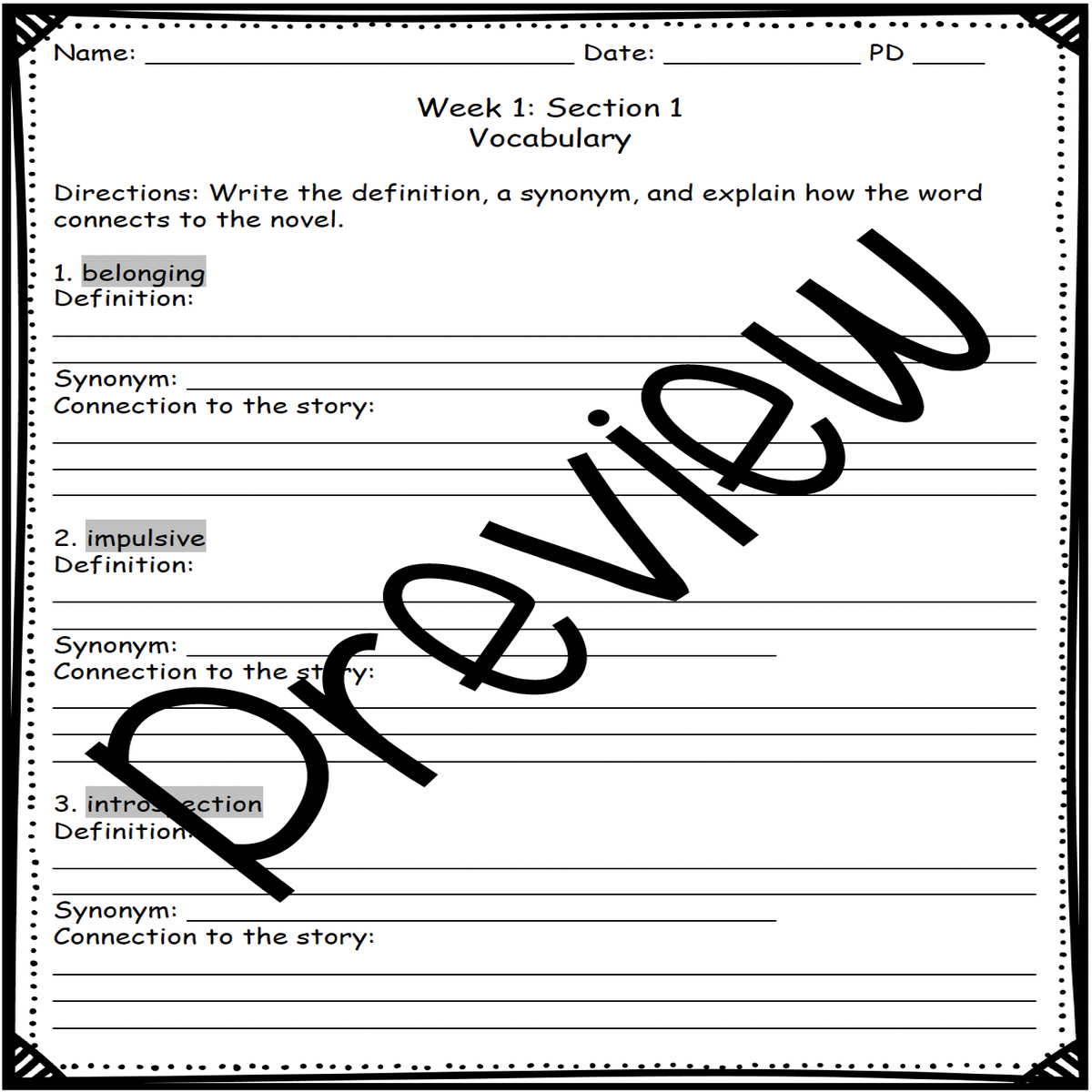
- Vocabulary Development Activities: Opportunities to define vocabulary, identify synonyms, and connect vocabulary to the text.
- Reading Comprehension Questions: Thought-provoking questions that assess understanding while encouraging deeper interpretation.
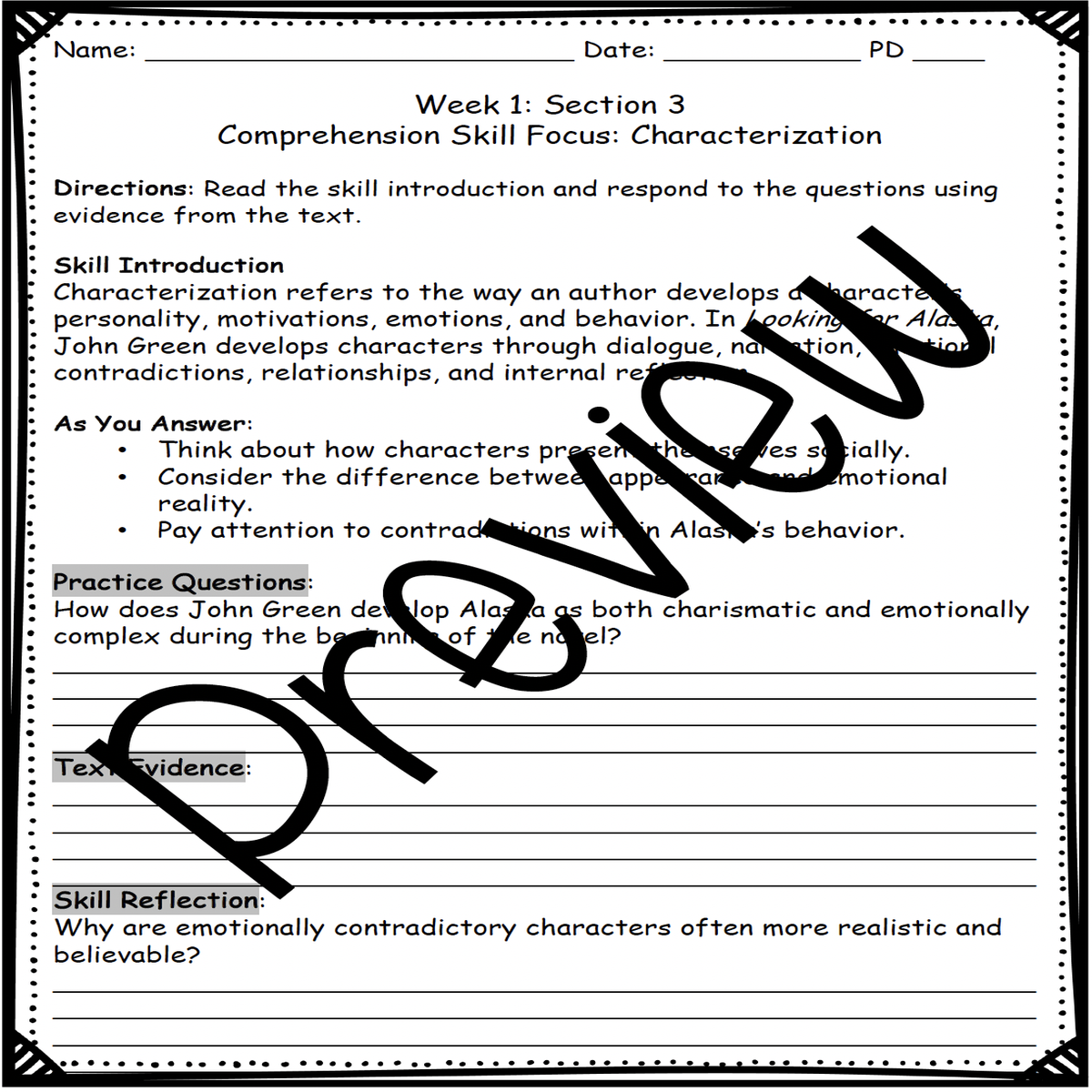
- Literary Skill Instruction: Focused activities addressing characterization, symbolism, theme development, and literary analysis.
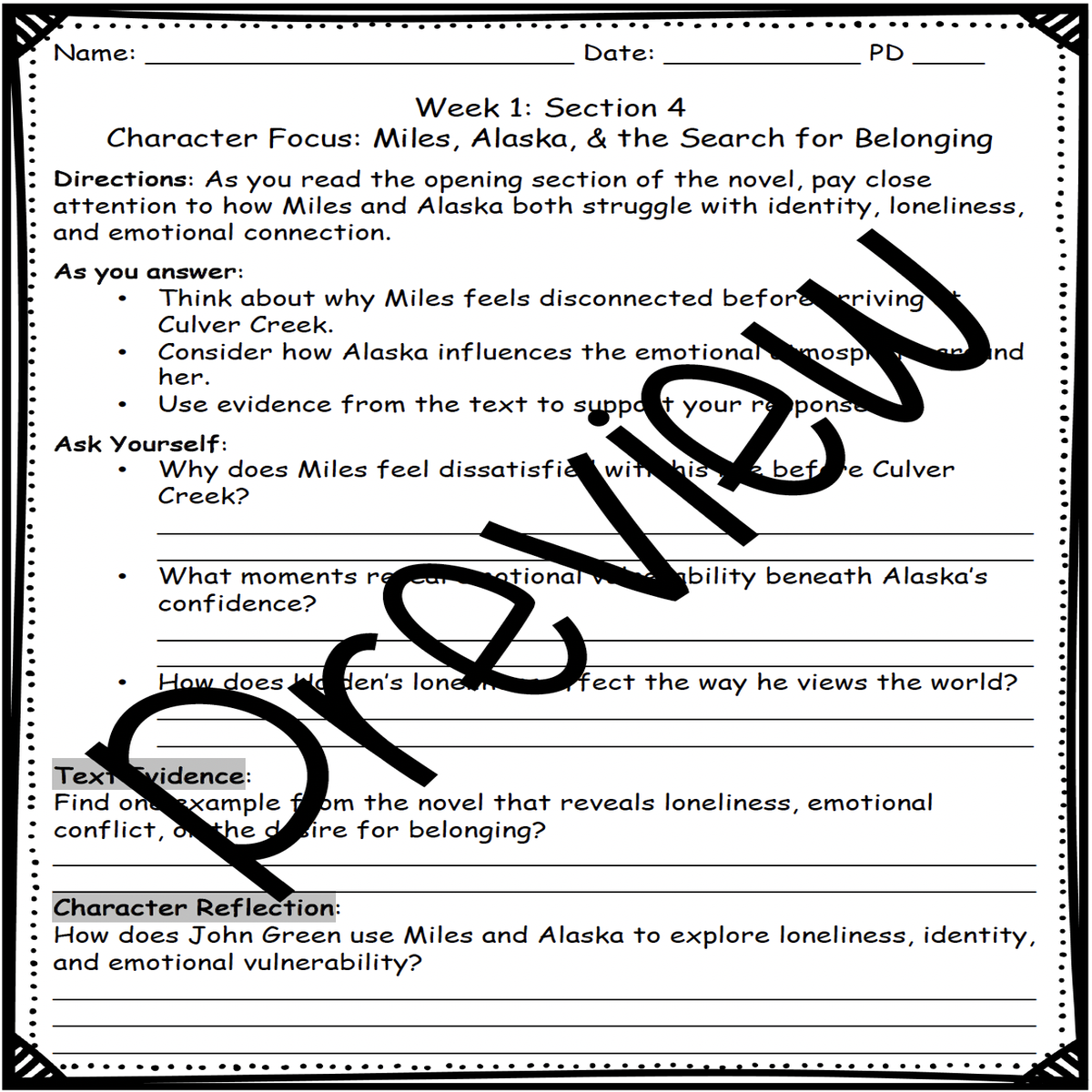
- Character Analysis Activities: Examine the motivations, relationships, emotional conflicts, and development of major characters.
- Theme Analysis: Explore identity, belonging, emotional isolation, grief, guilt, forgiveness, and personal growth.
- Textual Evidence Practice: Encourage students to support their interpretations with relevant evidence from the novel.
- Short-Response Writing Activities: Develop students’ ability to communicate literary interpretations.
- Critical-Thinking Questions: Encourage meaningful discussion, reflection, and analytical reasoning.
- Detailed Answer Keys: Support efficient grading, instructional planning, and guided discussion.
FOUR WEEKS OF MEANINGFUL LITERARY INSTRUCTION
This Looking for Alaska literature unit follows the development of John Green’s novel while emphasizing the emotional and psychological complexity of its characters.
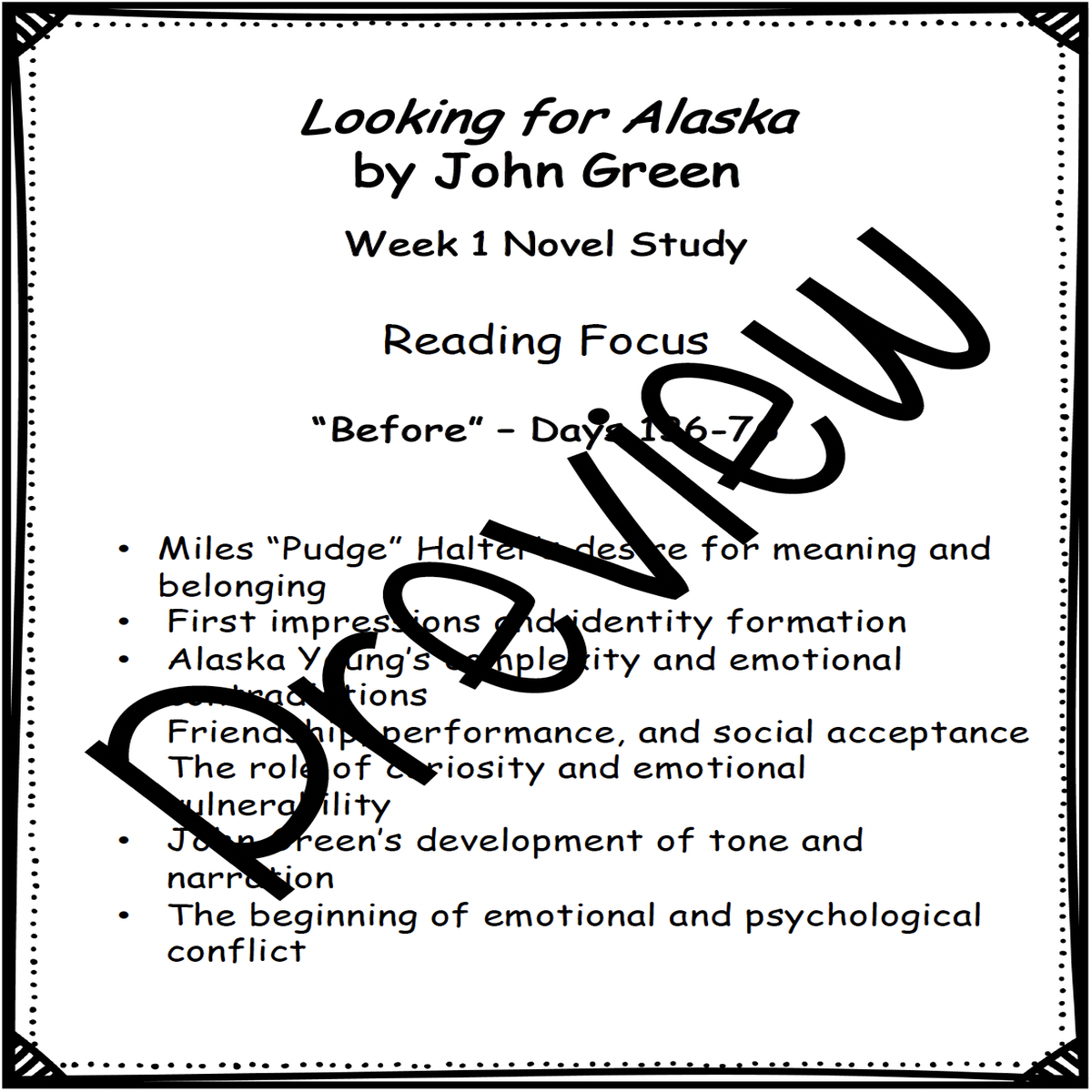
Week 1: Identity, Belonging & Character Development
- Students explore Miles “Pudge” Halter’s search for meaning and belonging as he begins his journey at Culver Creek.
- Activities emphasize characterization, first impressions, emotional vulnerability, friendship, and the development of identity.
- Students also examine Alaska Young’s complex personality and how John Green uses narration, dialogue, and relationships to reveal character motivations.
Week 2: Relationships, Emotional Conflict & Literary Interpretation
- Students continue examining character relationships, emotional complexity, and the development of the novel’s central conflicts.
- Reading activities encourage students to consider how personal experiences, relationships, and emotional vulnerability influence character behavior.
Week 3: Grief, Guilt & Theme Development
- Students analyze how grief and guilt affect the characters’ perceptions, relationships, and decisions.
- Literary analysis activities encourage students to explore how John Green develops themes surrounding loss, emotional isolation, and the search for understanding.
Week 4: Forgiveness, Healing & Finding Meaning
- Students examine the novel’s concluding themes, including forgiveness, emotional growth, and the search for meaning.
- Activities focus on the symbolism of the labyrinth, character development, and the relationship between suffering and healing.
Students use textual evidence to support their interpretations and reflect on the novel’s larger messages.
DEVELOP ESSENTIAL HIGH SCHOOL ENGLISH LANGUAGE ARTS SKILLS
This novel study supports the development of important secondary ELA skills, including:
- Reading comprehension and literary interpretation
- Characterization and character development
- Theme identification and analysis
- Symbolism and figurative meaning
- Vocabulary acquisition and application
- Textual evidence and analytical reasoning
- Critical thinking and interpretation
- Short-response writing
- Literary discussion and reflection
- Comparing literary themes across texts
The activities encourage students to move beyond identifying what happens in a story and begin analyzing why events matter, how characters develop, and what the author communicates through literary choices.
BONUS TEACHING OPPORTUNITY: PAIR WITH THE CATCHER IN THE RYE
Teaching The Catcher in the Rye by J.D. Salinger? This novel study offers an excellent opportunity for comparative literary analysis!
Looking for Alaska can function as a complete standalone literature unit or as a contemporary companion to The Catcher in the Rye.
Both novels explore important themes related to adolescence, identity, emotional isolation, belonging, grief, and the search for meaning.
Teachers can use these two works to encourage students to compare:
- Miles Halter and Holden Caulfield
- Identity formation and adolescence
- Loneliness and emotional isolation
- Grief, guilt, and personal loss
- Authenticity and social expectations
- Narration and emotional perspective
- Relationships and the desire for connection
- Psychological conflict and emotional growth
This pairing creates opportunities for comparative essays, classroom discussions, and higher-order literary analysis.
PERFECT FOR CLASSROOM TEACHERS AND HOMESCHOOL EDUCATORS
High School English Teachers
Use this resource for whole-class novel studies, literature circles, independent reading assignments, guided instruction, and supplemental ELA activities.
Homeschool Teachers and Parents
Provide your high school student with a structured literature study that encourages independent reading, analytical writing, and meaningful discussions about complex literary themes.
Small-Group Instruction
Use individual activities to support targeted reading comprehension, vocabulary development, and literary analysis.
Independent Learning
Students can work through the organized reading activities while developing their ability to interpret literature and support their responses with textual evidence.
WHY TEACHERS AND HOMESCHOOL PARENTS WILL LOVE THIS RESOURCE
SAVE VALUABLE PLANNING TIME
Organized reading activities and instructional materials help reduce the time spent preparing literature lessons.
ENCOURAGE DEEPER THINKING
Students analyze characterization, symbolism, themes, and emotional conflict rather than relying exclusively on basic comprehension questions.
SUPPORT MEANINGFUL DISCUSSION
Thought-provoking questions encourage students to explore complex characters and important themes.
BUILD CONFIDENT READERS AND WRITERS
Structured activities help students develop their literary interpretation and evidence-based writing skills.
FLEXIBLE FOR MULTIPLE LEARNING ENVIRONMENTS
Suitable for traditional classrooms, homeschool instruction, independent learning, and small-group activities.
WHO IS THIS RESOURCE FOR?
This printable Looking for Alaska novel study is designed for:
- High school English teachers
- Grades 9–12 ELA classrooms
- Homeschool teachers and parents
- High school literature courses
- Independent reading programs
- Literature discussion groups
- Secondary reading intervention and enrichment
- Teachers planning comparative literature units
Please note: Looking for Alaska contains mature themes. Teachers and homeschool parents should review the novel for suitability before assigning it to students.
MAKE LITERATURE MEANINGFUL WITH 305HIPPIECHIC!
Help students explore the emotional complexity of John Green’s Looking for Alaska while strengthening their reading comprehension, literary analysis, vocabulary, and critical-thinking skills.
Add this four-week novel study to your high school English curriculum and bring meaningful literary discussion into your classroom or homeschool!
🌼 305HippieChic — Print. Think. Write. Learn.