

The Complete Guide to Solar Inverters
This comprehensive technical guide analyzes solar inverter technology through the lens of industrial manufacturing and global B2B procurement. Designed for EPCs, large-scale distributors, and OEM partners, we explore how factory-direct R&D in MPPT algorithms, thermal management, and grid-compliance (UL/CE/TUV) maximizes ROI and system longevity.
Table of contents
- What is a Solar Inverter?
- How Does a Solar Inverter Work?
- What are the Different Types of Solar Inverters?
- Photovoltaic Inverter Efficiency Explained
- How to Choose the Right Solar Inverter
- Solar Inverter Lifespan
- How to Maintain Solar Inverters
- ROI Considerations
What is a Solar Inverter?
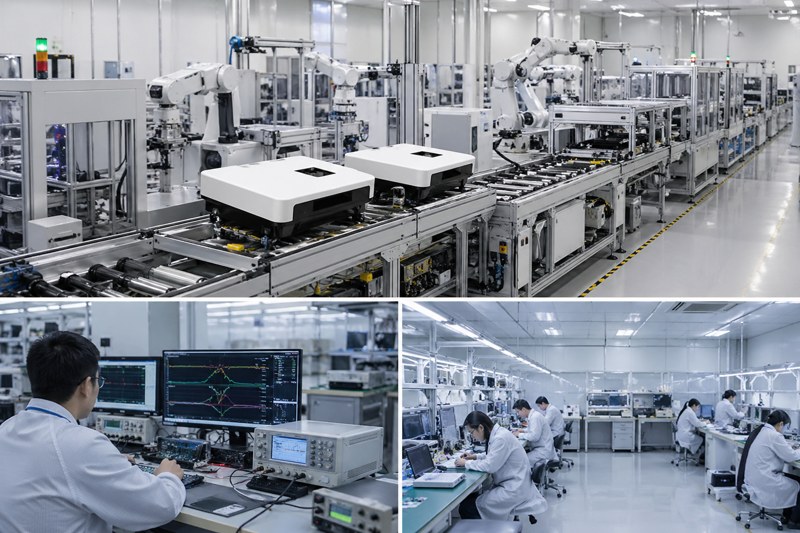
In the modern photovoltaic (PV) ecosystem, the solar inverter serves as the critical intelligence hub, far transcending its historical role as a simple power converter. It functions as the gateway between the raw Direct Current (DC) generated by solar modules and the complex Alternating Current (AC) requirements of the global electrical grid. For B2B stakeholders—including large-scale distributors and EPC firms—the inverter represents the most sophisticated component of the balance-of-system (BOS). Its performance directly dictates the system’s uptime, safety profile, and cumulative energy yield.
Why Is a Solar Inverter Essential for Solar Panels?
In the solar ecosystem, the inverter is the “intelligent gateway.” While PV modules harvest photons, they generate Direct Current (DC), which is incompatible with the global AC-dominated electrical infrastructure. A high-grade inverter is essential because it manages the Power Quality, ensures Grid Synchronization, and provides the Safety Protocols (such as AFCI and Ground Fault Protection) required by international compliance standards like UL 1741 and IEC 62109. Without a robust inverter, a solar array is merely a collection of glass and silicon; with one, it is a bankable power plant.
What Is the Role of MPPT in Solar Inverters?
Maximum Power Point Tracking (MPPT) is a sophisticated DC-to-DC conversion logic. Environmental variables—specifically irradiance and temperature—constantly shift the “knee” of the IV curve. Our factory-developed MPPT algorithms utilize high-speed digital signal processing (DSP) to scan the voltage range in milliseconds. By maintaining the system at its maximum power point ($P = V \times I$), we achieve a Static Tracking Efficiency of 99.9%, ensuring that even in partial shading or low-light conditions, energy harvest is maximized.
Do Solar Inverters Make Noise?
For commercial and industrial (C&I) installations, noise pollution is a critical site-planning factor. Inverters generate noise primarily from high-frequency switching and active cooling fans. To address this, we utilize Natural Convection Cooling for units up to 20kW, resulting in 0dB operation. For larger utility-scale units, we employ Smart Variable Speed Fans that adjust based on thermal load, keeping the acoustic output below 45dB—well within the limits for commercial office environments and residential zones.
How Does a Solar Inverter Work?
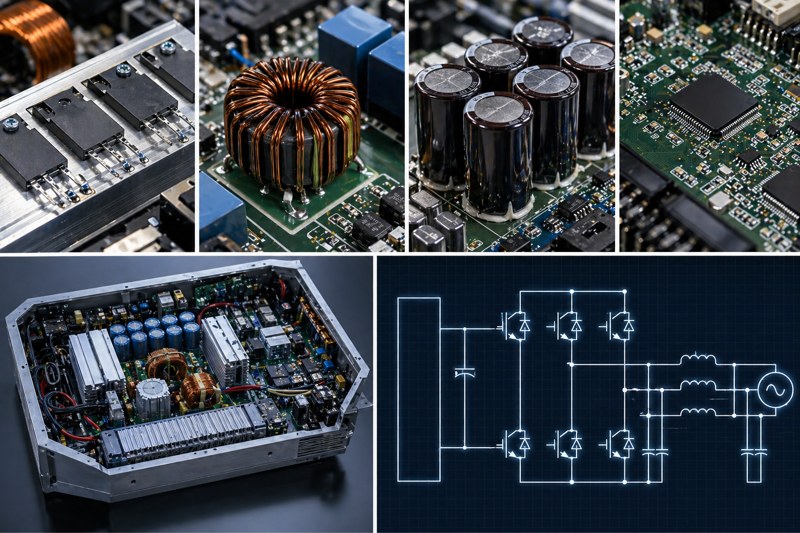
The internal conversion logic of a solar inverter is a masterpiece of high-speed power electronics and digital control. For technical procurement officers, understanding this process is essential to vetting the harmonic quality and grid-synchronization capabilities of a supplier’s hardware. Modern inverters must do more than just convert power; they must maintain a low Total Harmonic Distortion (THDi), manage reactive power, and communicate real-time data to the cloud.
What is the Function of a Solar Inverter?
Beyond simple conversion, the modern inverter functions as a Grid-Supportive Device. Its primary functions include:
- DC-AC Conversion: Transforming variable DC into a stable pure sine wave.
- System Monitoring: Transmitting performance data via RS485, WiFi, or 4G to an EMS (Energy Management System).
- Active Safety: Rapid shutdown and arc-fault detection to protect assets and personnel.
How Do Solar Inverters Convert DC to AC?
The conversion process relies on Power Electronics. China Moneypro Energy uses industrial-grade IGBTs (Insulated Gate Bipolar Transistors) or SiC MOSFETs arranged in an H-bridge configuration. By utilizing Pulse Width Modulation (PWM), the inverter switches these components on and off thousands of times per second. By varying the width of these pulses, it filters the DC into a smooth, 50/60Hz AC waveform that perfectly mimics the utility grid’s sine wave.
Does Solar Inverter Work at Night?
A standard grid-tied inverter enters “Sleep Mode” once the DC input voltage falls below the start-up threshold. However, for B2B clients looking at Energy Storage Systems (ESS), our Hybrid Inverters remain active 24/7. At night, the inverter switches to “Discharge Mode,” drawing power from the Lithium Battery Pack to serve the load or participate in Peak-Shaving to reduce demand charges for commercial facilities.
How Many Solar Panels Do I Need for an Inverter?
This is determined by the Inverter Sizing Guide. To maximize the “Capacity Factor,” we typically recommend a DC/AC Ratio of 1.3 to 1.5.
Technical Example: For a 100kW AC inverter, installing 130kW–150kW of PV panels ensures the inverter operates at peak efficiency for a longer duration of the day, compensating for system losses and atmospheric attenuation.
What are the Different Types of Solar Inverters?
Selecting the appropriate inverter architecture is a strategic decision that impacts the installation’s complexity, cost, and future scalability. From small-scale residential systems to utility-scale desert power plants, each application demands a different engineering approach. As a full-service manufacturer, we provide a portfolio that addresses these varying needs.
website: https://www.moneyproenergy.com/the-complete-guide-to-solar-inverters/