
"Except It Die" (MP3 Audio)
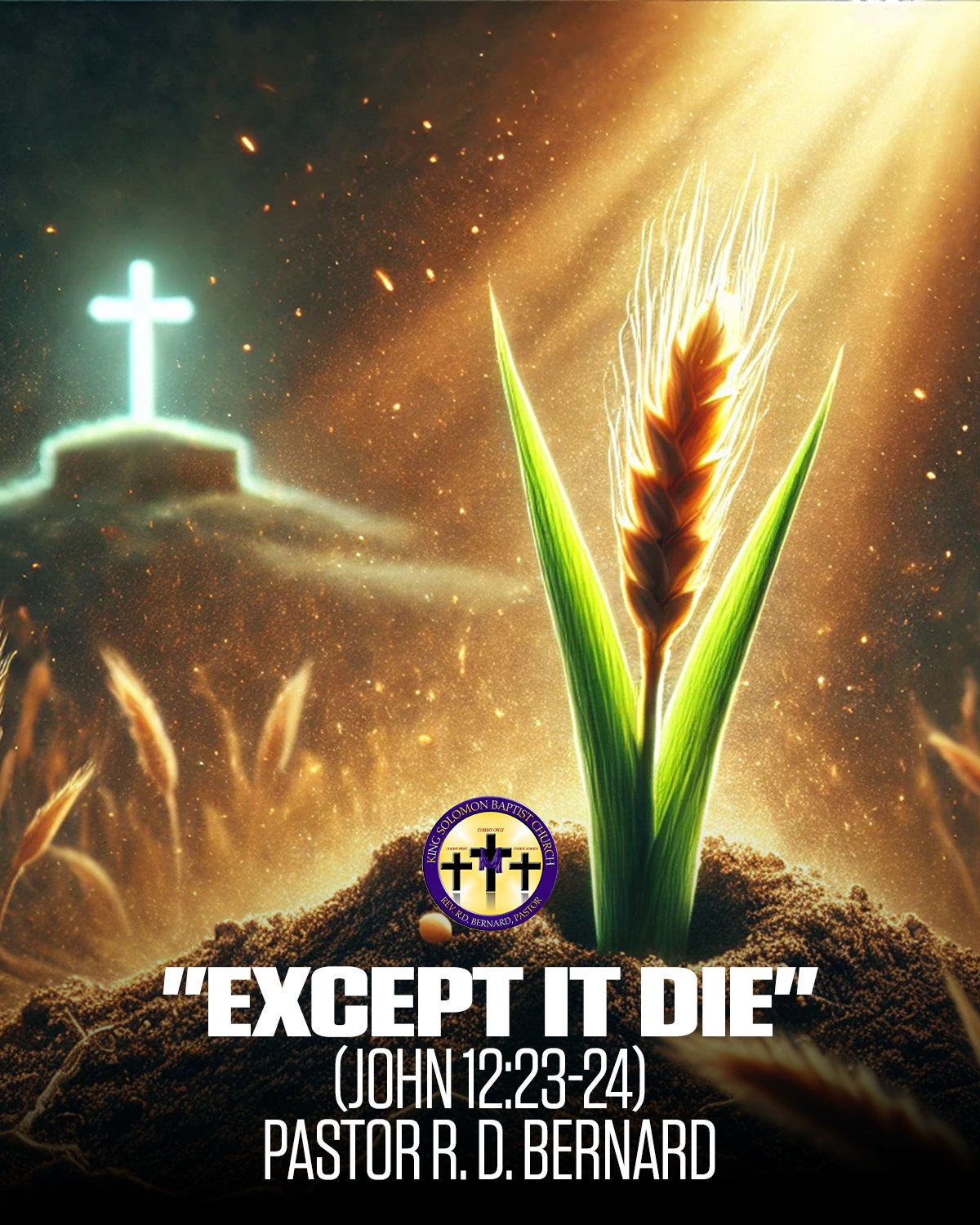
"Except It Die" (John 12:23-24)
All human history hinges on a resurrection. Jesus Christ, the incarnate Son of God, rose from death never to die again (Revelation 1:18). There is not another single instance of anybody anywhere at any point in human history, who lives, though they were once dead, and who will never die again. This is the great hope of the Christian faith (Colossians 1:27).
God specializes in resurrections. It is His special work and proves His power among all the living. We will all literally die one day and experience the resurrection for ourselves—some a resurrection to life, and others a resurrection to the second death (John 5:29).
But before we die and experience that ultimate resurrection, believers ought to have experienced several resurrections in this life. Things die, metaphorically and literally speaking. The problem with some of us is that we believe that we can save anything. Indeed, we believe it is our God-given mission to save some things. But answer this one question, “From where does new life come?”
John 12:24 answers so many questions that we all have about our lives. New life comes from death, except it die, there will be no new life. This is God’s special work, death and then resurrection.
Jesus shares a deep, spiritual truth using a simple agricultural metaphor. This verse reads in the NLT: “I tell you the truth, unless a kernel of wheat is planted in the soil and dies, it remains alone. But its death will produce many new kernels—a plentiful harvest of new lives.”
Through the profundity of this verse, Jesus teaches that some things must die, for new life to emerge. From this talk about a kernel of wheat comes significant information about your life, your walk with Christ, and the broader scope of God’s plan of redemption. Consider the following four points.
Image 2:
- Without death, there would be no new life.
- a. This discussion of Jesus’ is tucked neatly between the death and resurrection of Lazarus (chapter 11) and the Last Supper (chapter 13). Jesus is pointing to the necessity of His own death.
- b. Jesus is attempting to get His disciples to look past His impending suffering and death, to the renewal and glory to God that it will bring (John 12:28).
- Dying to self or letting anything die is not easy.
- a. To hold on to our lives (the seeds) as they are, would not result in fruitfulness for Christ (John 12:25).
- b. Not dying to self (allowing the seeds to fall into the ground and die), keeps us isolated from others and from Christ (John 12:25).
- c. Jesus Himself was exemplifying this fact. He willingly laid down His life, enduring the agony of the cross, so that we might have eternal life together with Him. Had He not gone to the cross to die, there would be no multiplication of disciples (2nd Corinthians 5:17; Romans 6:4-6).
- When we allow seeds to die, God brings new life.
- a. We die symbolically in baptism and are raised to new life (Romans 6:4-6).
- b. Jesus compared His resurrection to Jonah being in the belly of the great fish (Matthew 12:38-40).
- We glorify God when we become like Him as we pour out our lives into others.
- a. We are saved for a work that we are not qualified to give until we drop some seeds (Ephesians 2:10).
- b. The gifts that God is waiting to give us, and to bless His body through us, will bring Him glory (1st Peter 4:10-11).
- c. Jesus’ death, burial, and resurrection brought God glory (John 17:1-5).
“Christ First, Christ Only, Christ Always”