

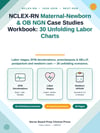
NCLEX-RN Maternal-Newborn & OB NGN Case Studies Workbook: 30 Unfolding Labor Charts
Maternal-newborn and obstetric nursing for the Next-Gen NCLEX-RN — every topic with its exact exam numbers, its discriminating cues, and its priority action, then 30 unfolding birth scenarios that test you the way the NGN does: the vitals change, the strip changes, and you decide what to do next.
Inside:
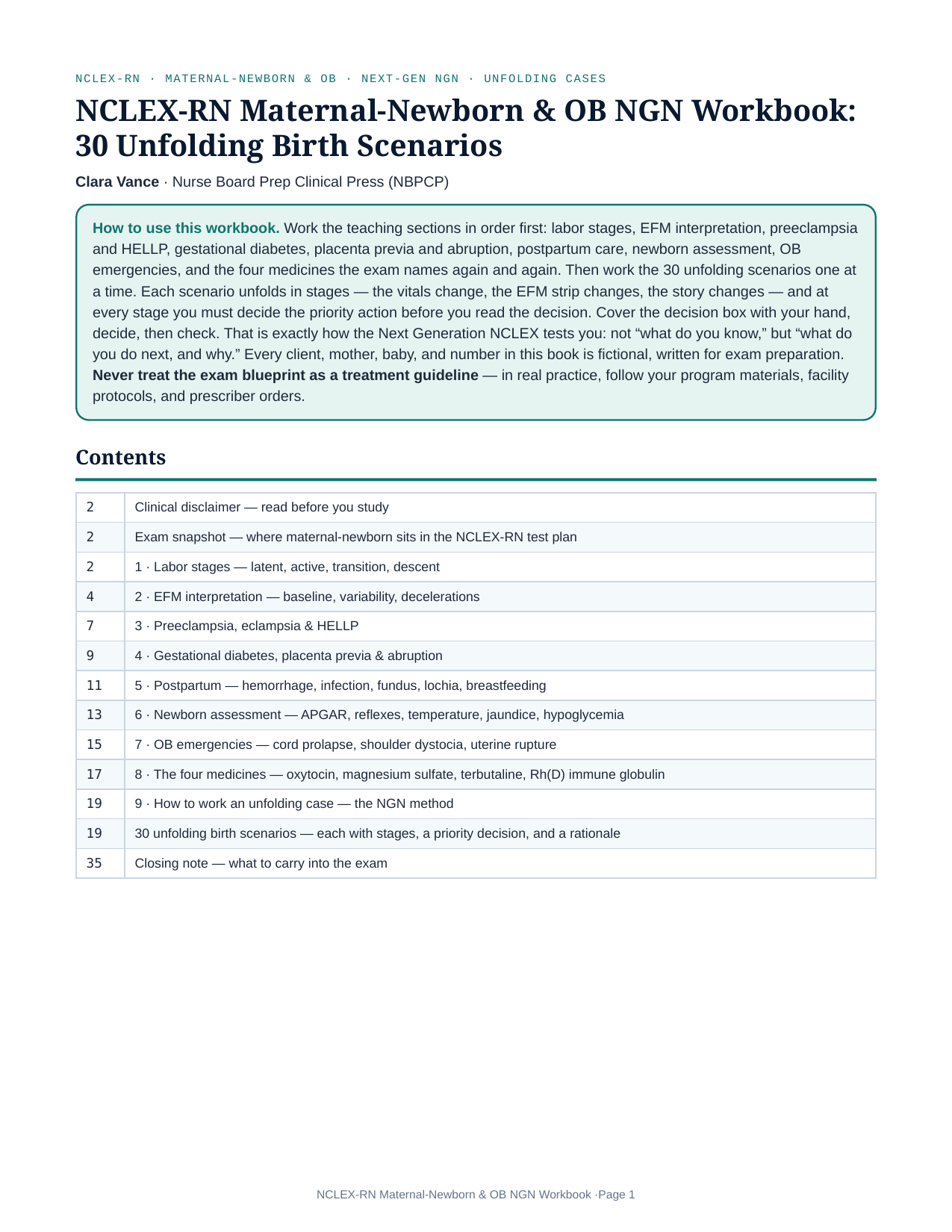
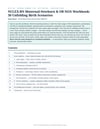
- Labor stages: latent, active, transition, descent — cervical changes (dilation, effacement, station), fetal descent, and true labor vs. false labor
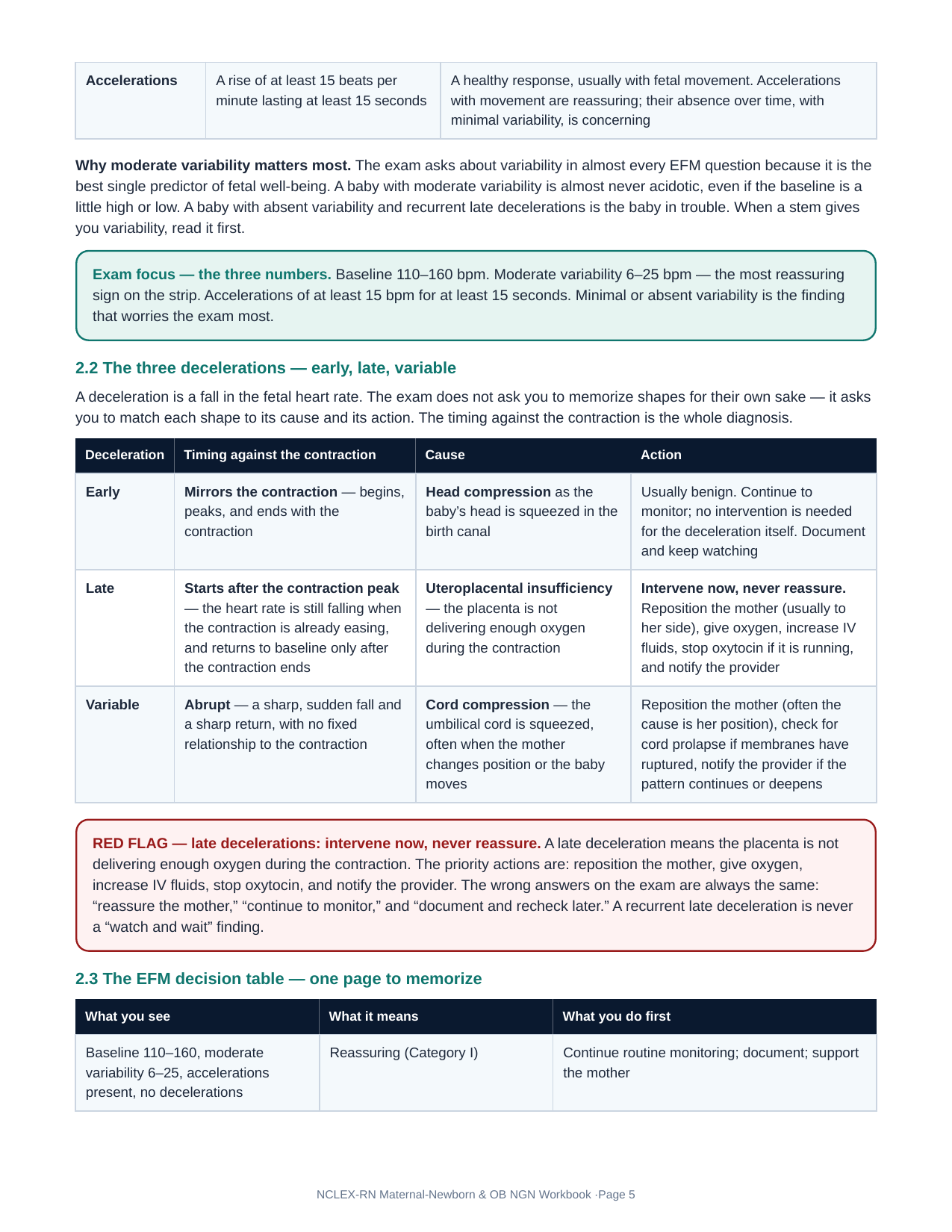
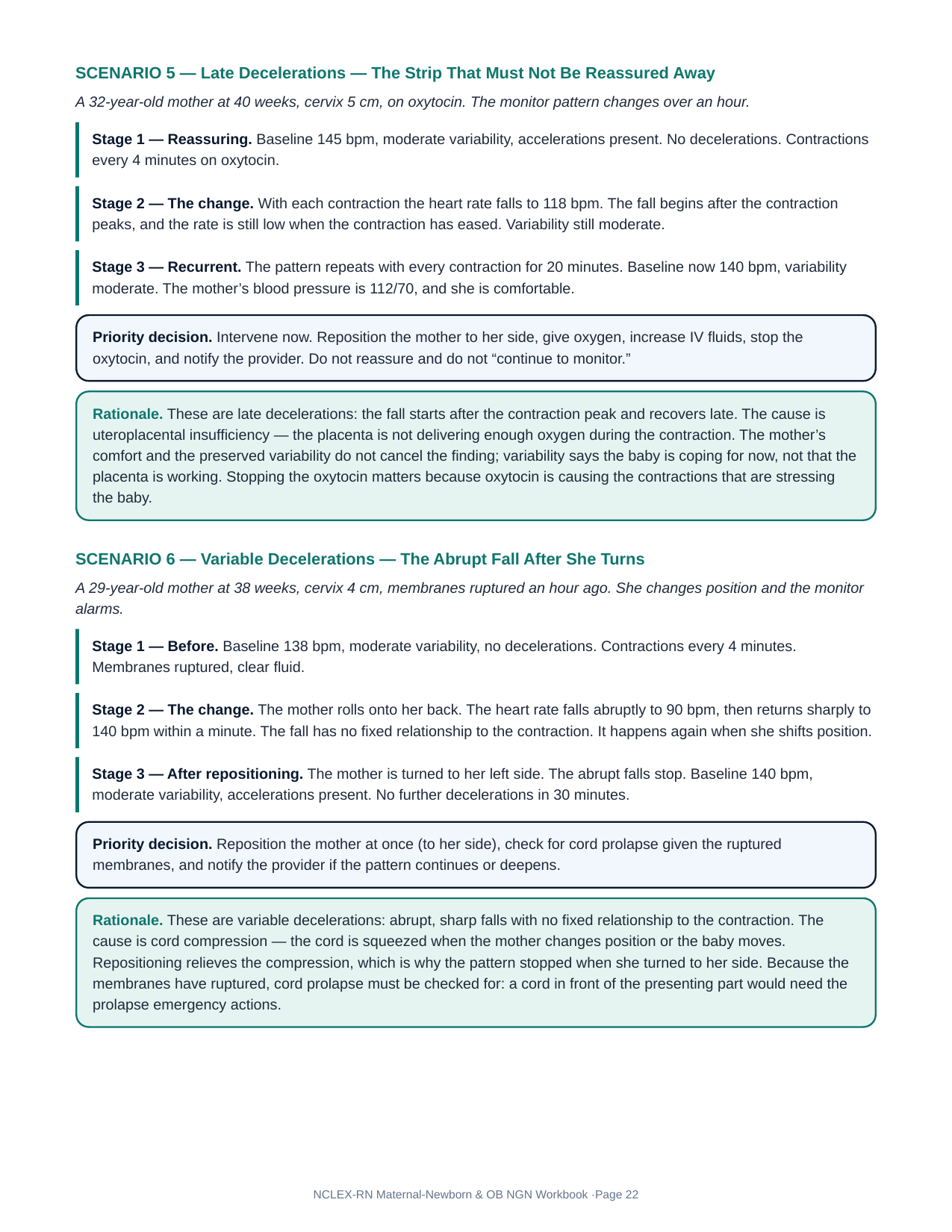
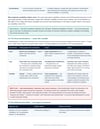
- EFM interpretation: baseline 110–160 bpm, moderate variability 6–25 bpm, accelerations, and the three decelerations — early (head compression, usually benign), late (uteroplacental insufficiency — intervene now, never reassure), variable (cord compression) — plus a worked strip read step by step and the EFM decision table
- Preeclampsia: 140/90 mmHg twice, 4+ hours apart, after 20 weeks, plus proteinuria or an end-organ sign; severe features at 160/110; eclampsia; HELLP (hemolysis, elevated liver enzymes, low platelets)
- Gestational diabetes (screening at 24–28 weeks) and the newborn's blood glucose after birth; placenta previa (painless, bright red, soft uterus — no vaginal examination) vs. abruption (painful, rigid uterus, concealed loss)
- Postpartum: hemorrhage and the boggy fundus (massage, check the bladder), fundal assessment (at the umbilicus after birth, down about 1 cm/day), lochia rubra days 1–3 / serosa days 4–10 / alba to about 6 weeks, infection, breastfeeding (including mastitis — keep feeding from that breast)
- Newborn assessment: APGAR at 1 and 5 minutes (Appearance, Pulse, Grimace, Activity, Respiration — 0–2 each; 7–10 reassuring, 4–6 moderately depressed, 0–3 low), reflexes, thermoregulation (axillary 36.5–37.5 °C), jaundice in the first 24 hours (pathologic — report at once) vs. after 24 hours (usually physiologic), neonatal hypoglycemia
- OB emergencies: cord prolapse (knee-chest, lift the presenting part off the cord), shoulder dystocia (McRoberts + suprapubic pressure — never pull the head, never fundal pressure), uterine rupture (sudden pain, contractions stop, fetal heart rate falls)
- The four medicines: oxytocin (more than 5 contractions in 10 minutes = tachysystole — stop the infusion), magnesium sulfate (watch reflexes, breathing, urine output; toxicity antidote calcium gluconate), terbutaline, Rh(D) immune globulin (Rh-negative mother, around 28 weeks and within 72 hours after birth if the baby is Rh-positive)
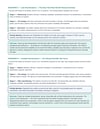
- The NGN method (NCJMM six steps) and 30 unfolding birth scenarios, each with 2–3 stages of changing vitals and EFM, a priority decision, and a full rationale — including late decelerations, preeclampsia with severe features, eclampsia, HELLP, previa, abruption, postpartum hemorrhage, APGAR 4, jaundice at 12 hours vs. 48 hours, cord prolapse, shoulder dystocia, and uterine rupture
No real medicine doses are asserted in this workbook — dosing is prescriber-ordered and product-specific. Original teaching cases written for exam practice. This workbook is not affiliated with NCSBN and does not guarantee a pass. If you find an error, a corrected version will be sent free.