
Lactate Quick-Response Toolkit: A Bedside Guide for Clinicians
Lactate Quick-Response Toolkit: A Bedside Guide for Clinicians
An elevated lactate doesn’t automatically mean sepsis.
Lactate can rise for many reasons—and understanding why it’s elevated matters.
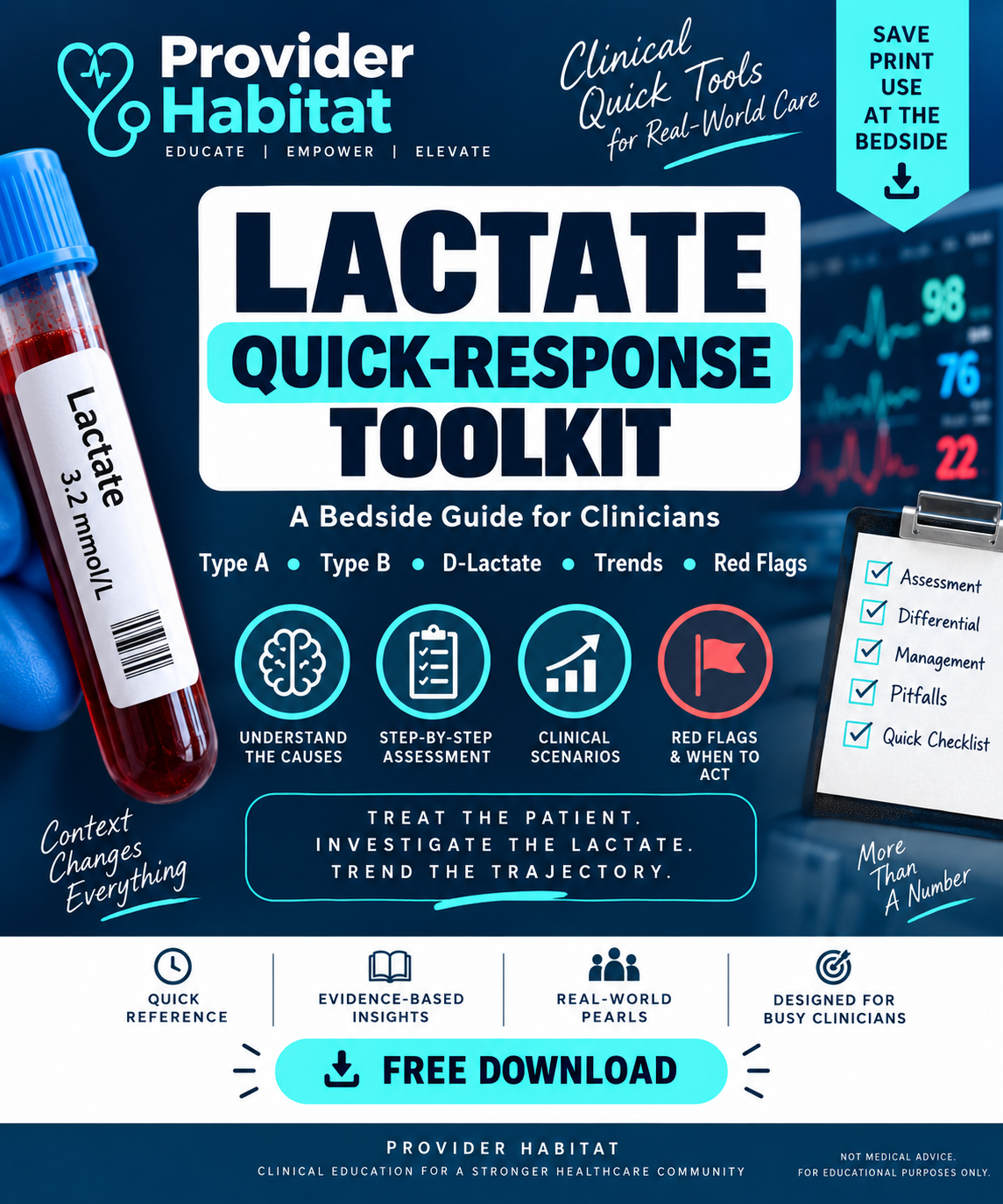
The Provider Habitat Lactate Quick-Response Toolkit is a practical bedside reference designed to help healthcare professionals interpret elevated lactate in clinical context, not as an isolated number.
Inside this FREE toolkit:
- Type A vs. Type B lactic acidosis explained
- Type B1, B2 & B3 breakdown
- D-lactic acidosis and why it’s different
- Common causes of elevated lactate
- A step-by-step bedside assessment
- How to interpret rising, persistent & falling lactate trends
- Important clinical red flags
- Real-world clinical scenarios to reinforce learning
Perfect for: NPs, PAs, physicians, nurses, students, and other clinicians who want a quick, practical refresher they can save for later.
Download it FREE and keep it handy for your next elevated lactate.
For educational purposes only. This resource does not replace clinical judgment, institutional protocols, or individualized patient care.
Provider Habitat | Practical clinical education for real-world practice