
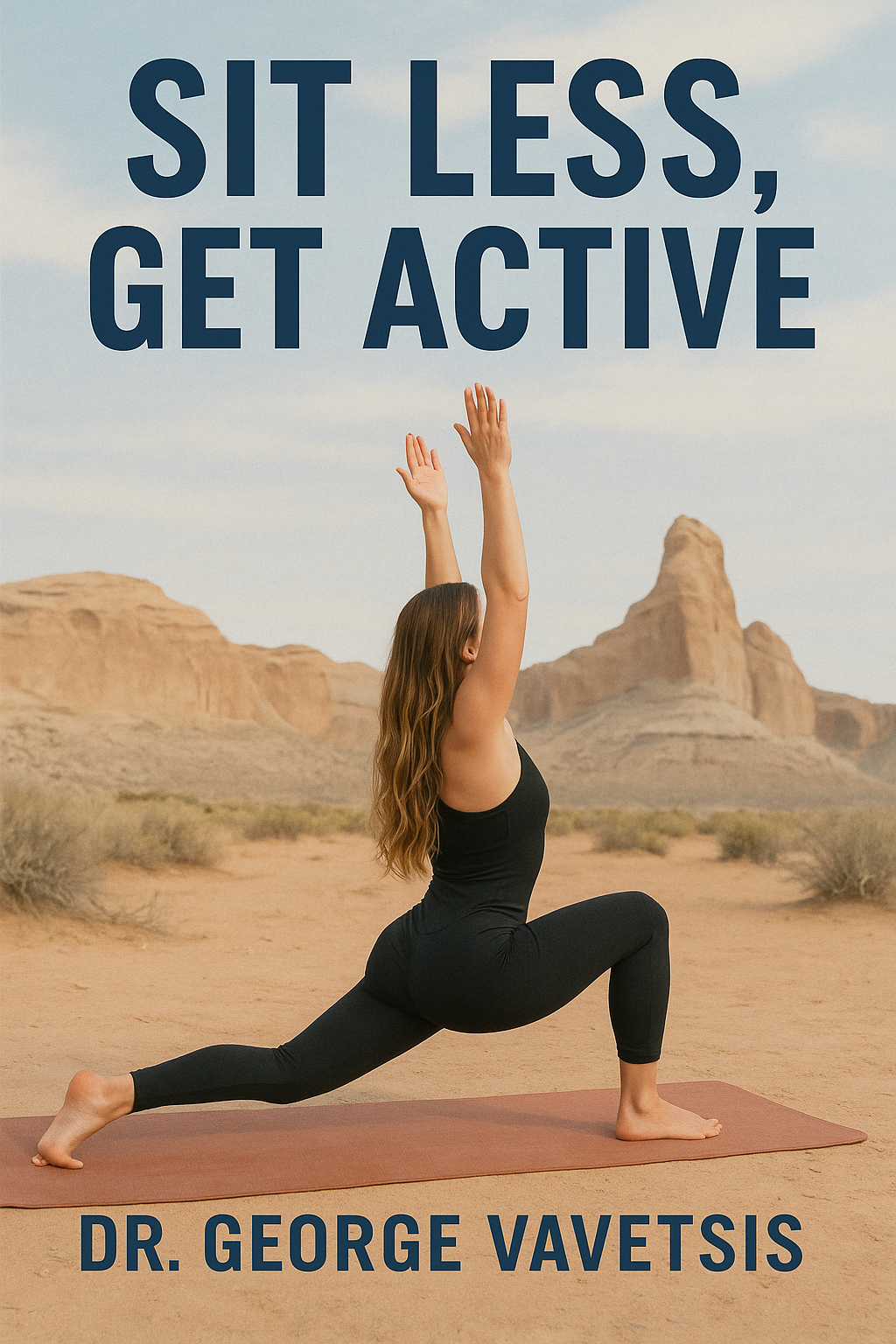
Sit Less, Get Active
Pages: 605
Physical inactivity is one of the most widespread, underestimated, and preventable threats to public health in the modern world. It affects people across all ages, socioeconomic levels, and cultures, yet it often goes unnoticed because it develops quietly—embedded in daily routines that feel normal, productive, and unavoidable. Long hours of sitting at work, extended screen time, passive transportation, and sedentary leisure have become defining features of contemporary life. Over time, these behaviors shape health outcomes in powerful ways.
This book was written in response to that reality.
Sit Less, Get Active is not a fitness manual, an exercise prescription, or a weight-loss guide. It is a public-health–oriented framework designed to help individuals, communities, and health professionals address sedentary behavior as a modifiable risk factor—one that contributes significantly to chronic disease, functional decline, and reduced quality of life.
Over the past decades, public-health research has consistently shown that prolonged sitting is associated with increased risk of cardiovascular disease, type 2 diabetes, metabolic syndrome, obesity, musculoskeletal pain, depression, sleep disorders, and premature mortality. Importantly, these risks remain elevated even in people who meet traditional exercise guidelines, if the rest of their day is spent largely inactive. In other words, exercise alone does not fully offset the health effects of sitting all day.
This insight has shifted the way movement is understood in population health. Physical activity is no longer viewed solely as structured exercise performed a few times per week. Instead, health is increasingly linked to how often the body moves throughout the entire day. Standing, walking, shifting posture, and engaging muscles frequently—at low intensity but high frequency—are now recognized as essential contributors to metabolic regulation, vascular health, musculoskeletal integrity, and neurological function.
The goal of this book is to translate that science into clear, practical, and achievable advice for people who are currently inactive. Many public-health messages unintentionally alienate these individuals by emphasizing targets that feel unrealistic: gym attendance, high step counts, or vigorous workouts. For people who are tired, stiff, stressed, or struggling with poor sleep and unhealthy habits, such messages can reinforce feelings of failure rather than empowerment.
Sit Less, Get Active takes a different approach.
It starts with the most accessible intervention available to almost everyone: reducing prolonged sitting. Standing up more often, breaking sitting time regularly, and redistributing movement across the day require no special equipment, no financial cost, and minimal physical capacity. These small changes can produce meaningful physiological benefits long before traditional exercise is introduced.
From a public-health perspective, this matters. Interventions that are simple, scalable, and low-risk are far more likely to be adopted and sustained at a population level. Encouraging people to move a little more, more often—rather than pushing for immediate performance or aesthetic outcomes—reduces barriers and increases participation.
This book is structured around advice rather than instructions because advice respects autonomy. Each chapter addresses a major barrier to movement commonly observed in inactive populations: physical deconditioning, habitually prolonged sitting, fear of exercise, poor sleep, suboptimal nutrition, stress coping through inactivity, and deeply ingrained beliefs about age, motivation, and ability.
The first chapter explains why prolonged sitting is harmful and why many symptoms attributed to aging or stress are often consequences of inactivity. The second chapter focuses on practical strategies to sit less in daily life, without requiring formal exercise. The third chapter introduces physical activity safely and progressively, emphasizing confidence, repeatability, and injury prevention. The fourth chapter addresses lifestyle factors—sleep, nutrition, stress, and habits—that either support or undermine movement behavior.
Throughout the book, the emphasis remains on prevention rather than correction, consistency rather than intensity, and behavior change rather than perfection. Movement is framed as a daily health behavior, not a performance task. The aim is not to turn everyone into an exerciser, but to reduce the burden of sedentary living and restore basic physical function.
Equally important, this book avoids blame. Sedentary behavior is not a personal moral failing. It is a predictable outcome of environments that reward stillness and efficiency while discouraging movement. Effective public-health solutions must acknowledge this context and empower individuals to make small changes within real-world constraints.
The message of Sit Less, Get Active is therefore intentionally modest and inclusive:
move more often, in ways that feel safe and manageable, and build from there.
If widely adopted, such an approach has the potential to reduce disease risk, improve functional independence, enhance mental well-being, and lower healthcare burden across populations. Most importantly, it can help people reconnect with their bodies—not through pressure or guilt, but through daily actions that restore capacity, confidence, and health.
This book does not promise transformation.
It promotes sustainable change.
And it begins with one public-health principle that applies to everyone:
sitting less is already a form of getting active.