
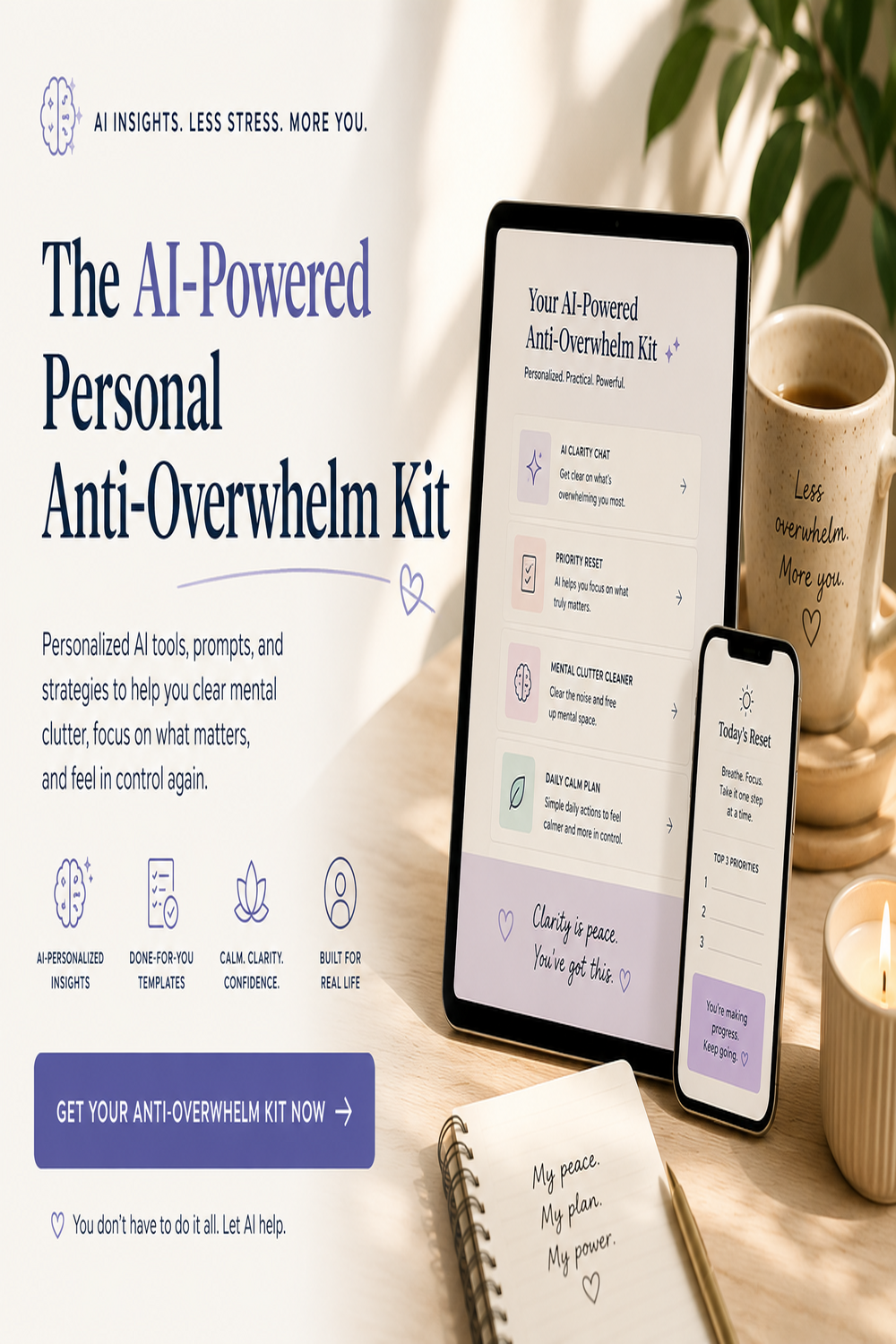
Purpose and Principles — Clear goals, three guiding principles, and a 60‑minute setup ritual.
Overwhelm Audit — Simple logging method to map drains and prioritize fixes.
AI Stack Selection — How to pick one general assistant and one specialist with privacy rules.
Privacy and Safety Rules — Redaction habits, deployment choices, and monitoring practices.
Inbox Triage System — Three‑bucket workflow, canned replies, and batching routines.
Meeting Minimalism — Meeting taxonomy, agenda template, AI notetaker setup, and audit cadence.
Task Capture and Prioritization — Single capture inbox, two‑minute triage, Impact × Effort method.
Smart Scheduling — Non‑negotiable focus blocks, AI calendar rules, and batching strategies.
Automation Recipes — Trigger→Action→Guardrail templates and shadow testing approach.
Decision Shortcuts — One‑page decision templates, defaults, and lightweight scenario analysis.
Context Windows and Notes — Single source of truth, structured headers, and AI summaries.
Focus Tools and Micro Rituals — Pre‑work rituals, timers, AI blockers, and environmental cues.
Delegation Framework — Human vs AI delegation, brief templates, and hybrid workflows.
Energy and Recovery Practices — Energy mapping, micro‑breaks, sleep and boundary rules.
Templates and Prompts Library — Ready prompts for emails, summaries, meeting notes, and automations.
Weekly Reset Ritual — 30‑ to 60‑minute checklist to review, prune, and plan.
Crisis Mode Playbook — Stop, Triage, Stabilize, Communicate, Recover checklist and canned messages.
Team Scaling Guide — Standards, governance, role‑based automations, and adoption metrics.
Measurement Framework — Simple KPIs: time reclaimed, focus blocks, throughput, and stress signals.
Lifelong Maintenance — Prune, refresh, expand rituals and a changelog for safe iteration.