
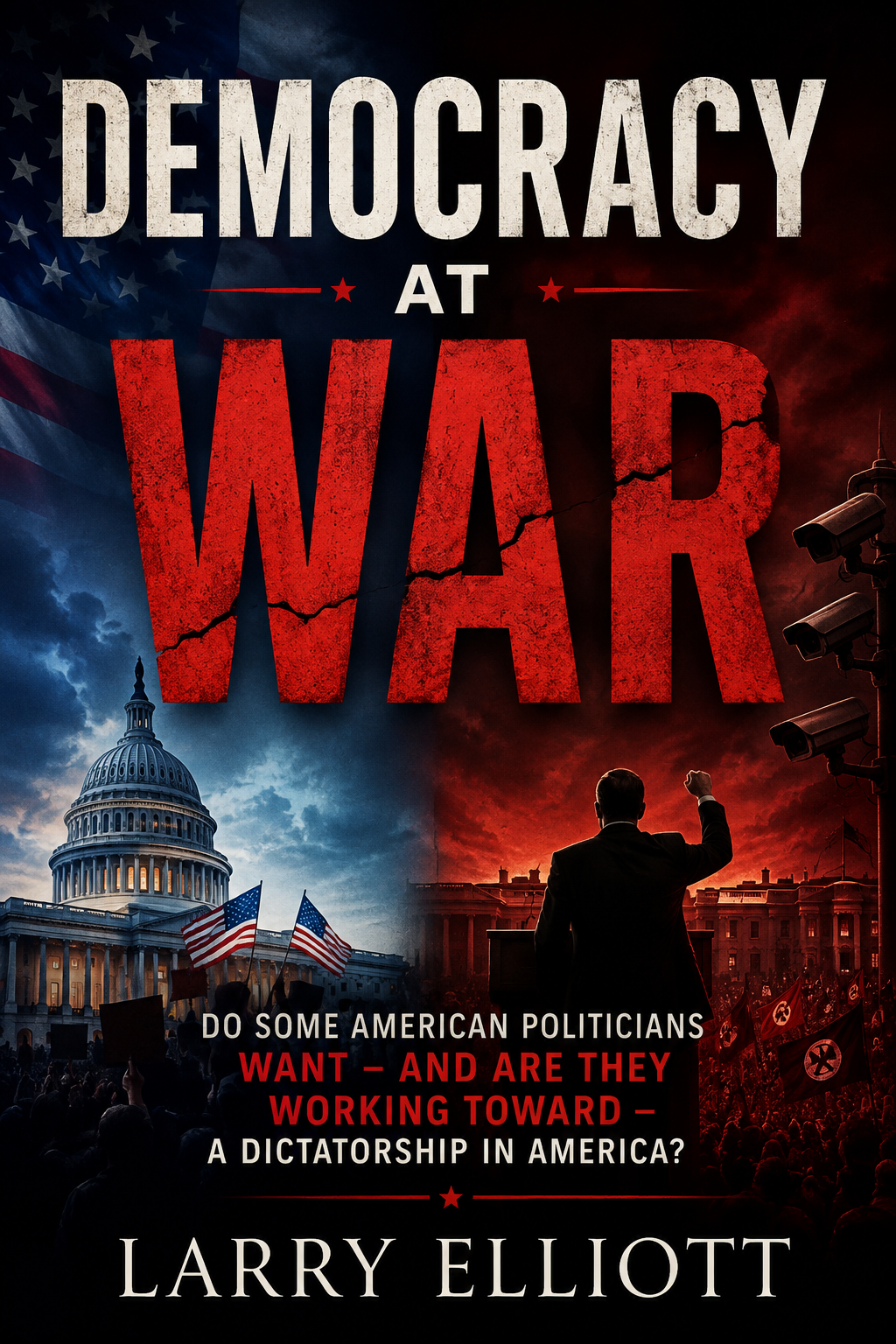
DEMOCRACY AT WAR Do Some American Politicians Want - and Are They Working Toward - a Dictatorship in America?
The central question
Can a democracy slowly move toward dictatorship while elections, courts, legislatures, television
networks, political parties, and a written constitution still exist? The answer is yes. Democratic
decline rarely begins with a dramatic announcement that democracy is over. It often begins with a
series of smaller decisions: attacks on the legitimacy of elections, efforts to concentrate executive
power, pressure on independent institutions, political retaliation, intimidation of critics, manipulation
of information, and demands for personal loyalty above constitutional duty.
A serious question, not a partisan slogan
The question of whether some American politicians want, tolerate, or are working toward
authoritarian government should not be treated as a slogan against one party or one ideology.
Americans have used exaggerated political language for generations. Calling every policy
disagreement "dictatorship" weakens the meaning of the word. At the same time, refusing to
recognize genuine authoritarian behavior can leave a democracy unprepared when its institutions
are tested.
What this book will do
This book examines the difference between ordinary hardball politics and conduct that threatens
democratic government. It explains how dictatorships develop, what warning signs political
scientists and historians commonly watch for, how American institutions can resist authoritarian
pressure, and what citizens can do without surrendering to fear, hatred, or political violence. The
purpose is not to tell readers which party to support. The purpose is to give readers a framework
for judging the conduct of any leader, movement, or administration.