
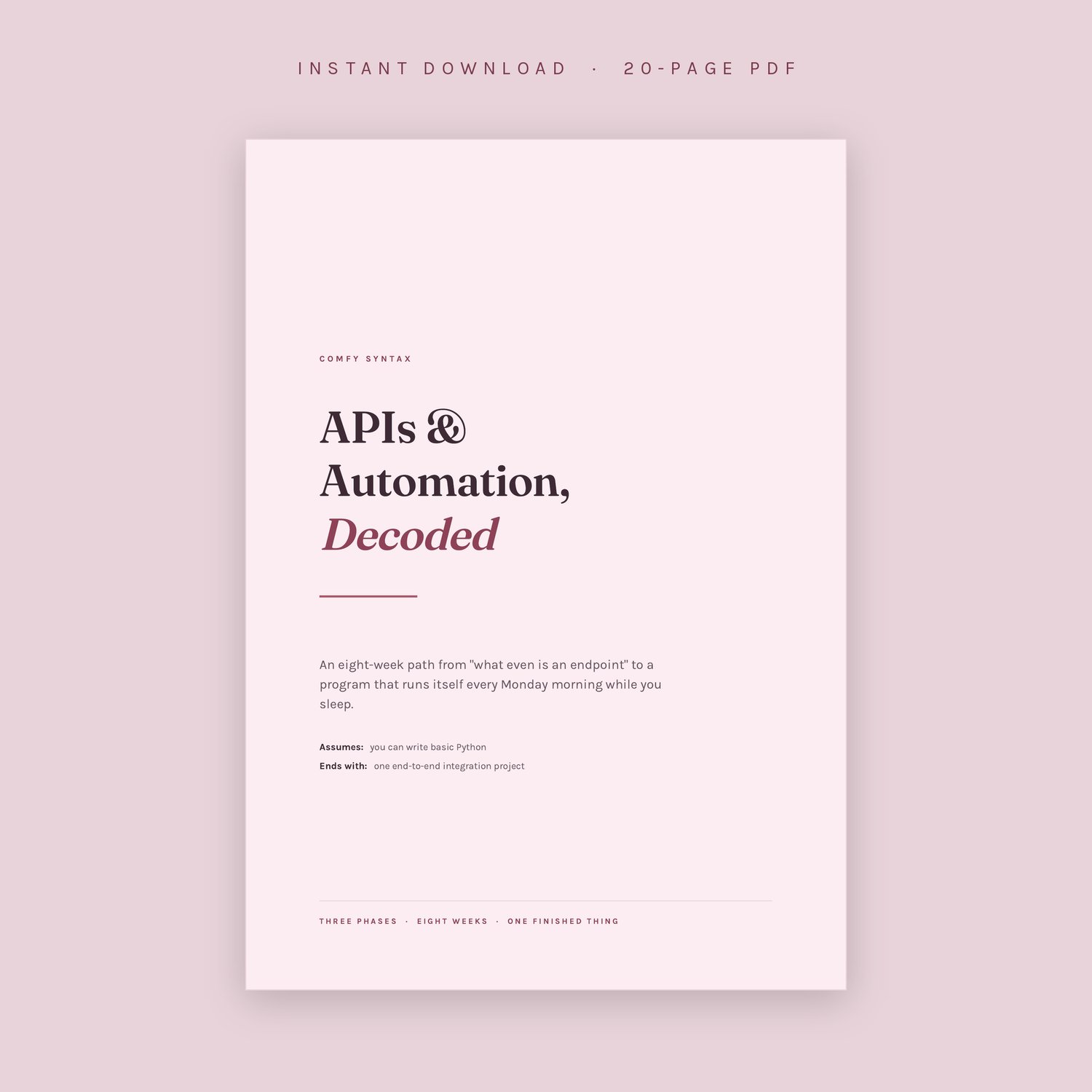
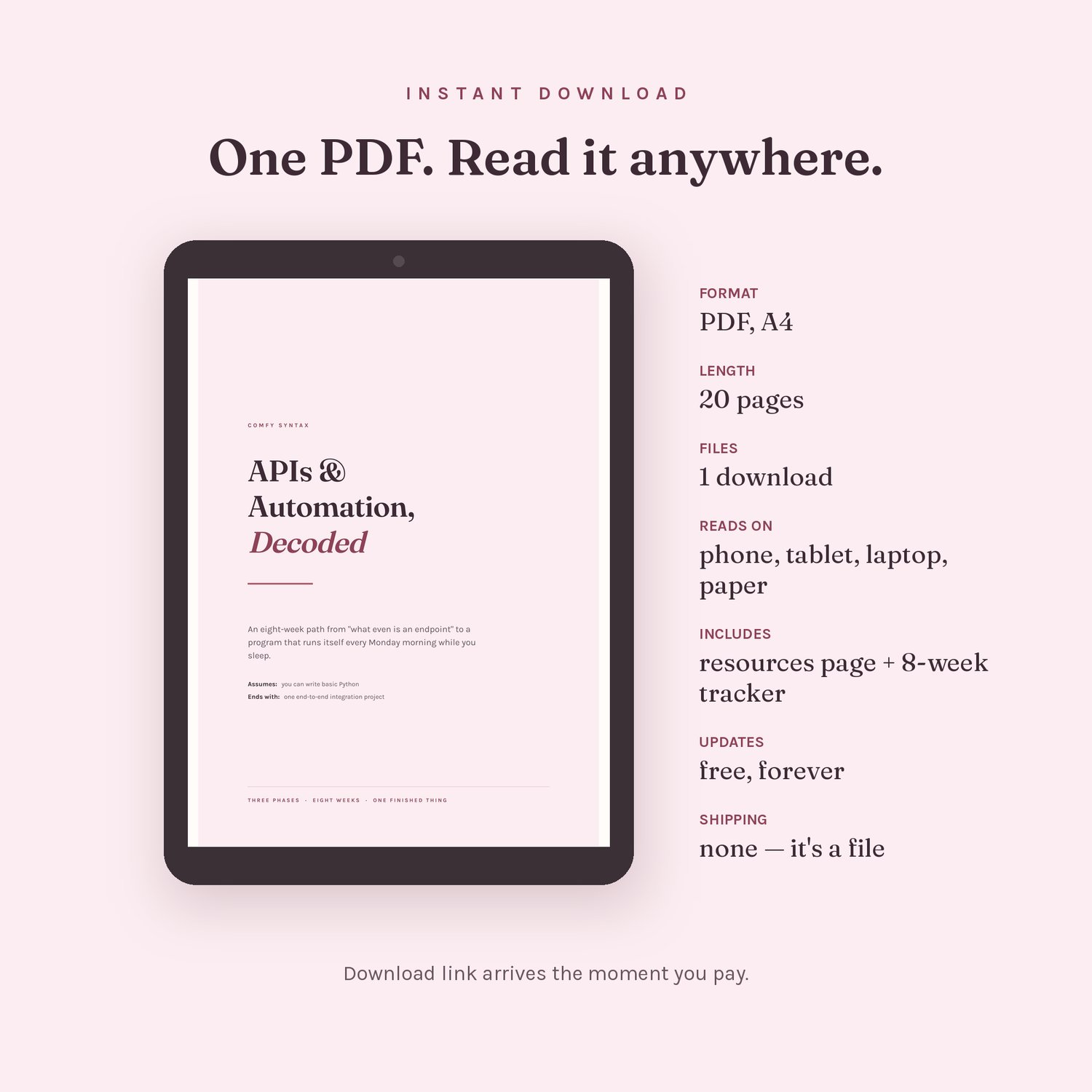



APIs & Automation Decoded - An eight-week path from "what even is an endpoint" to a Python program that runs itself while you sleep.
You can write Python. Loops, functions, dictionaries, fine. But every time you
try to connect it to something real you end up with twelve browser tabs, a
Stack Overflow answer from 2019, and a script that works once and then doesn't.
This is the path through that.
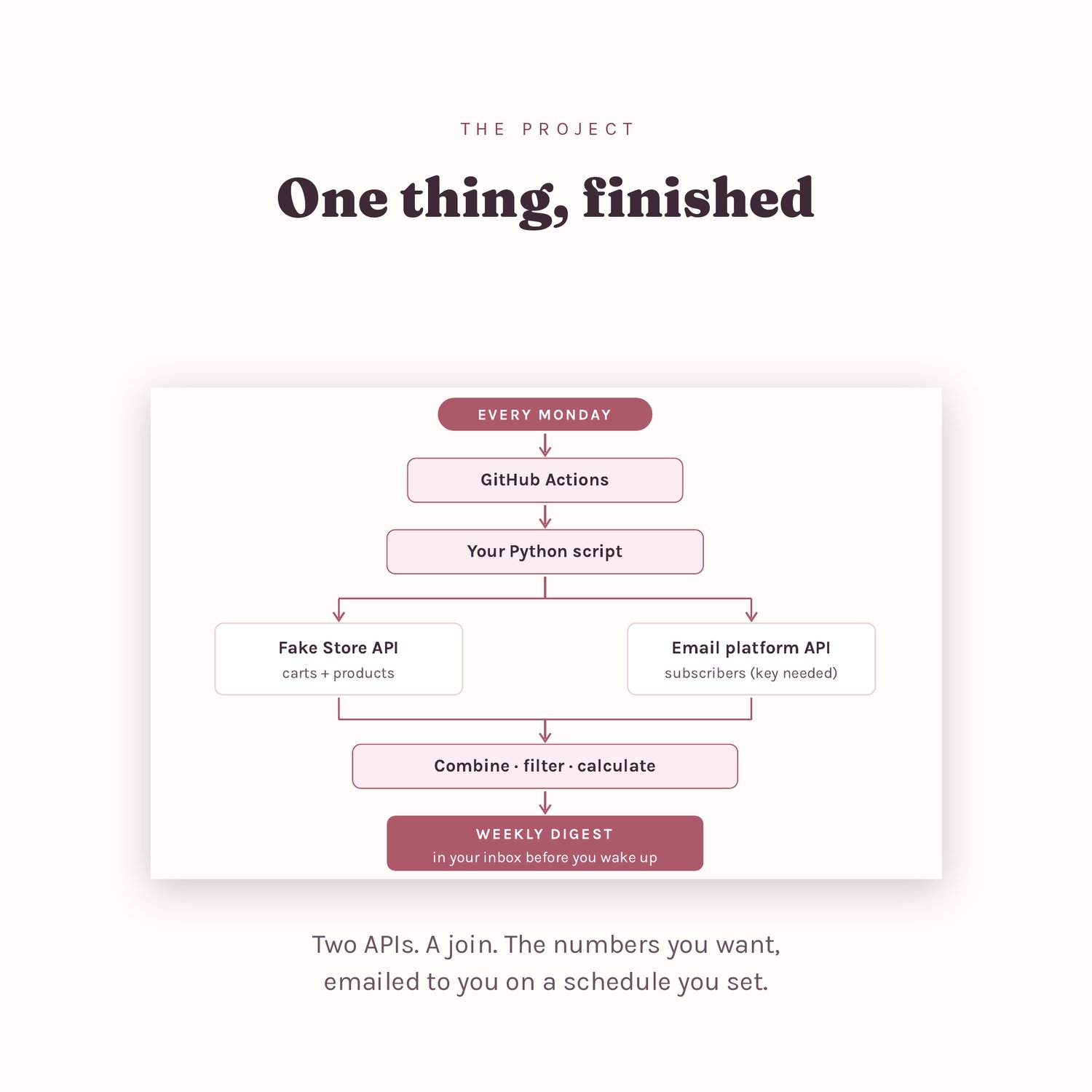
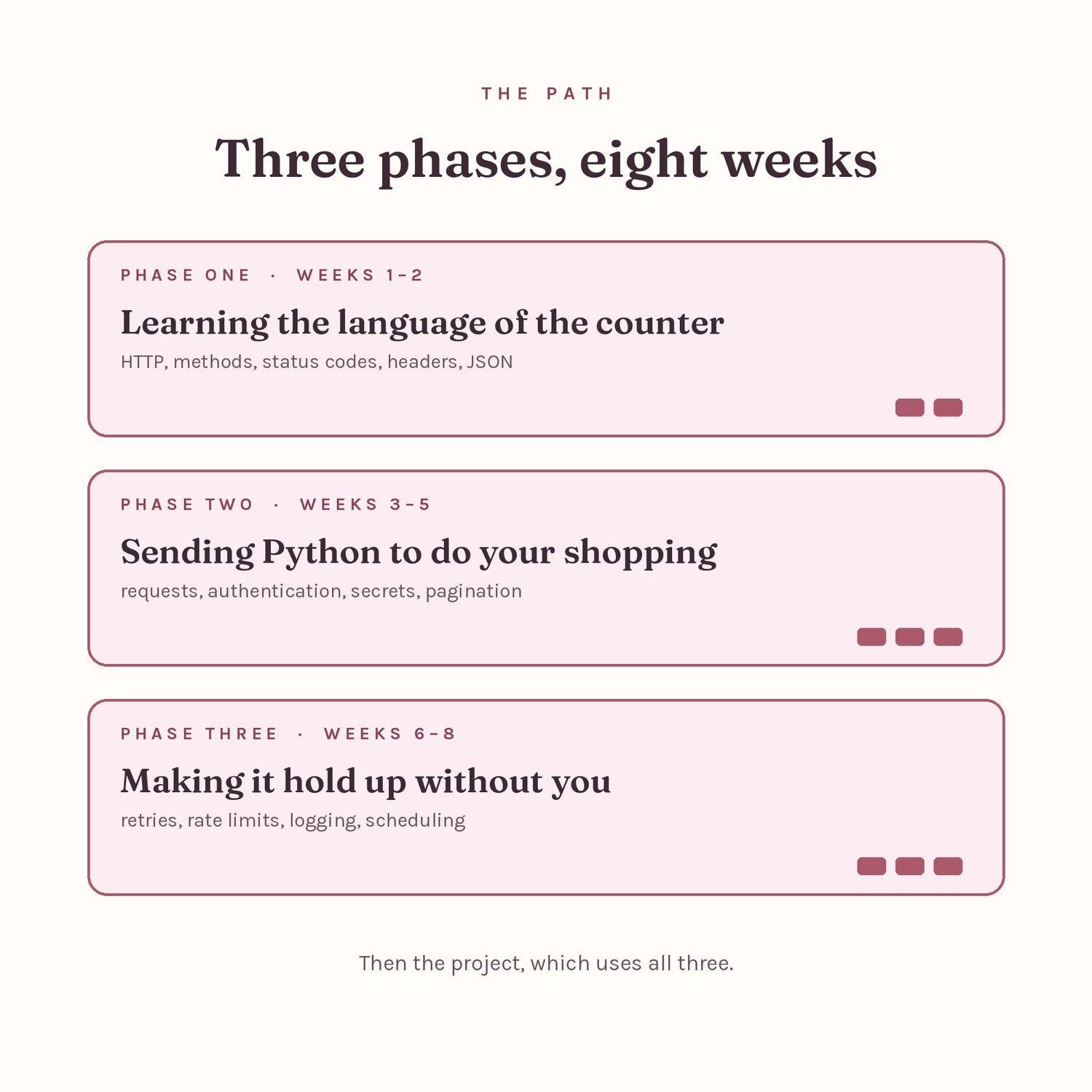
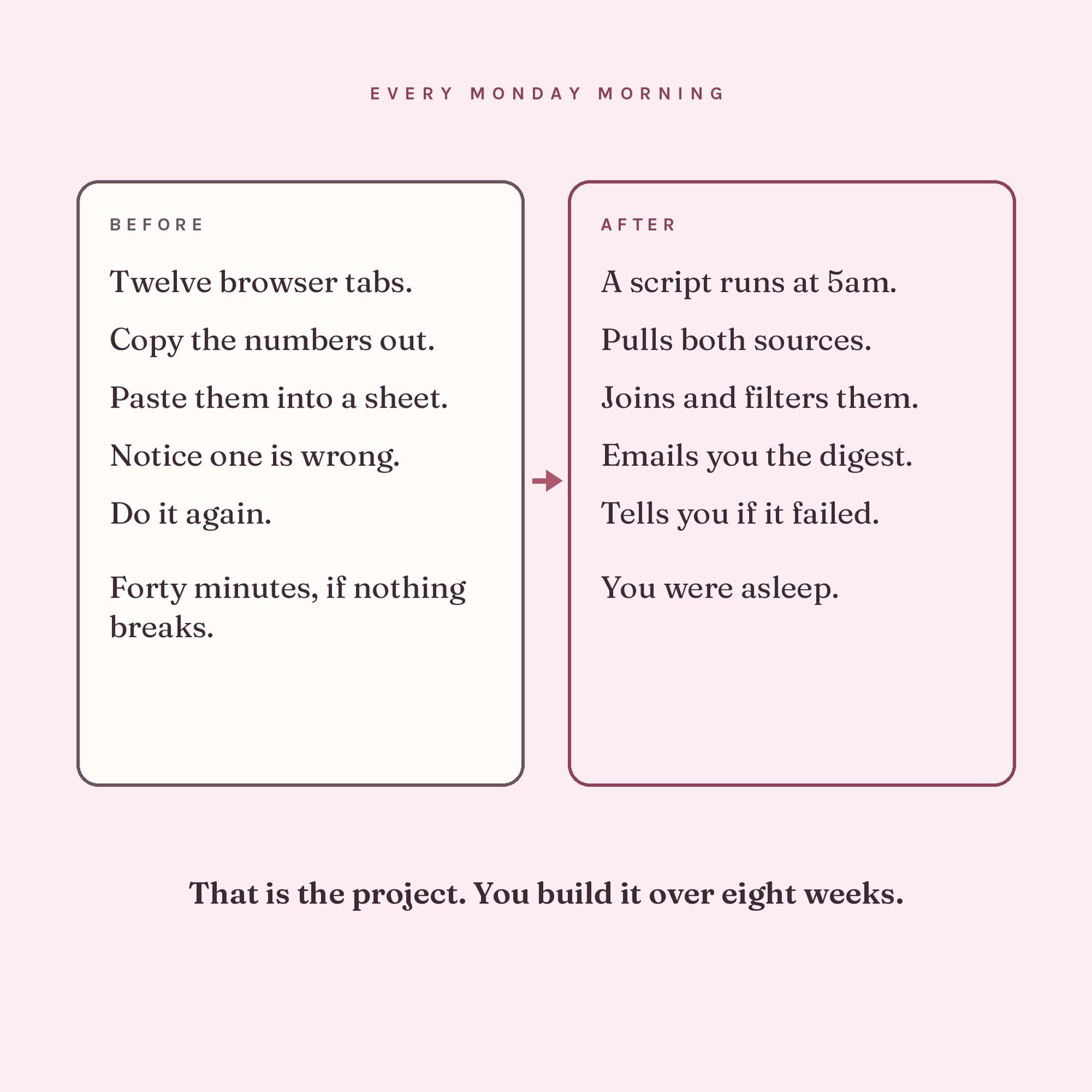
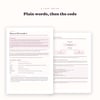
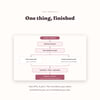
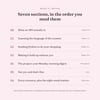
Eight weeks, three phases, and one project you actually finish: a Monday
morning digest that pulls from two APIs, joins the data, works out the numbers,
emails them to you, and keeps running on a schedule after you close the laptop.
WHAT IS IN IT
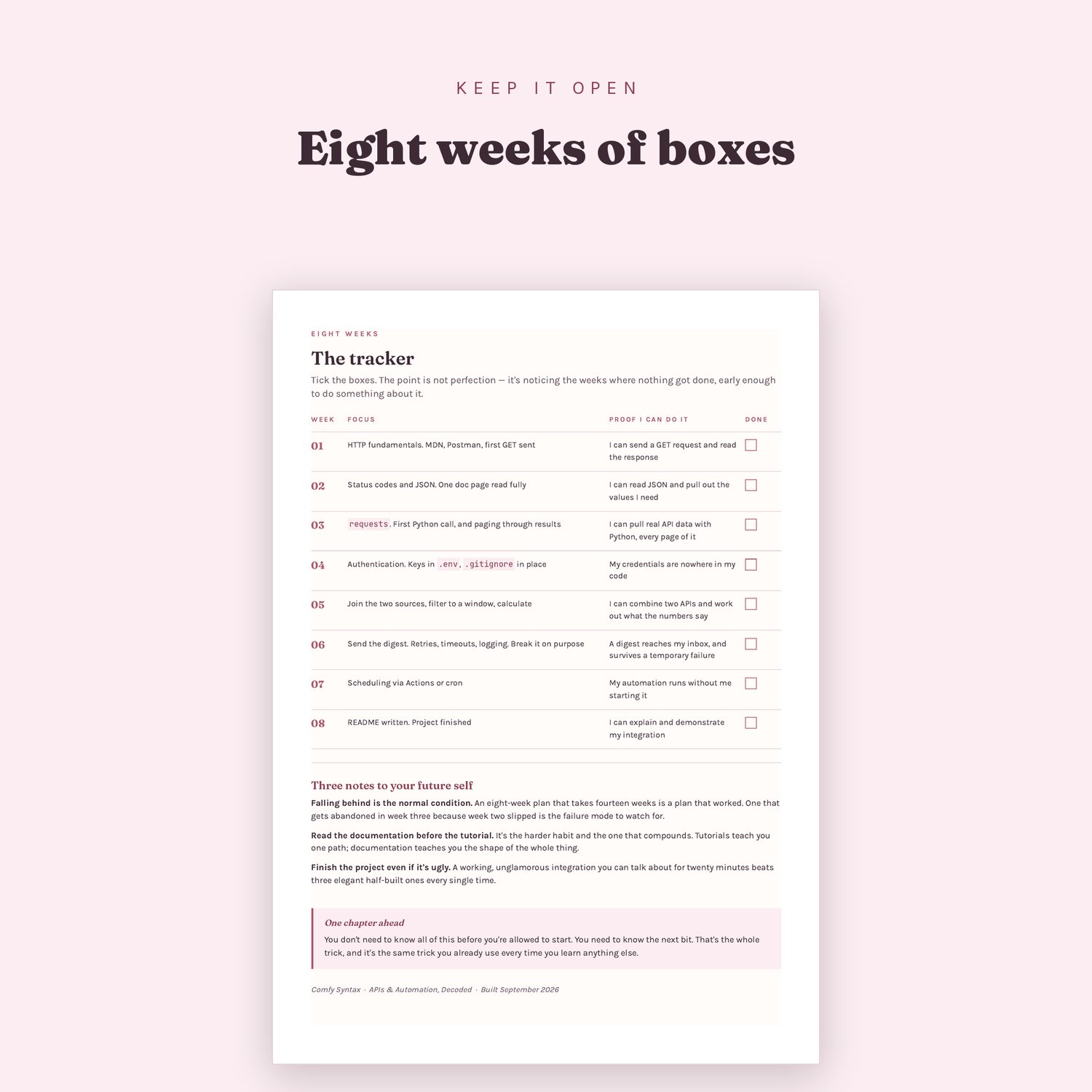
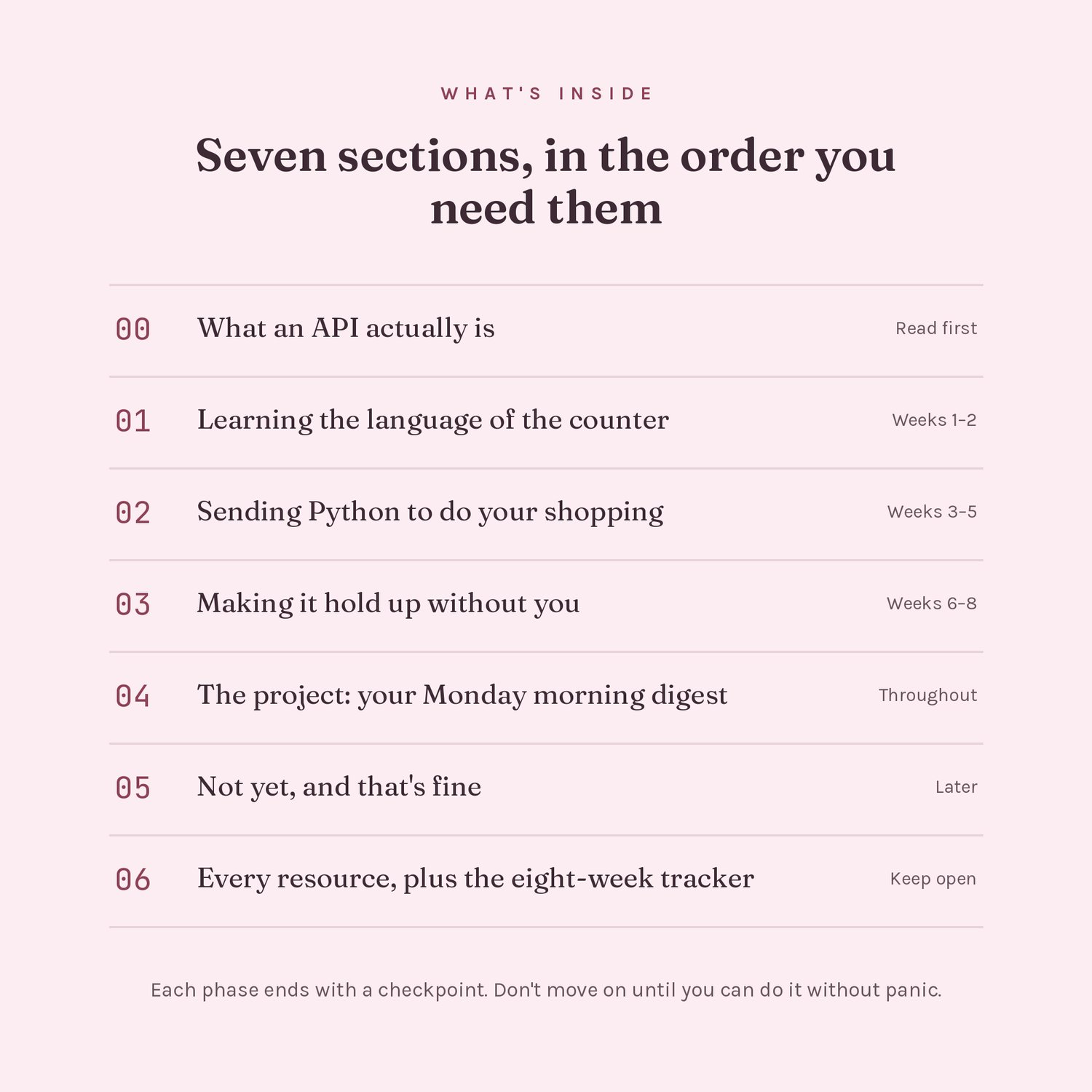
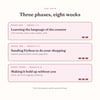
Phase 1, weeks 1-2. Learning the language of the counter.
HTTP, methods, status codes, headers, JSON. What a 401 means and why it is not
a 403.
Phase 2, weeks 3-5. Sending Python to do your shopping.
requests, authentication, keeping your keys out of your code, pagination.
Phase 3, weeks 6-8. Making it hold up without you.
Retries that back off, rate limits, logging you can read at 3am, scheduling,
and an optional look at building your own API with FastAPI.
Each phase ends in a checkpoint. You do not move on until you can do the things
in it without looking them up. Not perfectly, but without panic.
THE IDEA IT RUNS ON
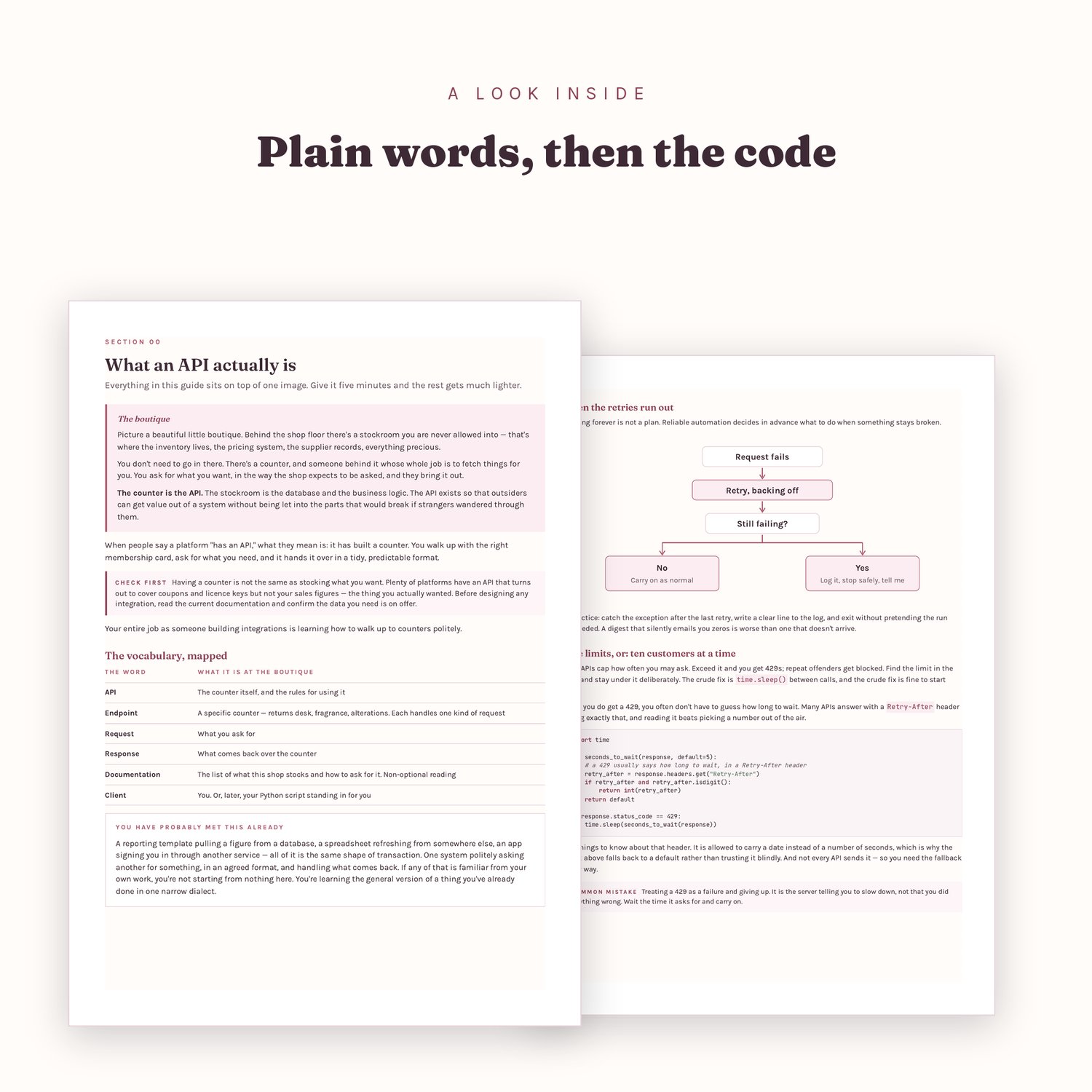
An API is a counter in a shop. Behind it is a stockroom you are never allowed
into, where the inventory and the pricing and the supplier records live. You
walk up, ask the way the shop expects to be asked, and someone brings it out.
Your whole job is learning to walk up to counters politely.
That analogy carries from the first page to the last, and it is the reason the
abstract parts stop being abstract.
WHAT YOU GET
A 20-page PDF, bookmarked and searchable, every link clickable.
An eight-week tracker so you can see where you are.
Every resource collected on one page, kept current when tools change.
Free updates, forever.
WHO IT IS FOR
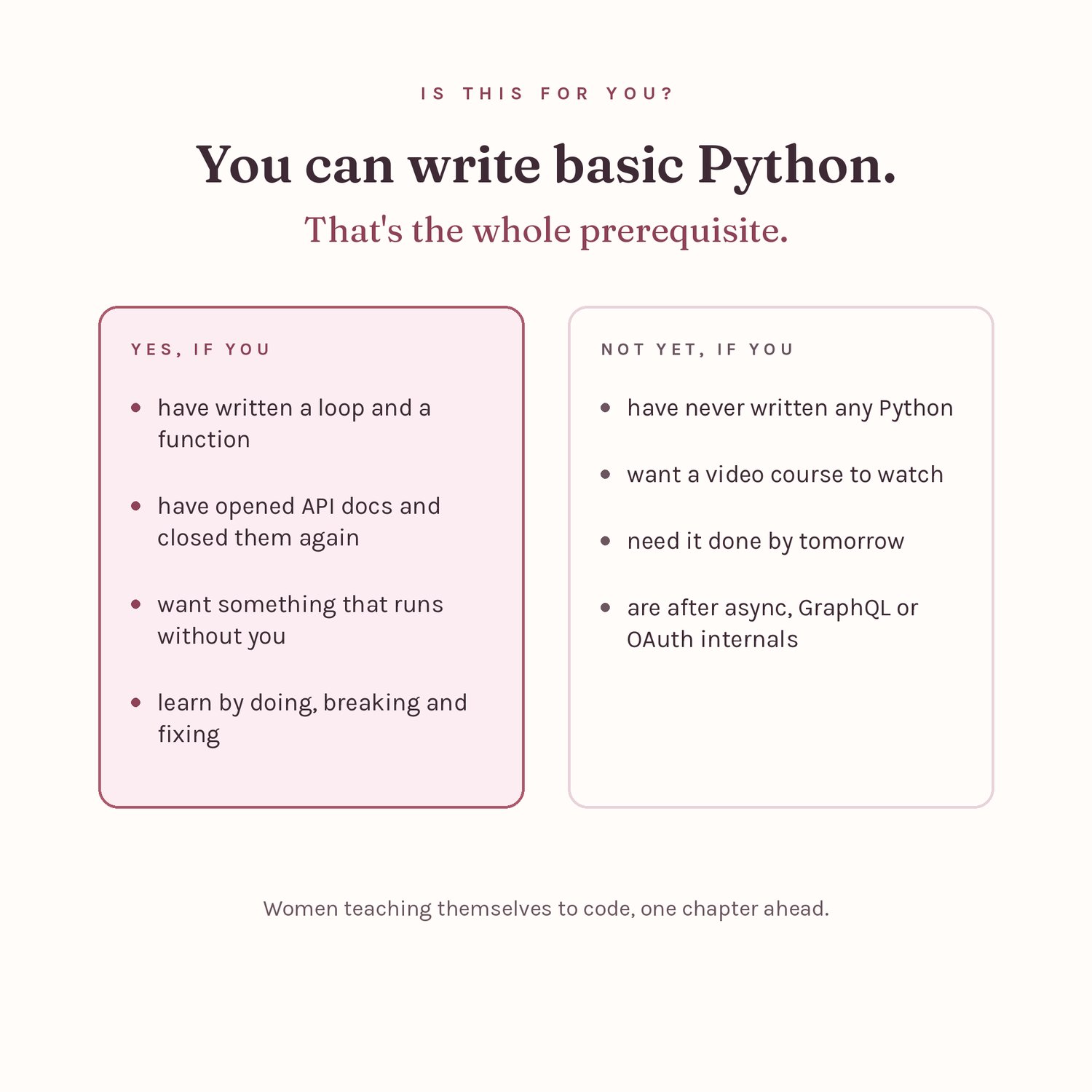
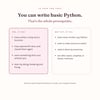
You can write basic Python and you want to connect it to things. You have not
necessarily touched an API before. You are tired of tutorials that stop at the
first successful request.
WHO IT IS NOT FOR
Anyone who has not written Python yet, and anyone wanting a reference manual.
This is a path, in order, with homework. The breaking things is not optional.
It is twenty pages because none of them are padding.