

Computer Science — Programming Complete Pack
Computer Science — Programming Complete Pack
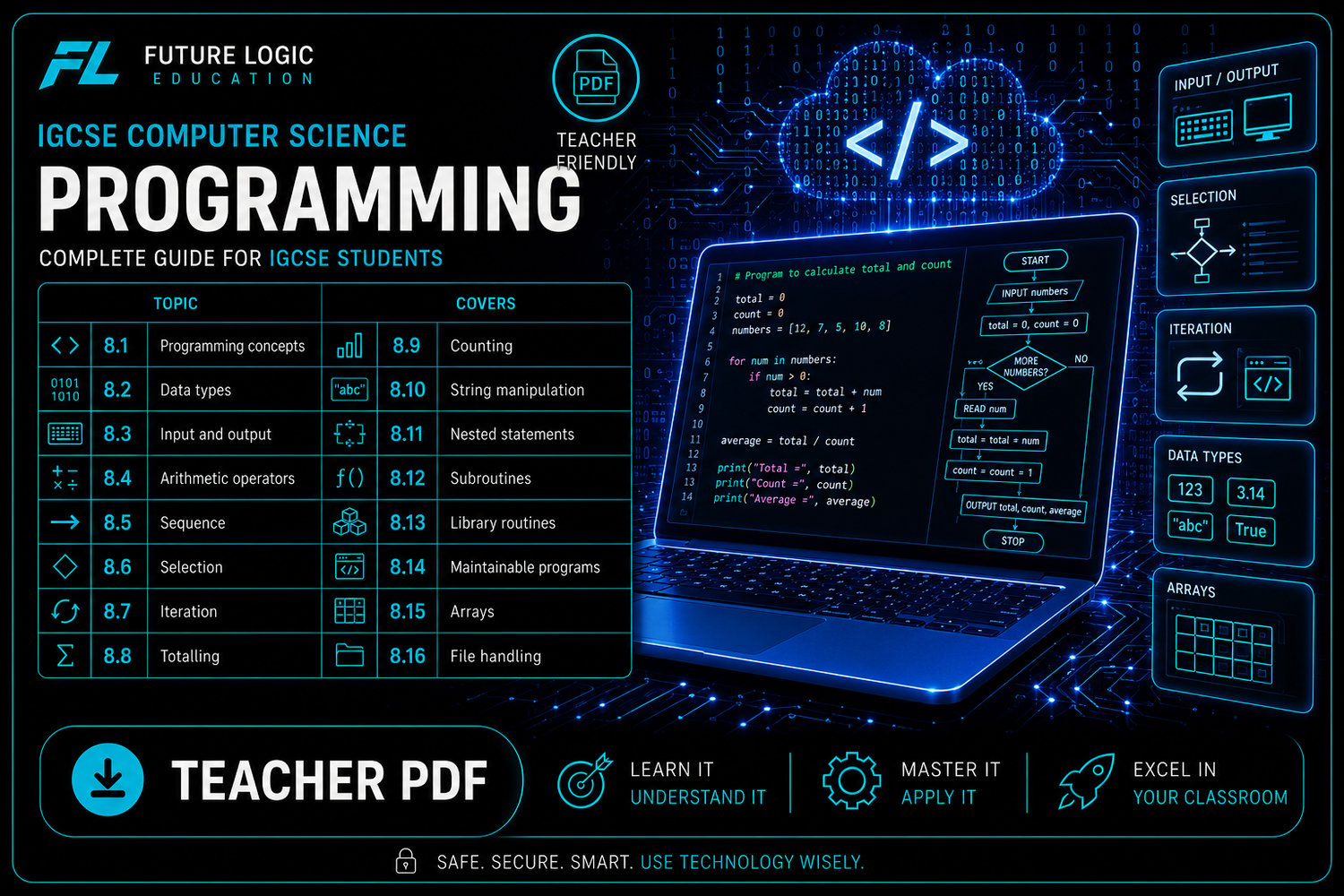
Master the practical heart of Computer Science. This complete Programming pack covers every programming concept you need — from the fundamentals of data types and operators, through selection and iteration, to advanced topics like string manipulation, subroutines, file handling and arrays. Clear explanations, exam-focused practice, and real pseudocode examples throughout.
What's inside:
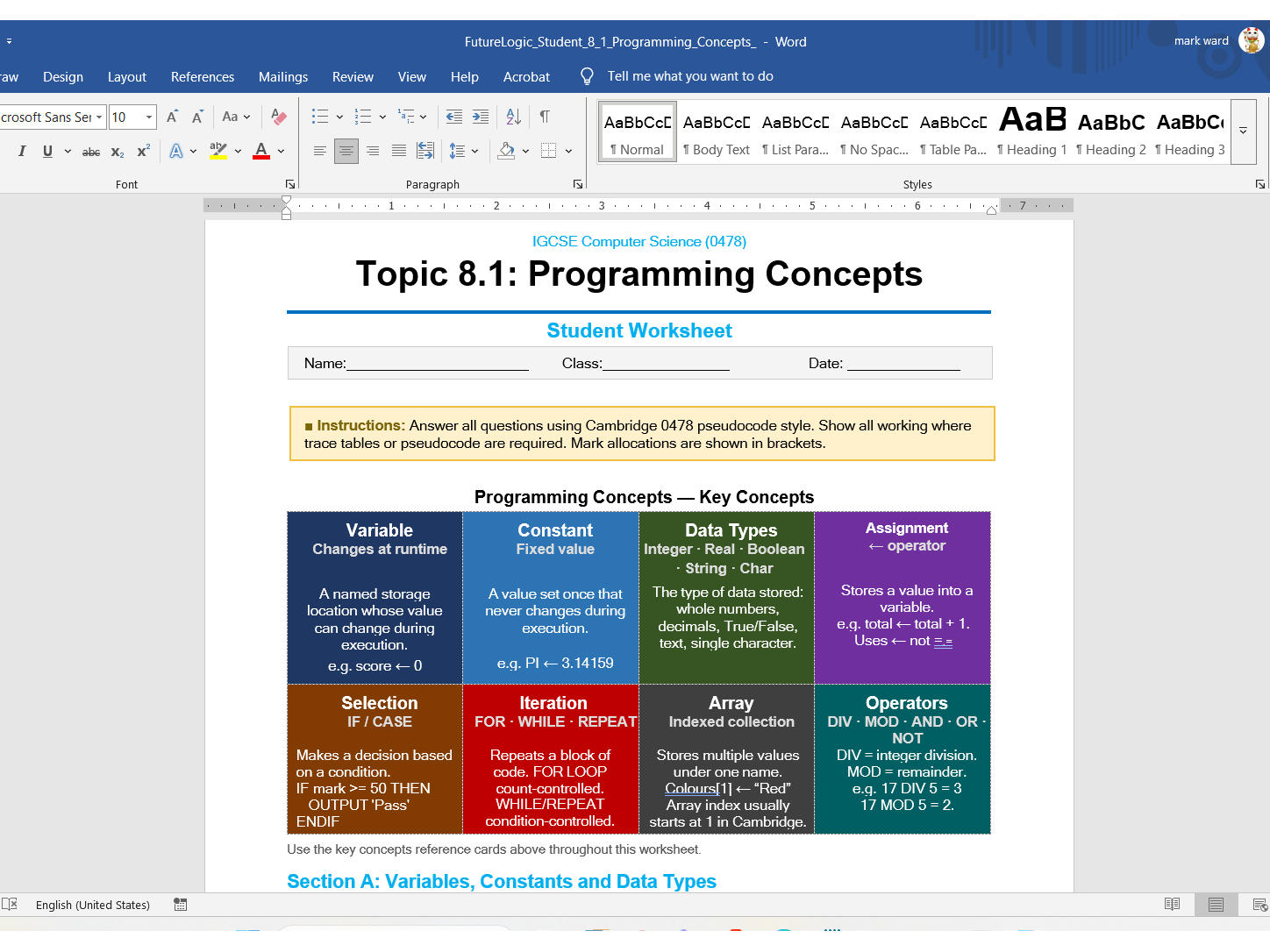
📘 8.1 Programming Concepts
Understand what a program is, how source code is written and translated, and the key principles that underpin all programming — the foundation for everything that follows.
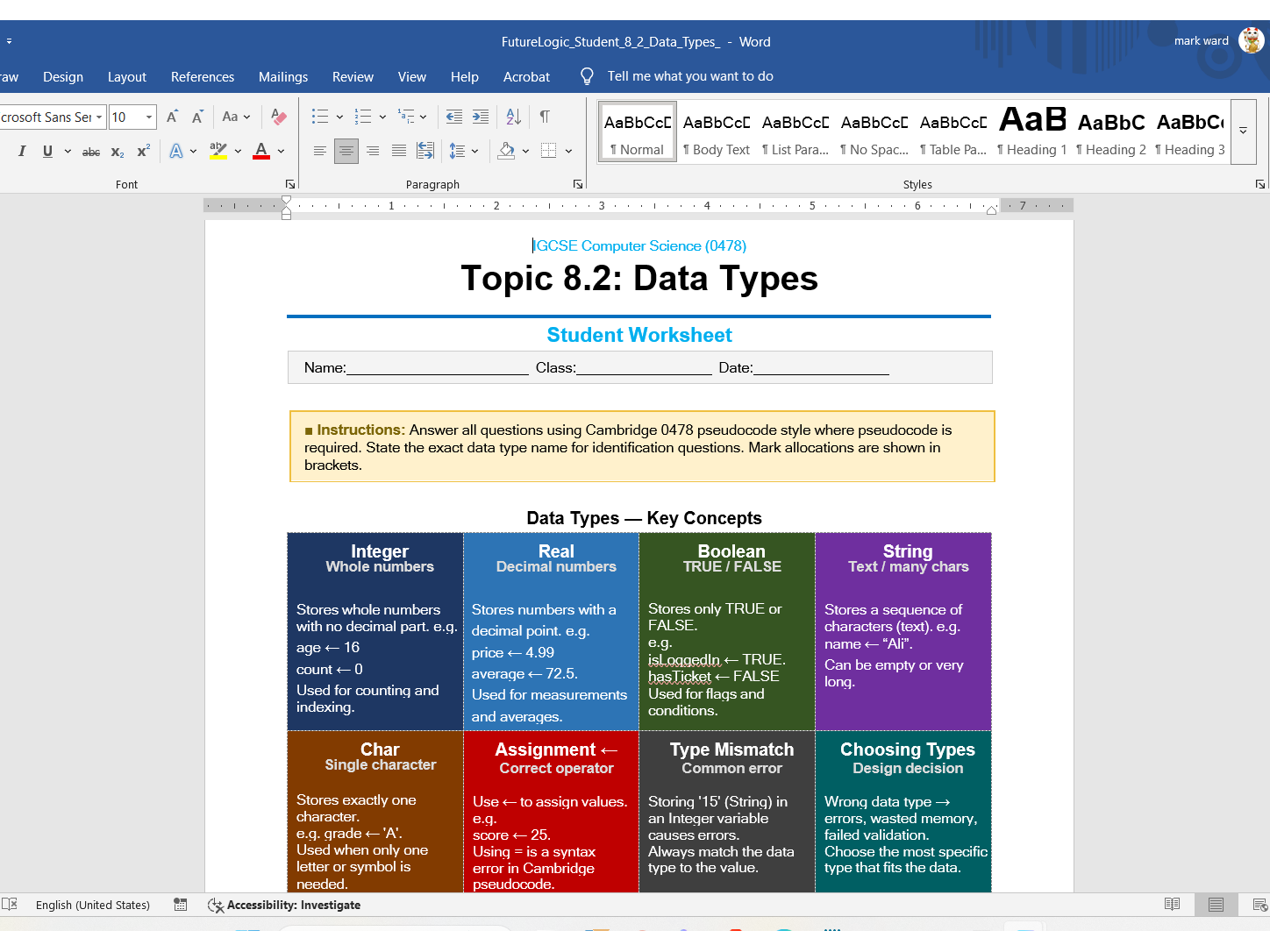
📘 8.2 Data Types
Learn the difference between integer, real, Boolean, character and string data types — and why choosing the correct type matters for storage, validation and processing.
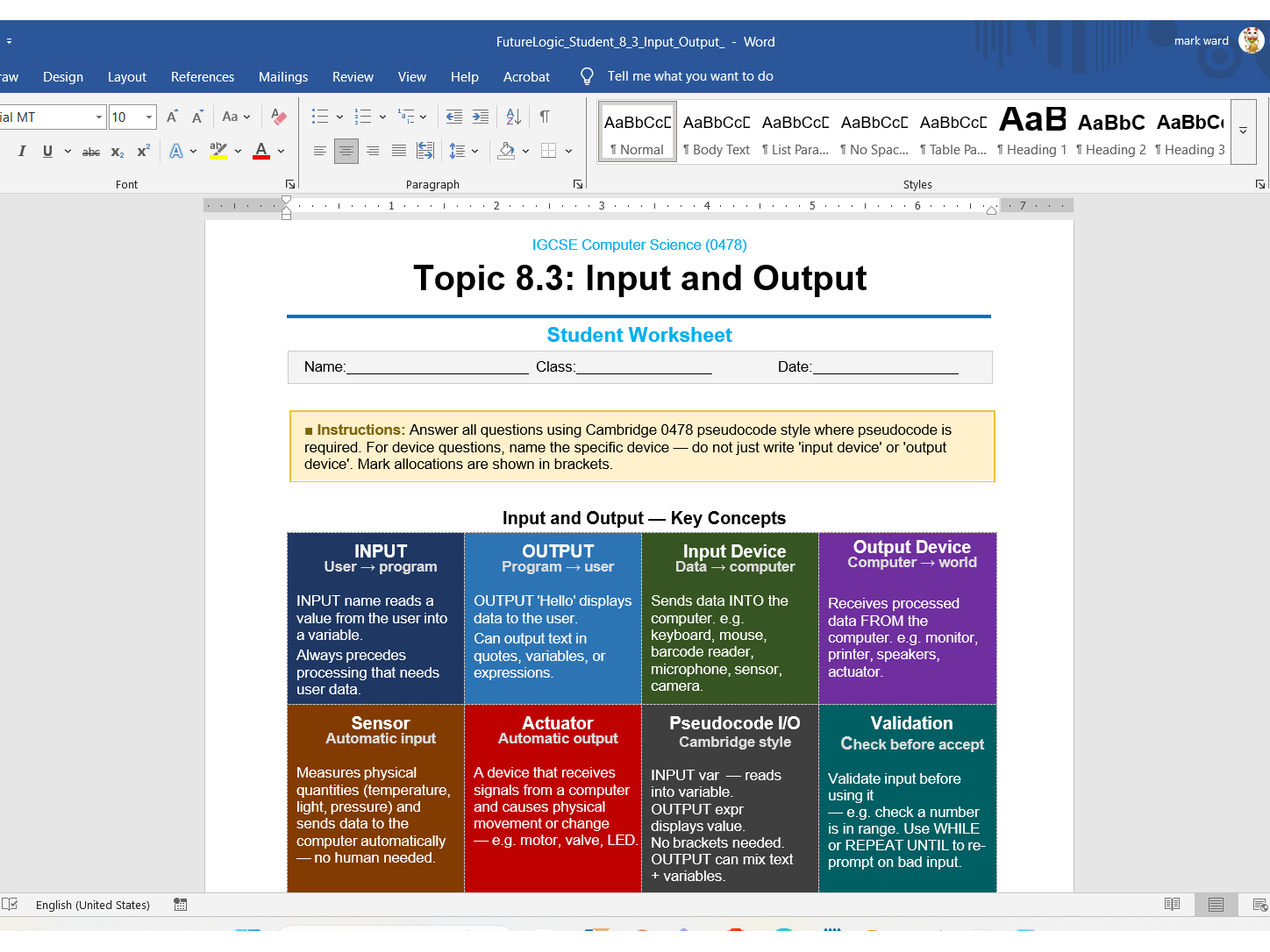
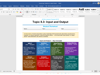
📘 8.3 Input and Output
Write programs that accept data from users and display results — covering INPUT and OUTPUT statements in Cambridge pseudocode with applied context questions.
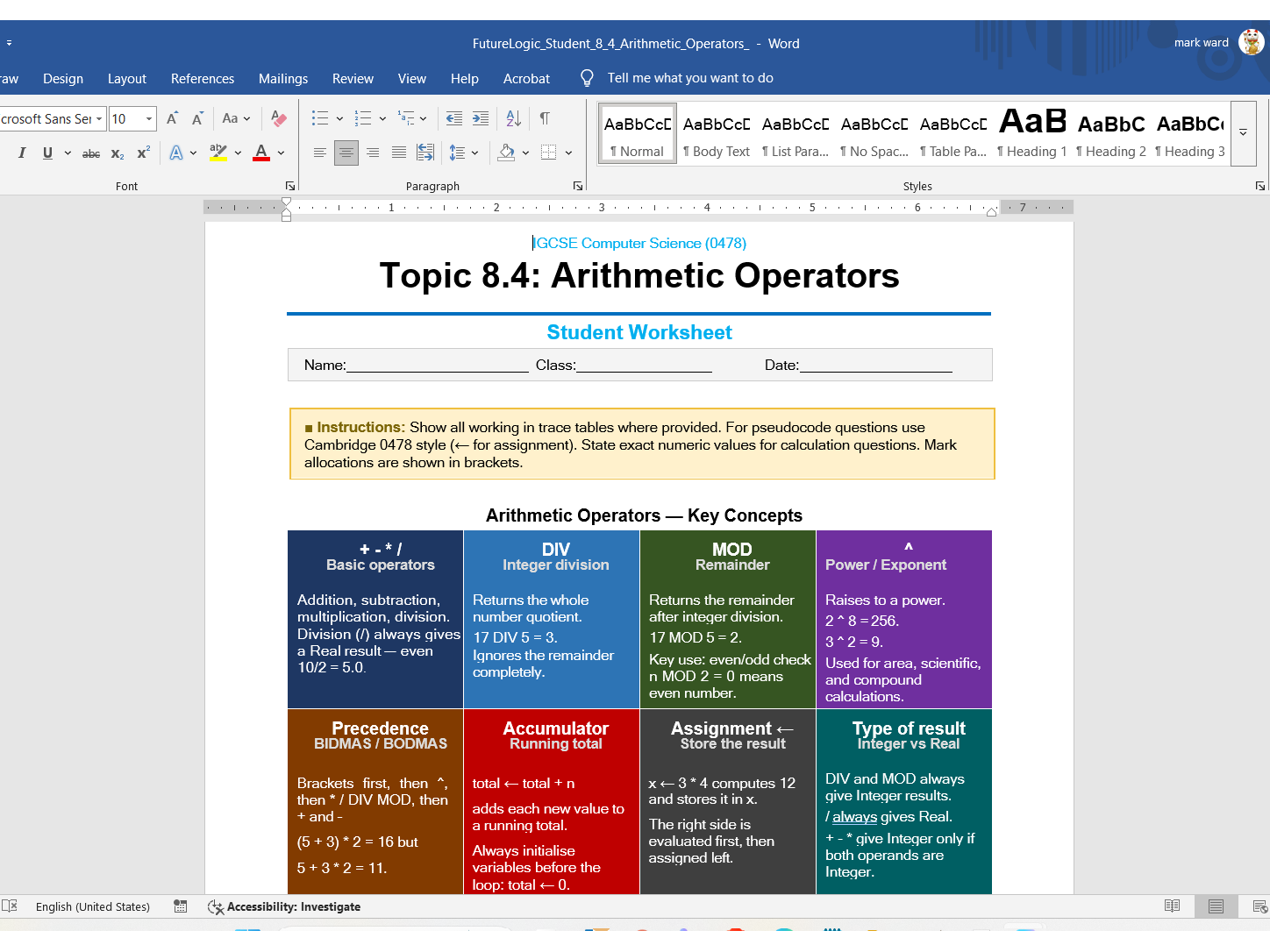
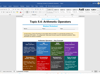
📘 8.4 Arithmetic Operators
Master all arithmetic operators including +, -, *, /, DIV and MOD — with trace table practice and real-world calculation programs.
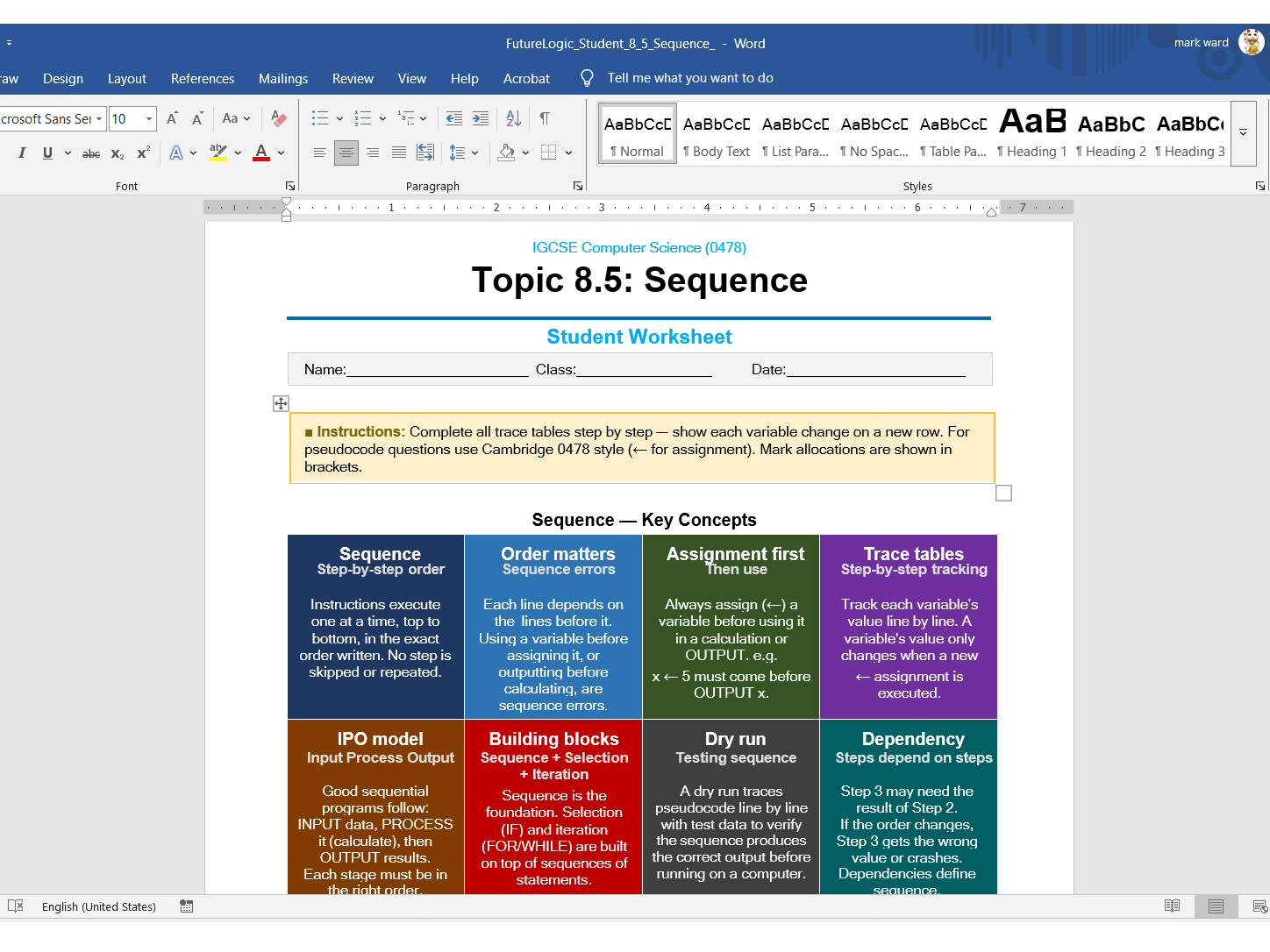
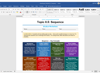
📘 8.5 Sequence
Understand how programs execute line by line in order — and how to write clear, correct sequential algorithms using assignment, arithmetic and output.
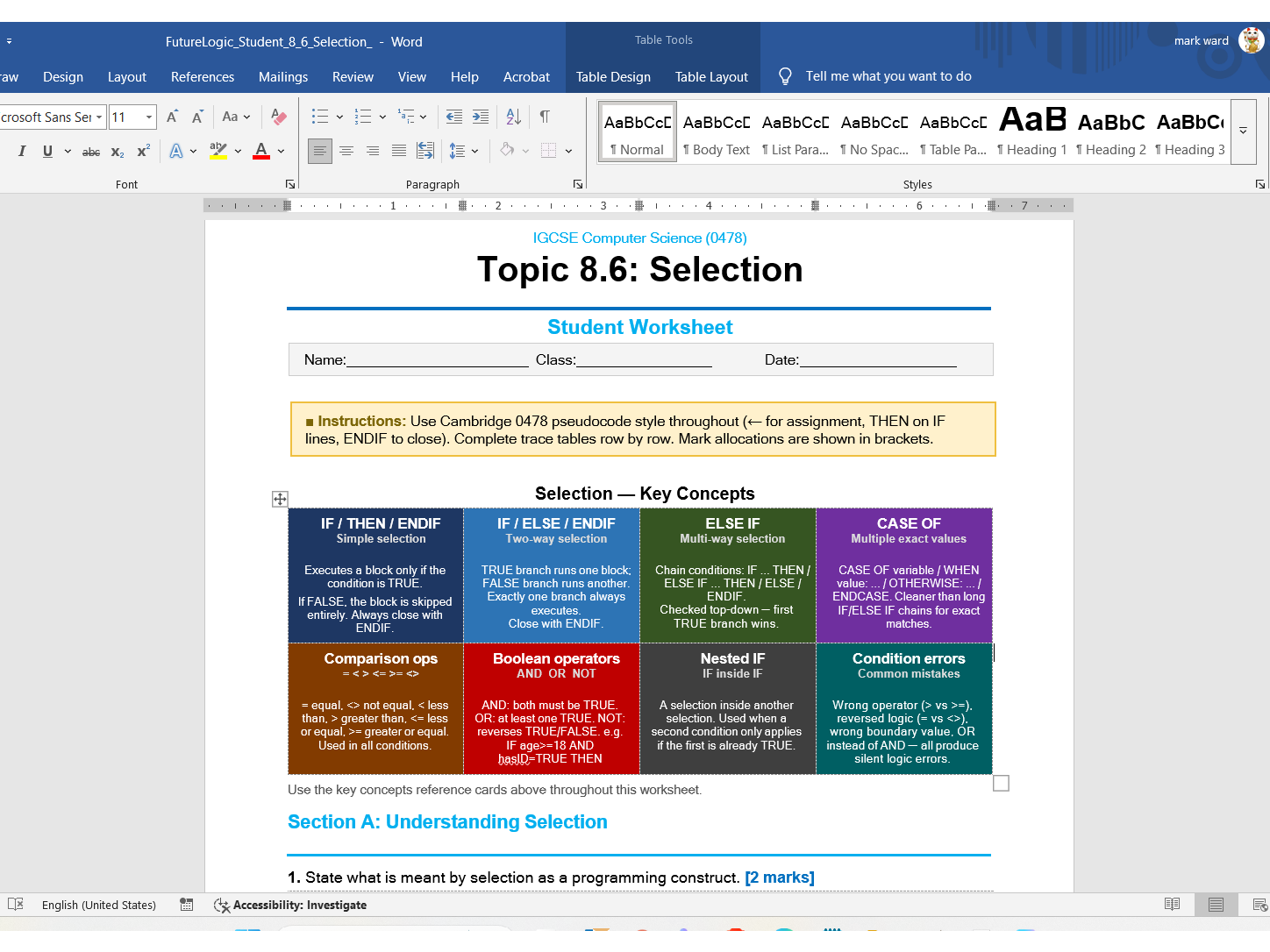
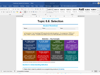
📘 8.6 Selection
Write IF, ELSE IF and ELSE structures to make decisions in programs — including compound conditions using AND, OR and NOT, with trace table practice throughout.
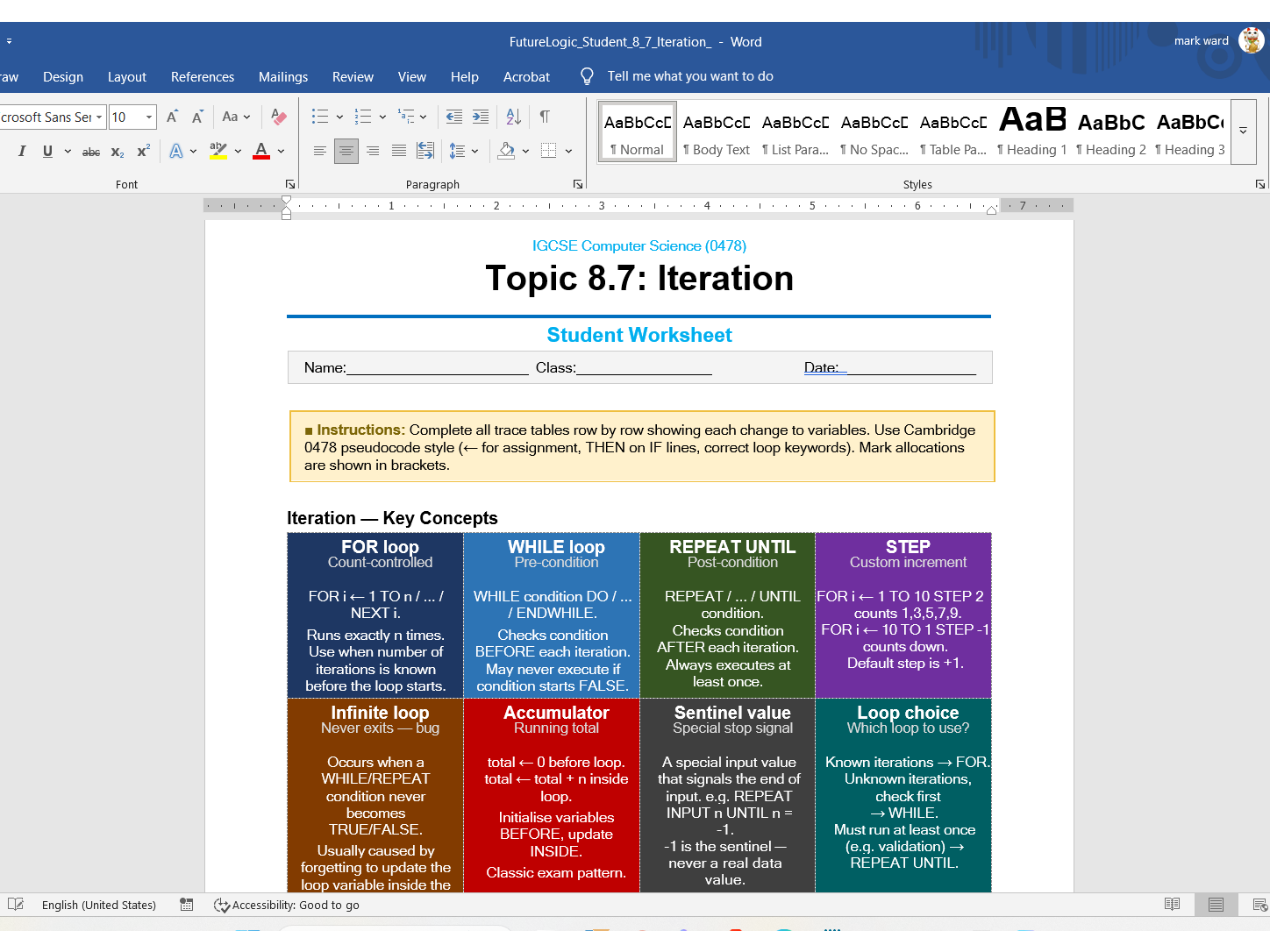
📘 8.7 Iteration
Master all three loop structures: FOR (count-controlled), WHILE (pre-condition) and REPEAT UNTIL (post-condition) — with trace tables, write-your-own pseudocode, and applied problems.
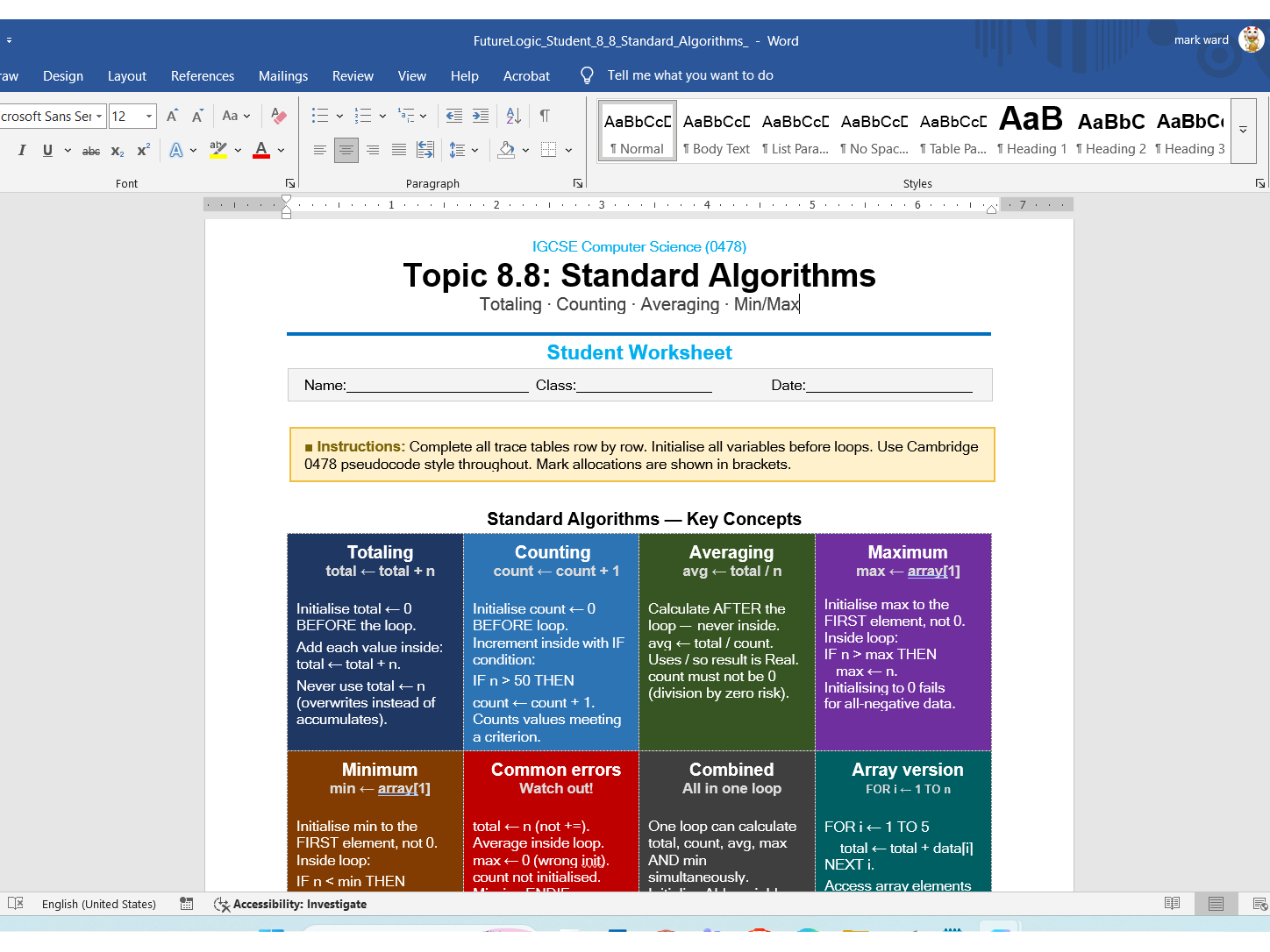
📘 8.8 Totalling
Build accumulator algorithms to sum values — including input loops, array totals and running totals — a core pattern tested in every Cambridge sitting.
📘 8.9 Counting
Write counting algorithms that track how many values meet a condition — combined with selection and loops for applied counting programs.
📘 8.10 String Manipulation
Work with strings using LENGTH, SUBSTRING, UPPER, LOWER and string concatenation — with applied questions involving user input, validation and text processing.
📘 8.11 Nested Statements
Write and trace nested IF statements and nested loops — including combined loop-and-selection algorithms and multi-level decision structures.
📘 8.12 Subroutines
Understand procedures and functions — how to define them, call them, pass parameters, and return values — and why modular code is easier to test and maintain.
📘 8.13 Library Routines
Learn how to use pre-written library functions for common tasks — including random number generation and mathematical functions — saving development time and improving reliability.
📘 8.14 Maintainable Programs
Discover the techniques that make programs easier to read, debug and update — meaningful identifiers, comments, consistent indentation, and modular design.
📘 8.15 Arrays
Store and process collections of data using one-dimensional arrays — including input loops, searching, sorting, totalling and finding maximum and minimum values.
📘 8.16 File Handling
Read from and write to text files in pseudocode — covering OPEN, READ, WRITE, CLOSE and EOF — with applied programs that process real-world data stored in files.
🍎 Teacher Sheets Included
Every section comes with a full teacher copy complete with mark scheme answers, acceptable alternatives, pseudocode model answers, and classroom discussion guidance — ready to use straight in the classroom.
🍎 Each topic comes complete with pdf files for printing and original Microsoft Word files.
✅ Student-friendly and exam-focused
✅ Teacher answer sheets with full explanations included
✅ Aligned to Cambridge IGCSE Computer Science (0478)
✅ Instant PDF download
✅ Perfect for classroom use, homework, and independent revision