
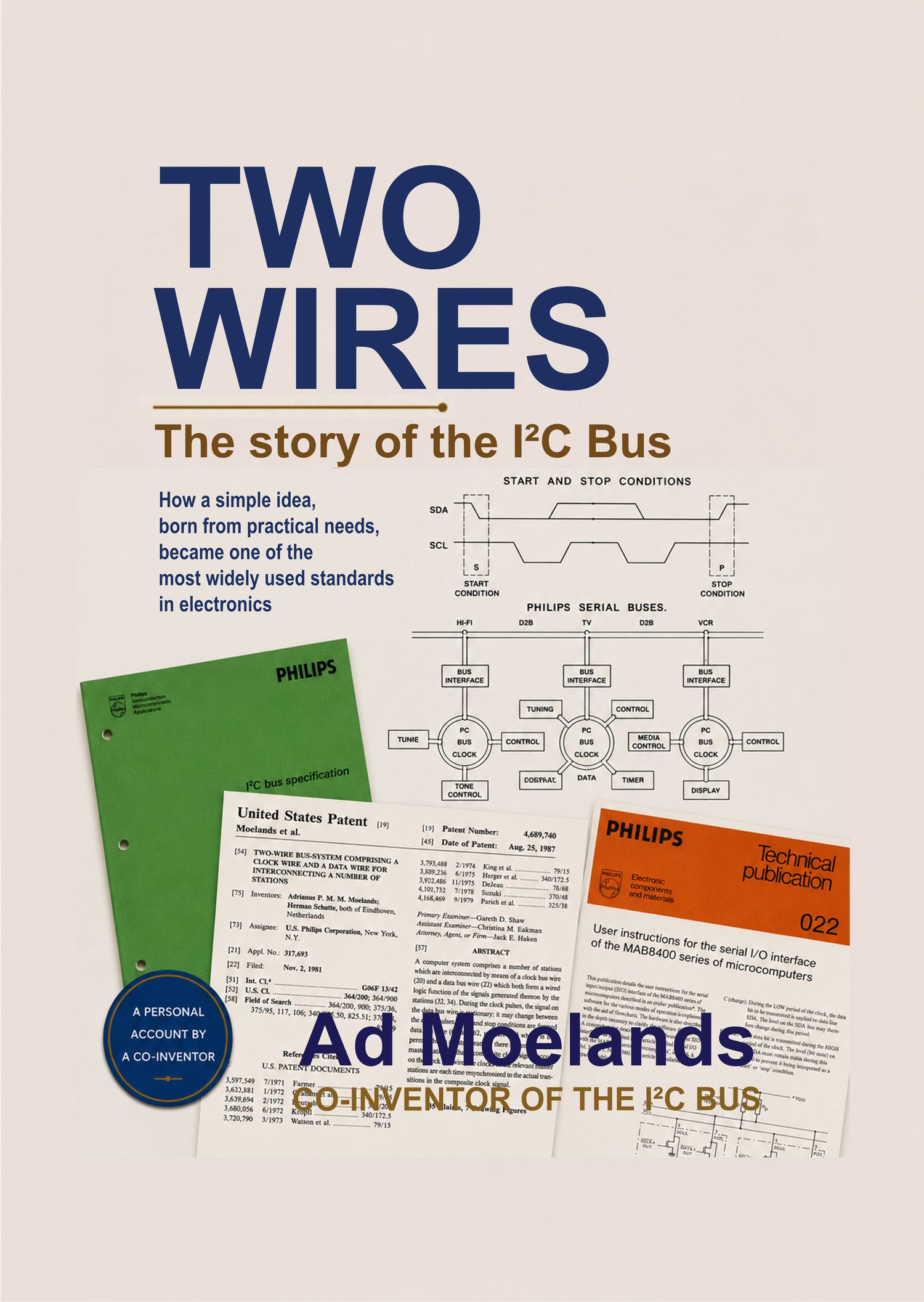
Two Wires The story of the I2C Bus
Two Wires – The Story of the I²C Bus
How did two simple wires become one of the most widely used communication standards in modern electronics?
In Two Wires, Ad Moelands, co-inventor of the I²C bus, tells the inside story of an invention that quietly transformed the electronics industry. What began as a practical engineering challenge at Philips in the late 1970s evolved into a communication standard that today connects billions of integrated circuits in televisions, computers, smartphones, automobiles, medical equipment, industrial systems, and countless other products.
Unlike traditional technical books, Two Wires combines engineering, personal history, and innovation. Drawing on original documents, patents, technical publications, photographs, and personal recollections, Ad Moelands describes how the I²C bus was conceived, developed, standardized, and ultimately adopted throughout the world.
The book also pays tribute to Herman Schutte, co-inventor of the I²C bus, whose technical insight and creativity played an essential role in its development.
Whether you are an engineer, student, technology enthusiast, or simply curious about how world-changing innovations emerge, Two Wires offers a rare first-hand account from someone who helped shape one of the most successful interface standards ever created.
Inside the book you'll discover:
The origins of the I²C bus inside Philips Research.
The engineering challenges that inspired its creation.
The development of the architecture and protocol.
How the standard achieved worldwide acceptance.
Rare historical photographs and original technical documents.
Personal stories from one of the inventors.
The lasting impact of the I²C bus on modern electronics.
More than forty years after its invention, the I²C bus remains one of the fundamental building blocks of digital electronics. Two Wires tells the story behind the technology—and the people who made it possible.