


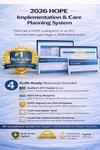
The 2026 HOPE Implementation & Care Planning System
The 2026 HOPE Implementation & Care Planning System
“Don’t let a HOPE coding error or an SFV documentation gap trigger a 2026 federal audit.”
As of 2026, the mandatory transition from HIS to the HOPE assessment has fundamentally changed hospice oversight. Compliance is no longer based on intent or policy — it is judged on execution, documentation accuracy, and follow-through.
As a Senior Nurse Auditor, I know that surviving HOPE implementation requires more than “following the rules.” It requires auditor-grade documentation, standardized workflows, and leadership visibility into how care planning and symptom follow-up are actually being managed.
With increased DOJ scrutiny of billing anomalies and CMS enforcement tied to HOPE reporting, this system serves as your operational defense mechanism — turning HOPE from a high-risk mandate into a controlled, auditable process.
Stop treating interoperability as a suggestion.
Start managing it as a regulatory mandate with daily execution standards.
🛡️ What Is Included in This Auditor-Validated System
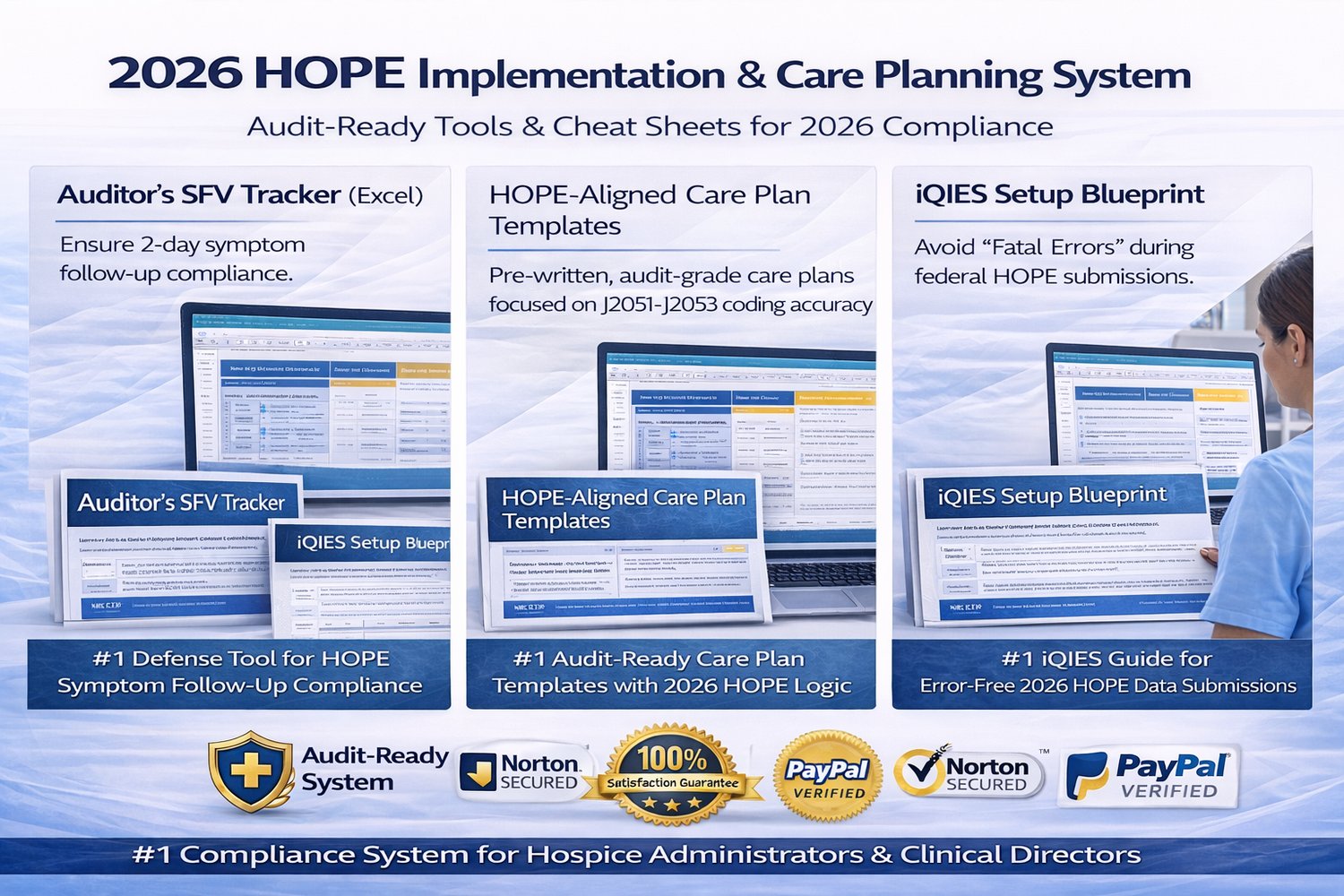
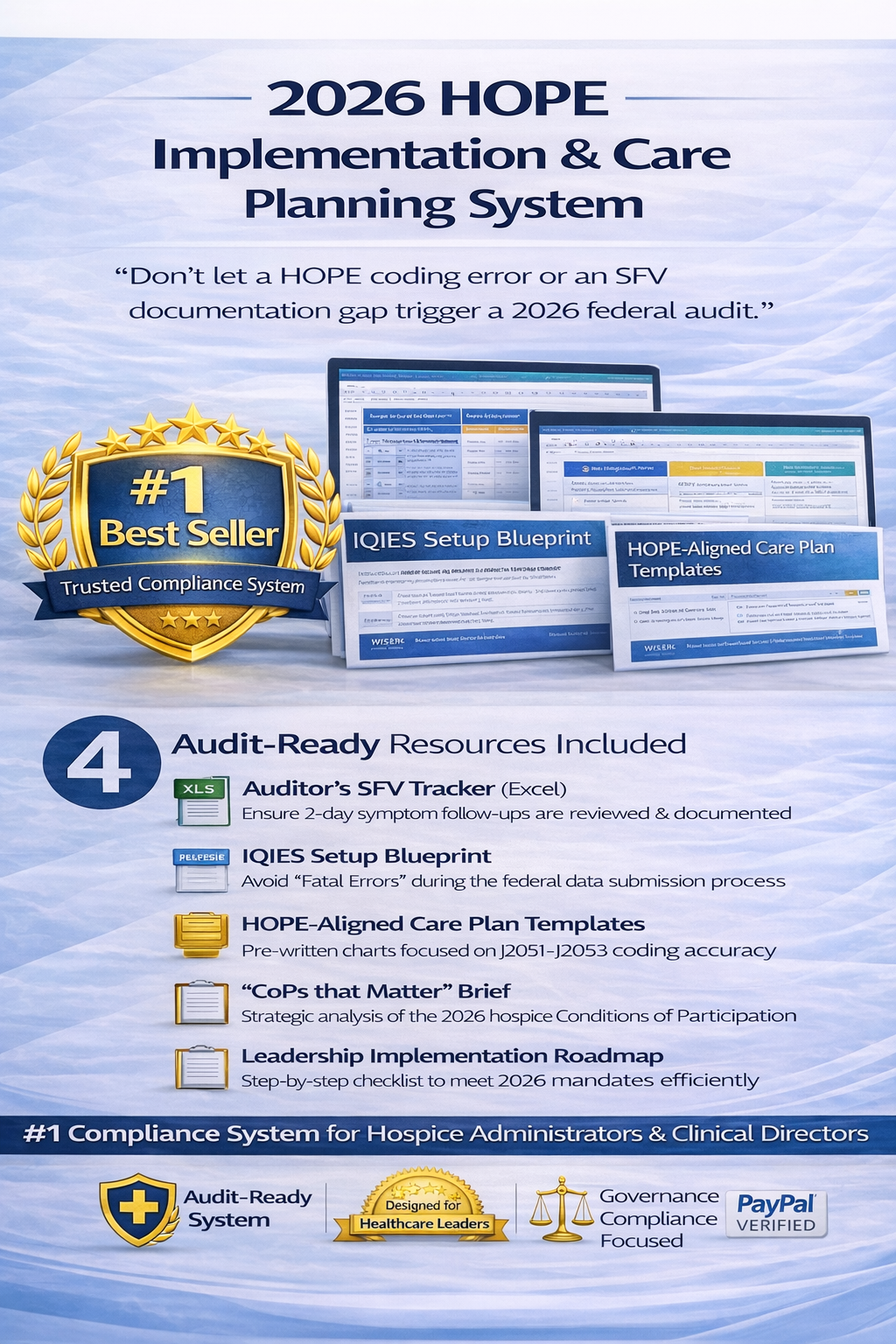
The Auditor’s SFV Tracker (Excel)
A precision tracking tool designed to manage the mandatory 2-day Symptom Follow-Up Visit (SFV) window — one of the most common HOPE-related survey citation risks in 2026.
Supports proactive monitoring, escalation, and leadership review.
iQIES Setup Blueprint
A step-by-step guide to prevent fatal submission errors, rejected HOPE records, and delayed quality reporting during federal data submission. Built to support accurate, first-pass reporting.
HOPE-Aligned Care Plan Templates
Pre-written, auditor-reviewed care plan language focused on J2051–J2053 coding accuracy, ensuring clinical documentation aligns with HOPE logic, symptom tracking, and survey expectations.
The “CoPs That Matter” Brief
A focused analysis of the Conditions of Participation most likely to trigger citations under HOPE, distilled from hundreds of pages of CMS guidance into what leadership actually needs to manage risk.
Leadership Implementation Roadmap
A practical, step-by-step checklist translating dense CMS HOPE mandates into clear, assignable executive actions across clinical, quality, compliance, and operations teams.
🔍 Why This Matters for Care Management & Quality Teams
HOPE compliance doesn’t fail on policy — it fails in daily execution.
This System helps care managers, QAPI leaders, and DONs:
- Standardize SFV workflows before surveyors identify gaps
- Reduce care plan rework and post-assessment corrections
- Align interdisciplinary documentation with HOPE assessment logic
- Demonstrate ongoing monitoring, not retroactive explanations
It transforms HOPE from a survey event into a managed operational process.
💼 Accountability & Ownership — Who This Is For
This system is designed for leaders accountable for 2026 organizational integrity, including:
- Care Managers & Clinical Coordinators
- Executing HOPE assessments, SFVs, and care plans daily — and responsible for documentation accuracy.
- Quality & Performance Improvement (QAPI) Leaders
- Monitoring trends, documentation integrity, and continuous survey readiness across departments.
- Directors of Nursing (DONs)
- Overseeing interdisciplinary teams and accountable for care plan accuracy and SFV compliance.
- Compliance Officers
- Safeguarding the agency’s 4% Annual Payment Update (APU) and mitigating enforcement risk.
- Hospice Administrators & Executive Leadership
- Translating CMS mandates into operational action without last-minute scrambling.
- Billing & Revenue Cycle Managers
- Ensuring alignment between clinical documentation, HOPE reporting, and reimbursement protection.
- New or Transitioning Hospice Programs
- Implementing HOPE without an established internal compliance infrastructure.
💡 About the Research Lead: S. Muhammad, MSN-Ed, MBA, RN, CCM
Nurse Auditor & 5-Time Author | 20+ Years Experience
As a Senior Nurse Auditor with nearly 9 years at a major health plan, S. Muhammad specializes in identifying the documentation gaps that lead to claim denials and False Claims Act (FCA) scrutiny.
This tool is Auditor-Developed, designed to bridge the gap between clinical bedside care and the rigorous 2026 data standards. As a 5-time published author on CMS mandates and AI governance, S. Muhammad provides the "Human-in-the-Loop" documentation required to survive 2026 audits.
Published Works Include:
"Don't leave your 2026 clinical oversight to chance. Secure this auditor-validated system today."