

Inventory Reorder Points & Carrying Cost — Stock is cash on a shelf, and holding it is not free
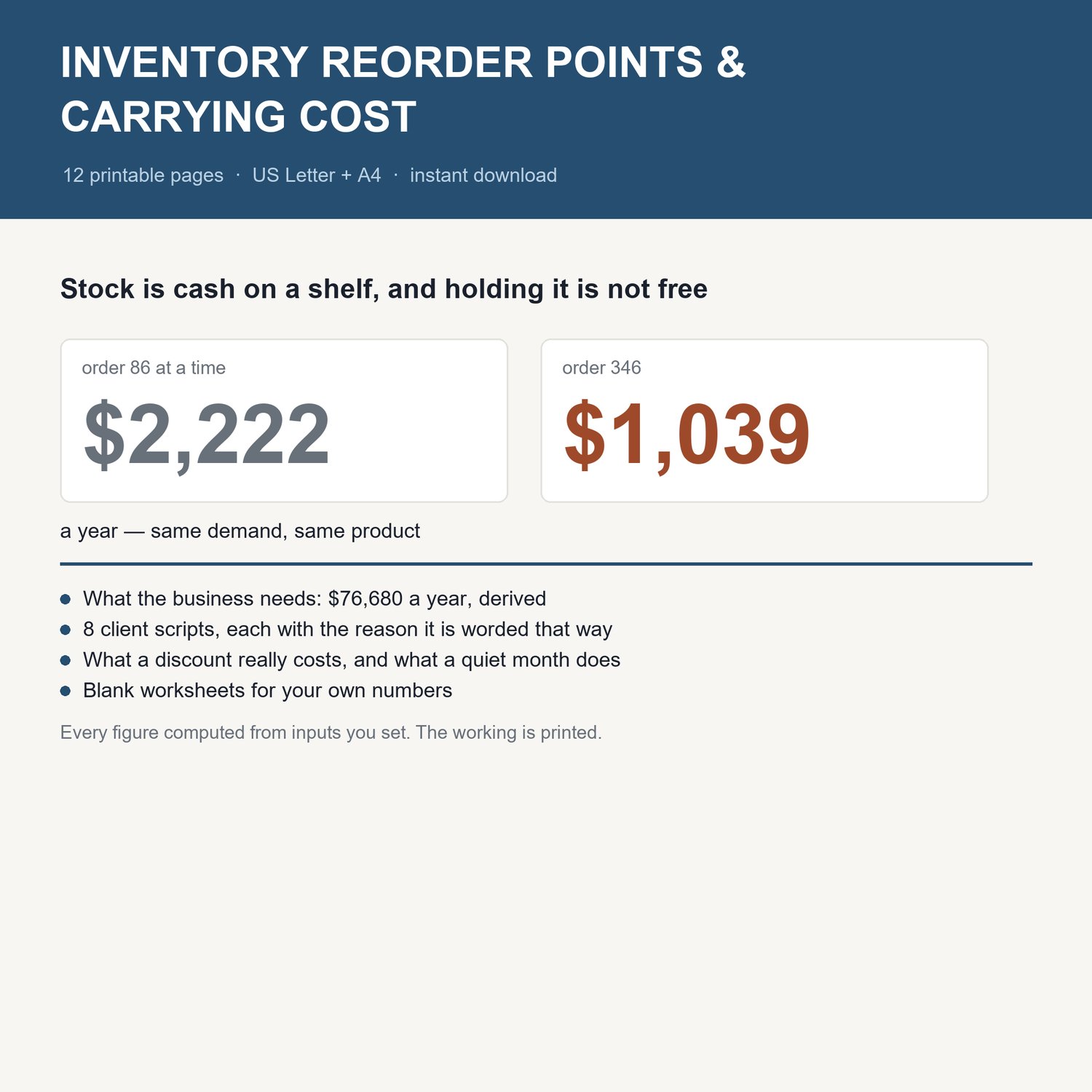
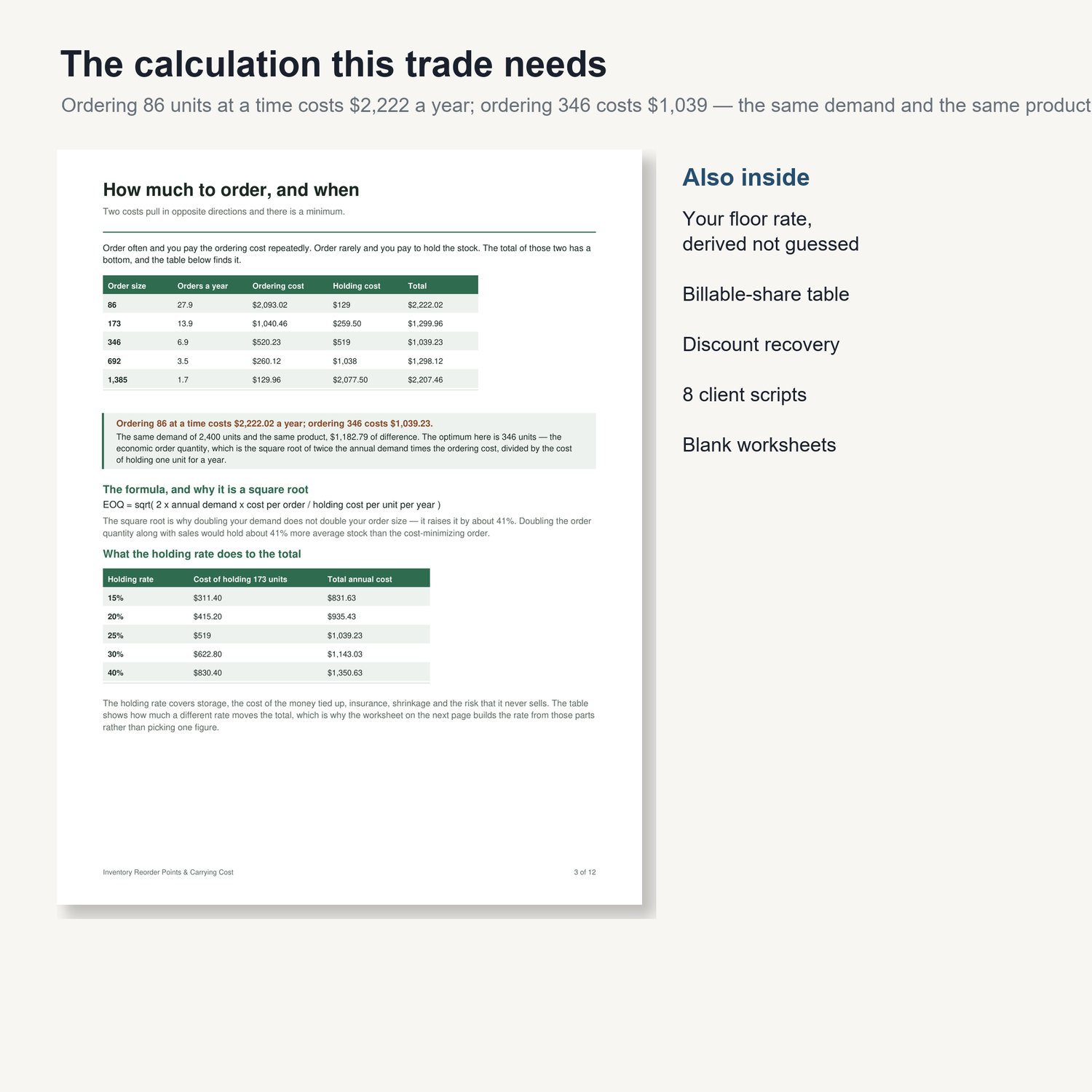
Ordering 86 units at a time costs $2,222 a year; ordering 346 costs $1,039 — the same demand and the same product, 47% of the cost, and the difference is one square root.
What the year has to bring in
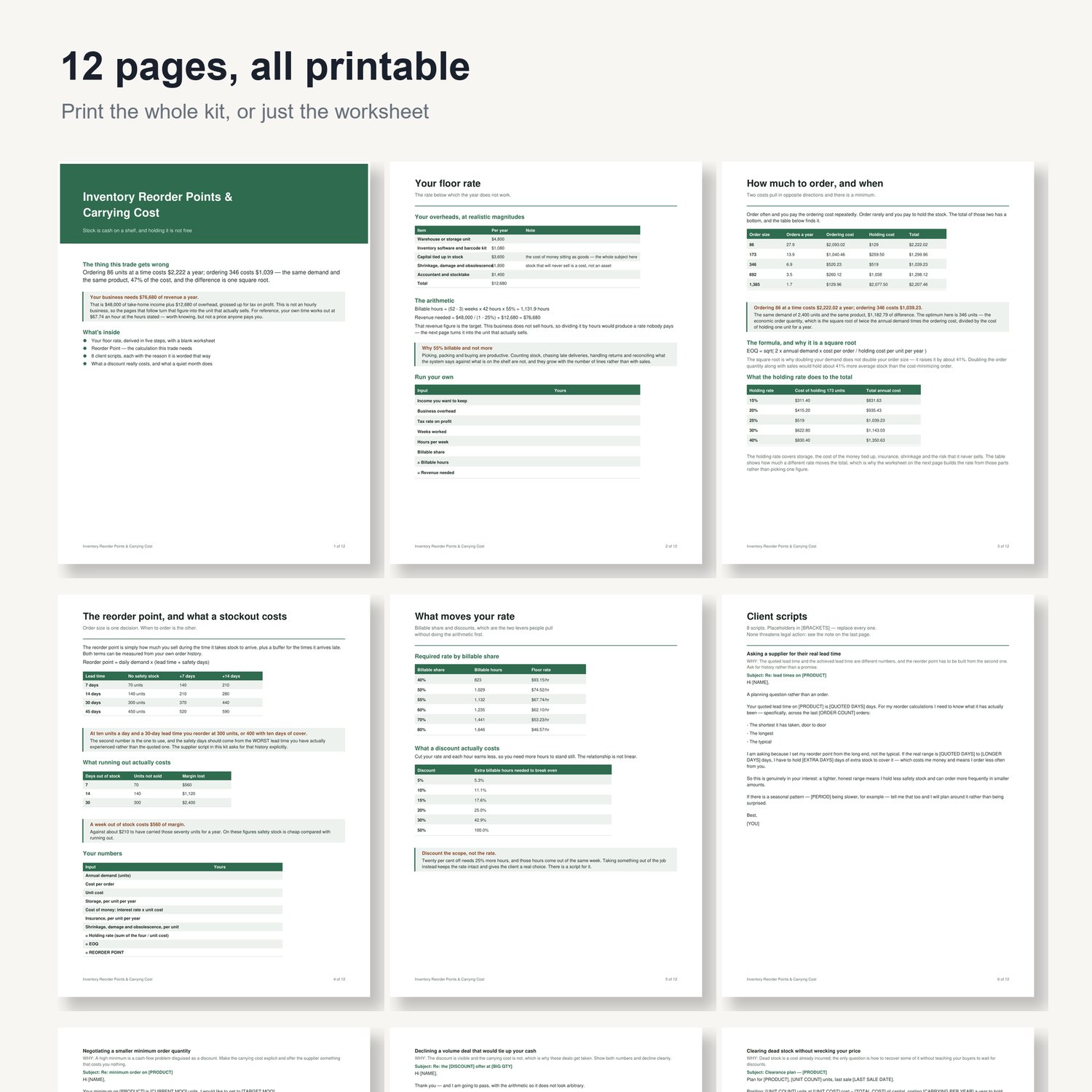
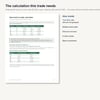
The first worksheet page starts from $48,000 of take-home income, $12,680 of overhead across the items listed and tax on profit, and works out the revenue the business needs: $76,680 a year. This business does not sell hours, so the kit does not turn that into an hourly rate. Every step is printed, with a blank worksheet for your own numbers.
Two costs pull opposite ways, and the total has a bottom
Order often and you pay the ordering cost repeatedly; order rarely and you pay to hold the stock. On 2,400 units a year, ordering 86 at a time costs $2,222.02 a year and ordering 346 costs $1,039.23 — the same demand and the same product, $1,182.79 of difference.
The optimum is 346 units, and because it is a square root, doubling your sales raises your order size by about 41% rather than doubling it. Doubling the order along with sales holds about 41% more average stock than the cost-minimizing order.
On the other side, a week out of stock costs $560 of margin against roughly $210 to have carried that safety stock for a year. On these figures safety stock is cheap compared with running out.
Includes a live Excel workbook: EOQ, reorder point and total cost at any order size, all 23 formulas verified by recalculation.
8 client scripts
Each one carries a line explaining why it is worded that way, because a script you do not understand is one you will not send. Placeholders are in [BRACKETS] so nothing goes out in someone else's words.
- Asking a supplier for their real lead time
- Negotiating a smaller minimum order quantity
- The supplier who is three weeks late with no warning
- Declining a volume deal that would tie up your cash
- Telling a customer an item is out of stock
- Clearing dead stock without wrecking your price
- Asking for consignment or drop-ship terms
- Raising prices when a supplier raises theirs
What this is not
These numbers are not a market price. They are arithmetic about you — what your income target requires. They do not tell you what your market will pay. If the number is far above what your market bears, that is real information: something has to move, and quietly working below the floor is the one option that cannot last.
These are scripts, not contracts, and nothing here is legal or tax advice. No script threatens statutory interest, collections or legal action — whether any of those is available to you depends on your contract and jurisdiction. The 25% tax figure is a placeholder; ask your accountant for yours.
Honest about the format
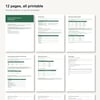
Printable PDFs plus an editable Excel workbook, not a physical product. One US Letter PDF (12 pages) and one A4 PDF (12 pages), and one .xlsx that opens in Excel, Numbers, LibreOffice and Google Sheets. Files are available immediately after purchase; nothing ships.
Refunds
If this isn't what you expected, email me within 30 days and I'll refund you in full — no need to explain. Because it's an instant download I can't take the files back, so I'd rather you just had your money back.