
Bridging The Gap with LEO's
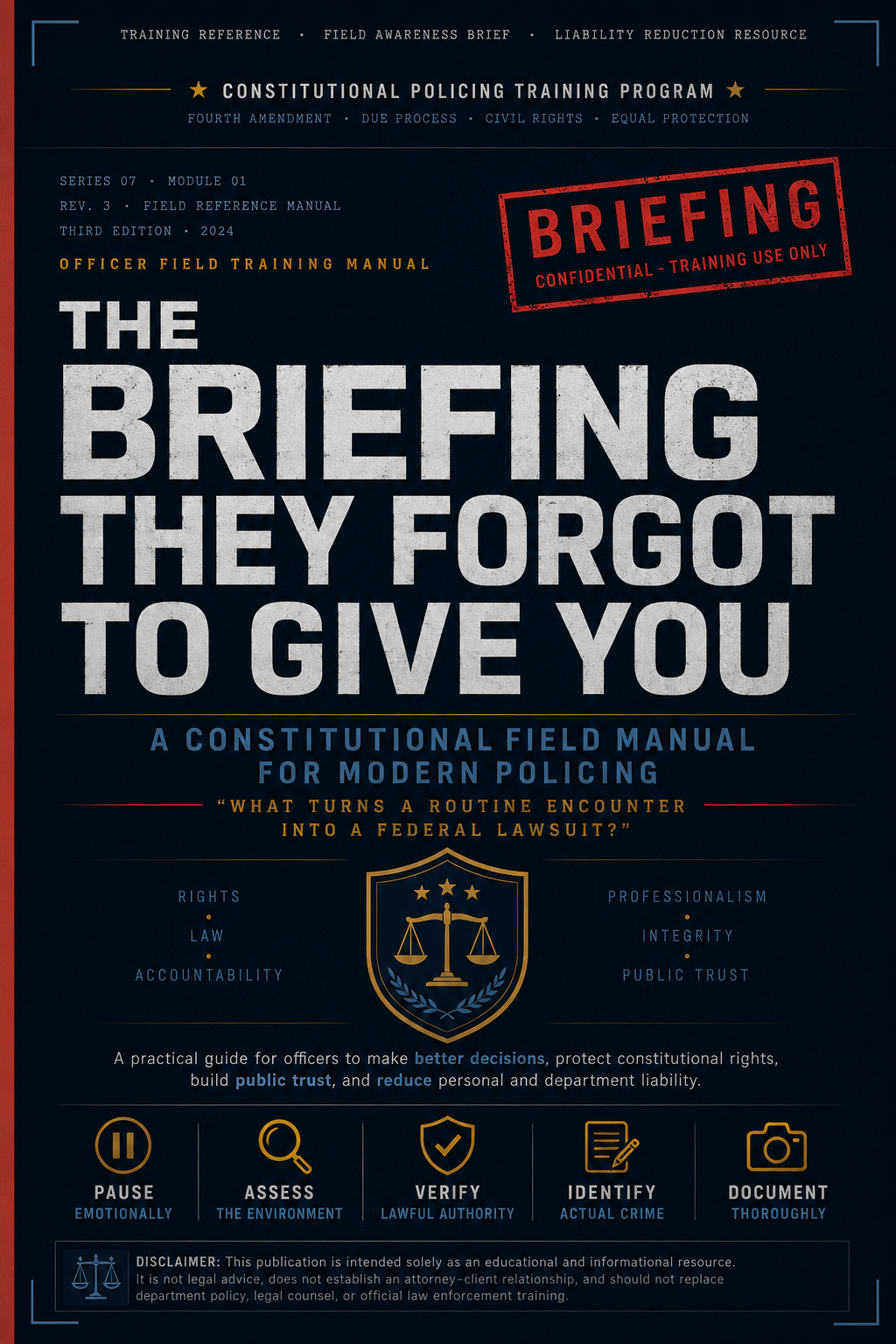
THE BRIEFING THEY FORGOT TO GIVE YOU
A Community Resource for Constitutional Policing, Public Trust, and Protecting Qualified Immunity
"What turns a routine encounter into a federal lawsuit?"
TRAINING REFERENCE • FIELD AWARENESS BRIEF • LIABILITY REDUCTION RESOURCE
Author: Community Resource
DISCLAIMER
This publication is intended solely as an educational and informational community resource. It is not legal advice, does not establish an attorney-client relationship, and should not replace department policy, legal counsel, or official law enforcement training.
The goal of this resource is to encourage constitutional policing, improve public trust, reduce unnecessary escalation, and help officers better understand constitutional protections in modern public interactions.
INTRODUCTION
Modern policing exists in the age of body cameras, livestreams, smartphones, independent journalism, and instant public scrutiny.
Every interaction can be recorded.
Every statement can be replayed.
Every decision can become evidence.
Good officers deserve better preparation than many receive.
CHAPTER 1 — THE SECRET WEAPON OF EVERYDAY POLICING
The greatest tactical advantage an officer can carry is not force. It is judgment.
Critical thinking, emotional control, constitutional awareness, and investigative patience are often what separate professional encounters from constitutional violations.
Tactical Reminder:
Pause. Assess. Verify. Then Act.
CHAPTER 2 — RECOGNIZING THE PUBLIC AS PARTNERS
One of the most common misconceptions repeated in public interactions is:
"They're just looking for a reaction."
Protected speech, criticism of government officials, public recording, questioning authority, and verbally petitioning government employees are all deeply rooted constitutional traditions.
CHAPTER 3 — THE FIRST AMENDMENT IN PRACTICE
The five protected elements of the First Amendment are:
Religion
Speech
Press
Assembly
Petition
Protected activity cannot be transformed into criminal activity simply because it is uncomfortable, critical, annoying, or embarrassing.
CHAPTER 4 — CRITICAL THINKING BEFORE ACTION
Officers investigate crimes. They do not manufacture suspicion.
Before escalating an encounter, officers should mentally ask:
What specific crime do I suspect?
What facts support that suspicion?
Is the conduct protected activity?
Investigate first. React last.
CHAPTER 5 — LEARNING FROM COSTLY MISTAKES
Poor investigations, emotional escalation, and constitutional misunderstandings can create long-term consequences.
A few seconds of emotional reaction can become years of litigation.
CHAPTER 6 — PUBLIC VS. PRIVATE: KNOWING YOUR TERRAIN
Before removing someone from a location, officers should consider:
Who controls the property?
Is the area publicly accessible?
Is there a lawful trespass order?
Is the activity constitutionally protected?
Know the space before you control the space.
CHAPTER 7 — WHEN QUALIFIED IMMUNITY APPLIES — AND WHEN IT DOESN'T
Qualified immunity protects officers from personal liability only when constitutional rights are not clearly violated.
Three Tactical Anchors:
Identify protected rights
Intervene only on articulable facts
Document everything
CHAPTER 8 — BRIDGING THE TRUST GAP
Trust is built encounter by encounter.
Professionalism during uncomfortable encounters often improves:
Officer safety
Community respect
Department reputation
Public cooperation
CHAPTER 9 — ACTION STEPS FOR EVERY ENCOUNTER
Tactical Checklist:
Pause emotionally
Assess the environment
Identify actual criminal behavior
Verify lawful authority
Document thoroughly
CHAPTER 10 — THE REMINDER BEFORE EVERY ENCOUNTER
The strongest officers are often the officers most capable of remaining calm, investigative, and constitutionally aware under pressure.
FINAL TACTICAL MEMORY PHRASE
Pause. Assess. Verify. Then Act.
FINAL MESSAGE
Good policing and constitutional policing should never be enemies.
Professional officers who understand constitutional rights protect:
The public
Their departments
Their communities
Their careers
And the integrity of the badge itself.